
Choosing the Right Hook For Straylining

Last month we looked at the humble ledger or dropper rig; this issue we look at which hooks should ideally be used on strayline (both unweighted and lightly weighted) rigs in single and double-hooked variations. Fortunately for us all, the recommended hook style/shape is pretty much the same as those I recommended last month: the circle/recurve hook, with just the size and configuration changing according to the bait used and the species targeted.
As explained last month, I believe this style of hook is the way forward, and there are some great reasons for this, as you will find out.
The strayline (lightly-weighted) rig
A bait rigged on a strayline rig is potentially very effective because it can be presented so naturally. Any food items wafting down or washing around with the current make a tempting and easy target.
However, completely unweighted rigs often won’t work when significant wind and/or current are present, with the mainline becoming a long, thin sail that catches the breeze/tidal flow, preventing a natural looking descent.
In such instances, incorporating a little weight will neutralise these natural forces so the bait appears to be acting more naturally. That’s why ‘lightly weighted’ is also bracketed in here (although lightly-weighted is relative – you might need two or three ounces of lead to encourage a really big bait to ‘behave’ in heavy current!).
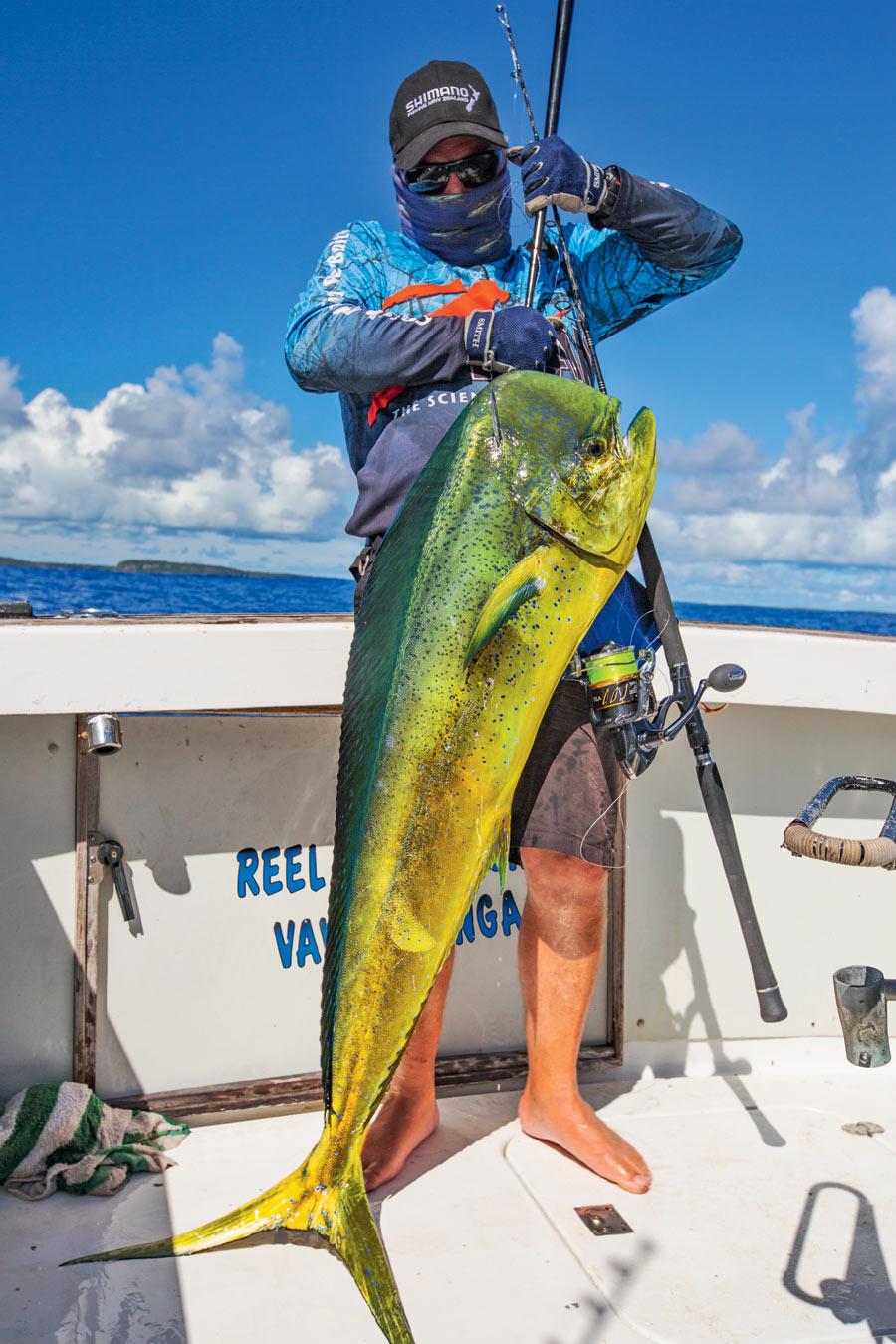
Most anglers associate straylining with snapper, but this technique is also deadly on a variety of other popular species – including trevally, kahawai and kingfish – and can also prove effective on bluewater sportfish such as yellowfin, albacore and mahimahi (we’ll omit the other, bigger gamefish, such as sharks, bluefin and marlin, as the rigs used are so much more specialised).
Strayline rigs can be single or double-hooked; we will start with the former.
Single-hook rigs
When I think of single-hook rigs, the situation tends to involve either fishing into very foul ground or dropping a bait down a chunk trail.

Fishing foul ground
The very nature of a hook means it is made to catch hold, so attach a bulky bait and place this offering amongst weed and rocks, and it’s not surprising that snagging occurs.
However, as the recurve hook’s point faces inwards towards its shank, catching on structure becomes much less likely, especially when just one of them is used.
In such situations, most fishers will be targeting snapper with 6-15kg tackle; I suggest the thinner 5/0-8/0 recurves from Gamakatsu or Mustad will do the job on gear to 10kg, while the thicker, heavier-duty Black Magic KLs will suit those fishing 10-15kg tackle.
It also pays to use the lightest and smallest weight possible for the circumstances; just one small ball sinker placed on top of the hook is preferable.
However, if the sinker required is too heavy and bulky, it will tend to block the incurving hook point’s gape, making successful hook-ups less likely (circle hooks rely on sliding smoothly into place around the jaw hinge). It will snag up more often, too. Instead, use multiples of smaller pea/bean sinkers (say 1/4oz each) for any sinker weight over 1/2oz or so, as this makes the rig more streamlined.

Next, arm the rig with a long, slim bait, perhaps a whole or half pilchard, squid or a slender tapered cut-fish bait (see the accompanying diagrams for some rigging options). Whatever you use though, ensure the recurve hook’s gape (the gap between the shank and the hook point) remains exposed and is not choked with bait, especially when deploying the firmer baits.
The chunk trail
It’s amazing what can happen when a chunk trail is made. Typically, this consists of small cubes of cut fish fillet or sections of baitfish such as pilchards.
All sorts of fish are attracted by this steady stream of tidbits – anything from a wide assortment of ‘baitfish’ through to kahawai, snapper, trevally and kingfish. Out wider and deeper, various tuna and sharks may arrive.
Depending on what you want to catch and your location, make sure you have a suitable outfit on hand, rigged and baited, ready to go. (If targeting kingfish or tuna, this is one of the few times I still use a relatively small, strong, short-shanked live-bait hook, as sometimes a quick strike is required after the chunk is eaten.)
Make sure the unweighted or very lightly weighted hook is well hidden in a slightly bigger chunk of bait.
I prefer to use a softer bait in this instance, so it’s possible to strike it off at the drift’s end if desired; otherwise the bait can spin throughout the retrieve, badly twisting up the line.
Whatever you use though, keep distributing more chunks to any fish attracted and which are starting to feed, as you want to gain their confidence before sending down your offering with a surprise inside!

A note on hook sizes
While I appreciate why many capable anglers vehemently advocate the use of large hooks (i.e. 7/0-9/0) so smaller fish cannot swallow their offerings, the recurve hook’s shape sees very few fish, large or small, gill or gut hooked. Instead, they are snagged in the mouth, enabling easy release if necessary. Consequently, I aim for a more subtle approach, choosing hooks that suit the size of the baits used and the gear’s capabilities. These smaller hooks are harder for fish to detect, weigh less, and won’t snag the bottom much. However, some thought is required when attaching the different baits as the hook’s point needs to remain exposed enough to hook up. My recurve hooks typically range from 5/0 to 7/0.
HOOK RECOMMENDATIONS
Fish species and preferred bait Recommended hook
Trevally (chunk) 3/0-5/0 recurve
Kahawai (strip bait) 4/0-6/0 recurve
Kahawai (small baitfish) 5/0-6/0 recurve or live-bait hook
Snapper (strip bait) 5/0-9/0 recurve
Snapper (baitfish, half) 5/0-6/0 recurve
Snapper (baitfish, whole) 5/0-8/0 recurve
Kingfish (chunk) 4/0-6/0 live-bait hook
Kingfish (small baitfish) 5/0-6/0 live-bait hook
Kingfish (large baitfish) 7/0-10 /0 live-bait hook
Albacore/yellowfin/mahimahi (chunk) 2/0-5/0 live-bait hook
Albacore/yellowfin (whole baitfish) 3/0-5/0 live-bait hook.
Fishing Reports Visit Reports
Canterbury Fishing Report - 01/10/26
Freshwater season underway. Wow, it’s October already, and our freshwater season is underway, and the... Read More >
Top of the South Fishing Report - 01/10/26
Snapper about but not yet firing. It’s certainly nice to see daylight savings upon us... Read More >
Hauraki Gulf Fishing Report 01/10/26
Big reds in the shallows. The weather has made getting out on the water challenging... Read More >
Bay of Islands Fishing Report - 01/10/26
Snapper moving in. A few Pacific bluefin are still gracing the weigh stations with last... Read More >


Monday 12 October 2026
Major Bites
 - -
- - Minor Bites
 - -
- - Tuesday 13 October 2026
Major Bites
- - Minor Bites
- -
Comments