
Chasing big eye tuna

Bigeye tuna – a species that until recently has not been specifically targeted by gamefishers, but can capture the imagination like no other.
In what is to follow, I will discuss their movements, where we catch them commercially in New Zealand, and the structures they hang out on in the hope it will encourage readers to get out there and target them.
Bigeye tuna are present in New Zealand waters year-round. They are more widely distributed through the summer, north of the Taranaki Bight up to the Three Kings Islands on the west coast, from about January to March. They can be found from the continental shelf out at 200 metres, and this extends to very deep water along the 1000 metre contour line and deeper, particularly off the Kaipara, Manukau and to some extent Raglan harbours along the shelf edge.

Bigeye tuna are also found around most of the North Island’s east coast, from North Cape to East Cape, where they are predominantly caught surface longlining – generally in waters more than 1000 metres deep.
During winter, bigeye tuna occupy a smaller area within New Zealand waters, but are more common north of the Bay of Plenty and Great Barrier Island. Surface longline catches mainly occur off Northland in July and August, as fishing efforts switch from the southern bluefin tuna fishery off East Cape, to the Far North tuna fishery targeting bigeye tuna and broadbill swordfish.
Throughout winter there are no bigeye tuna on the west coast of the North Island.
During summer, the movement of bigeye tuna is interesting. The general trend is to move southwards into New Zealand waters from the southern Fiji Basin in early summer – from about mid-November and through December on the North Island’s east coast, but then they retract northward again during the winter (June, July, August) as surface waters cool off.
Tuna swim to their northernmost extent off Northland in winter, when the surface longline fleet target them out of ports such as Mangonui and Opua.
In New Zealand, albacore form the basis of a commercial troll fishery off the west coast of both the islands from about December, and whilst the majority of the bigeye tuna are actually targeted in the North Island’s east coast tuna longline fishery, the commercial trolling fleet fishing off the Manukau do encounter them through January and February, boating a few of them as by-catch.
They may well be there in greater numbers, but as is always the case, you need numbers of boats on the water to find them.
Bigeye tuna on the west coast first show up from between late December and January, which is around about the time albacore tuna schools first start being targeted by the troll fleet.
Water temperatures at this time of the year along the west coast are normally between 18 and 19 degrees, and most of the tuna troll fleet who have captured bigeye have done so towing multiple albacore tuna lures, with bungy cords attached to trace lines which they haul in by hand, set well behind the boat.
Big-eye tuna are a little different to the other tunas in our oceans, as they have the ability make big vertical movements from the surface, swimming deep and staying there for longer periods.
When I was surface longlining, we found all sorts of deepwater ooglies they had been feeding on, from lancetfish to rays bream and squid. We even found a small type of puffer fish in one tuna. This shows that they are opportunist feeders at all levels in the water column.
It is well-known that juveniles and young adults school near the surface in warmer tropical seas, whilst the adult big-eye tend to live in deep water.
But here in the New Zealand surface longline fishery, most of the bigeye caught consists of adult fish.
In the east coast surface longline fishery, we have encountered them as early as November, and when I was crewman on a surface longliner back in the early 2000s, we used to catch them in the Bay of Plenty out at the West and East Ngatoro Knoll, which are off Mayor and White Islands respectively.
Tony Walker (TK Offshore Fishing) informs me he used to start looking for them in late October up towards the Kermadec fishery, where he would try and intercept both the bigeye and yellowfin tuna schools as they swam south from the South Fiji Basin into our Exclusive Economic Zone (EEC).
Bigeye favour structure
On the east coast of the North Island structure includes offshore canyons, rises, and seamounts from North Cape right down to East Cape. Features such as the Poor Knights Rise and the East and West Ngatoro Knolls behind White Island will hold fish from about mid-November.
If you are fishing on the west coast of the North Island, you may encounter tuna right out at the continental shelf in 200 metres of water and deeper on tht canyons and trenches, such as Mokau Trench and the Kaipara Canyon. We even hooked a couple on the Viti Canyons, which are off New Plymouth, but more on that later.
Trying to target and catch bigeye tuna can be tricky. More so because anglers are not specifically targeting them when they are most active – just before dusk. By then most people are either sipping away on their favourite beverage at the clubhouse or steaming back to an anchorage for the evening.
Commercial tuna fisherman know that night time is the right time to target bigeye. Those fortunate enough to have experienced the commercial albacore troll fishery between the Hokianga and Mokau will know what it is like when the bigeye decide to come out and smash the living daylights out of the albacore lures at dusk! It’s one hell of a fight and pure adrenalin -pumping action.
I wouldn’t be at all surprised if a lot of game fishers troll over bigeye during the day when fishing for marlin and other pelagics. But because the bigeye are hanging down deep and no one is specifically targeting them when they are most active (at dawn, dusk and throughout the night, when they rise to the surface and chase squid, saury, and other deep water species) few are caught.
In the summer, pilot whales are a very good indication that both bigeye and marlin could be hanging around in the vicinity. Pilot whales feed almost exclusively on squid. Seeing a pod of whales milling around during the day when tuna trolling well offshore near or on top of any offshore structure or canyon, is a dead-set giveaway that you are in an area with high concentrations of baitfish/squid.
Both albacore and bigeye feed almost exclusively on squid, coming up when the sun starts to set during the witching hours (between 8:00pm to 9:00pm here in New Zealand) when the bait rises to the surface.
For many years Kiwi recreational game-fishers thought of bigeye tuna as a nice bycatch whilst targeting other species. With a bit of know-how and good old Kiwi ingenuity, I can see recreational fishers tapping into this fishery in the not too-distant future.
Make the effort
Let me explain. Most tuna, and that includes most of the tuna species that swim in our EEZ, like feeding shallow early and late in the day when the sun is setting on the horizon, and also well into the night. This is why the tuna trollers troll for the night bite and the New Zealand surface longline fleet set their gear after dark.
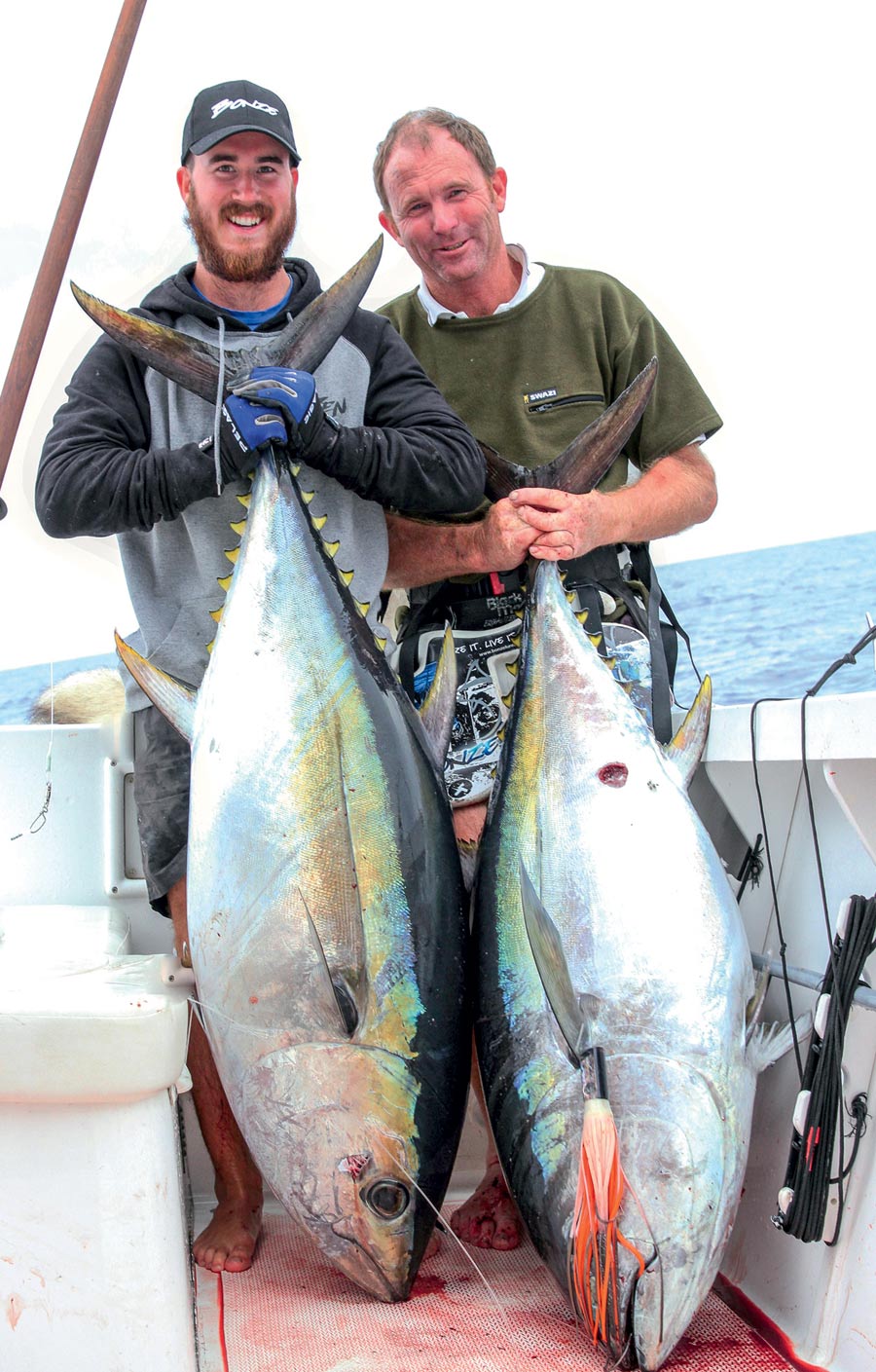
I have experienced multiple strikes and bust-offs trolling albacore tuna lures well after dark out wide on the 1000-metre line west of the Manukau. We had a pack-attack of big-eye off Raglan, landing just one, in 200 metres on the shelf edge. The bigeye took to our bungy cords while we in the process of hauling in albacore on the night bite.
The same happened off the Kaipara a couple of years later, where we managed to land one.
It really was cool to watch and there’s no doubt in my mind that there is some sort of fishery out there for anglers wishing to pursue it.
When we were trolling for albacore on the west coast, if we managed to get on the bigeye, we generally found that they would come to the surface again in the morning, probably to recharge their batteries after chasing squid during the night, before heading back down deep to rest during the day.
This used to happen particularly in the few days leading up to the full moon, around which is a great time to target all types of tuna in New Zealand waters. The moon gives extra light, and when we were targeting albacore schools off the North Island’s west coast, it kept the baitfish on the move.
It must be seen to be believed – often after a long day of pulling in albacore and while packing away the last fish on the ice at night, you could hear albacore smashing the baitfish just outside our deck lights. You just knew there were some bigger predators down there somewhere.
This isn’t just limited to bigeye tuna either –albacore, yellowfin and southern bluefin tuna feature prominently in surface longline catches in the few days leading up to the full moon.
The full moon is like a gigantic lantern in the sky. In America and other parts of the world, some gamefishing skippers specifically target tuna at night, fishing lures from the witching hour as the sun starts to set and sometimes trolling until 10:00pm at night. They then move on to the drift and chunk technique, which we call cubing here in New Zealand.
Chunking an option
It is amazing what those tuna can see. On the west coast we pick up all types of tuna until well after dark, even when we can’t see the lures ourselves. There are few successful charter boat operators in Australia that specifically target bigeye by sending big jigs deep down at night on top of seamounts in the Coral Sea. Bigeye fishing hasn’t really taken off here in New Zealand, as after the southern bluefin tuna run, most anglers put away their gear for the winter.
As previously mentioned, off the Hokianga and down towards Raglan, the bigeye generally start turning up with the albacore from late December and into January out at the shelf edge in 200 metres and out around 1000 metres.
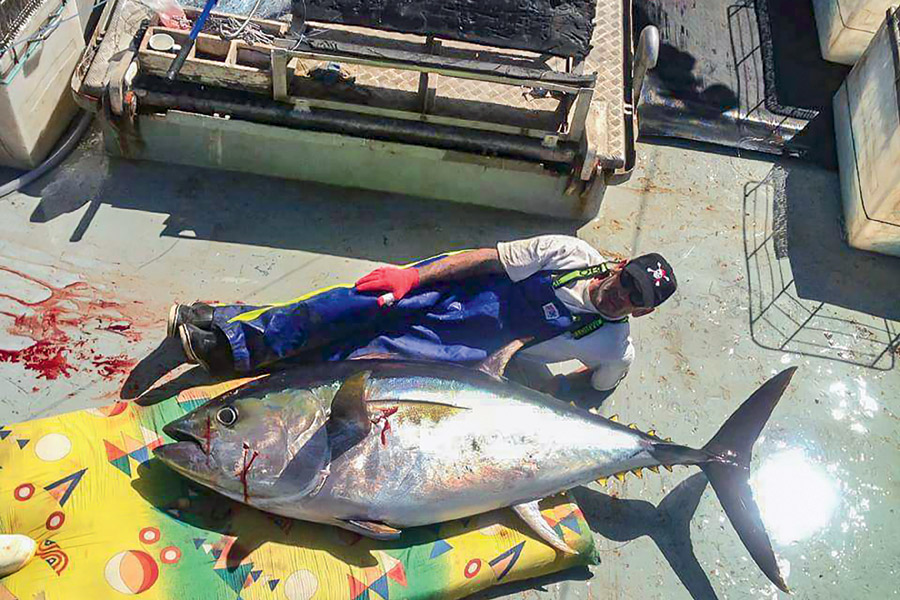
On the east coast they seem to show much earlier. The general trend is for them to start showing up on the offshore knolls in the Western Bay of Plenty in November, with the tuna filtering down to East Cape and off Waihau Bay around Christmas. They may well be there earlier. I do believe there is some sort of fishery out there that is untapped. But as always, it is numbers of boats on the water that will help find them.
Food for thought for those adventurous anglers wanting to expand their gamefishing season. It is another option worth exploring.
|
|
|

Fishing Reports Visit Reports
Manukau/West Coast Fishing Report - 15/10/26
Big spring snapper in 60 metres. The El Niño weather pattern isn’t going to be... Read More >
Rotorua Fishing Report - 15/10/26
Solid start to the season! The Rotorua lakes have all started the season well, and... Read More >
Tutukaka Fishing Report - 15/10/26
Big snapper in shallow. Things remain relatively quiet on the fishing front out of Tutukaka,... Read More >
Tauranga Fishing Report - 15/10/26
Bait and temperature on the rise. It’s been great to get out and see some... Read More >


Friday 23 October 2026
Major Bites
 - -
- - Minor Bites
 - -
- - Saturday 24 October 2026
Major Bites
 - -
- - Minor Bites
- -
Comments