
Catching Striped Marlin on Lures - Part 1

Luke Davis shares some tips for trolling for striped marlin...
Trolling for striped marlin in NZ is an interesting topic; everyone has their own ideas and techniques on how best to raise and hook these fickle-feeding fish. In this article, I’ll explain some of the methods that have brought me great success when targeting stripies with lures.
What hooks to use?
Fishing methods change over time, and now the first thing many hear when the topic of marlin hooks comes up is: ‘light gauge’ hooks. While some anglers adamantly steer clear of light gauge hooks, for others, it has changed their gamefishing experiences forever.
Either way, it is something to consider because these hooks are well-suited for the size of our striped marlin – the main marlin species you will bump into in NZ. Light gauge hooks require ongoing maintenance and preparation to see success, but standard hook rigs also require some too.
Many top crews are also using a jigging hook instead of a standard trolling hook or a light gauge hook. This is somewhat in between the two and offers a little more strength while maintaining a sharp point and thin gauge for penetration. This balancing act is something you as an angler or skipper need to weigh up when choosing your hooks.
Nevertheless, all good captains I’ve fished with agree that, whatever hook you choose, make sure it’s sharp! This is crucial and something which many people overlook. You need to be prepared and vigilant to keep your hooks sharp – a set of good diamond files should be in every boat and rigging bag.
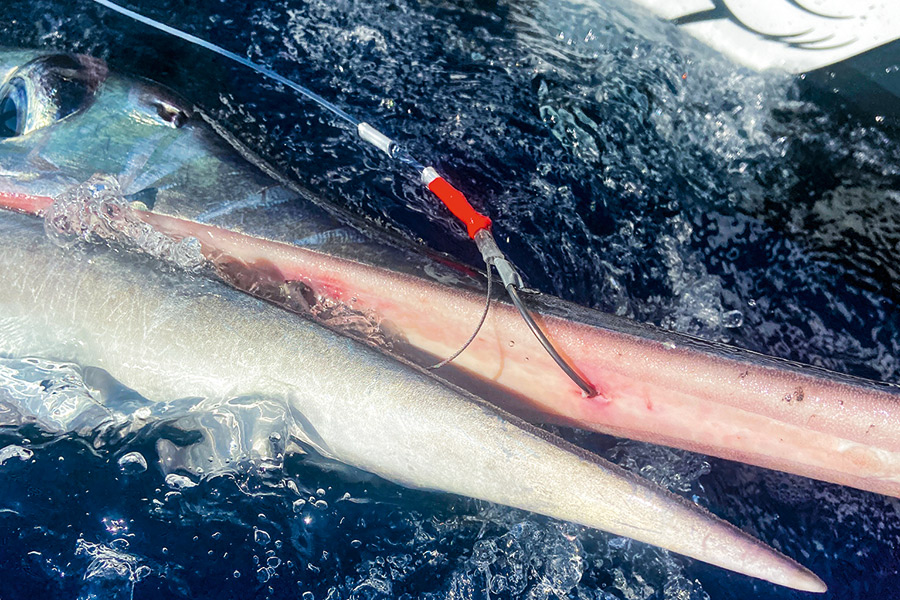
Sharp hooks like this light gauge style ensure good bill penetration.
Lure selection
Now that you’ve picked a hook, you need to pick a spread. For striped marlin, we like to run 8-12” lures as generally the baitfish they feed on, such as saury, jack mackerel, squid and pilchards, fit in this size bracket.
When choosing a spread, we like to pick them as a team, more than as a lure. Having a ‘hot’ lure doesn’t help your spread – you want all lures to complement each other and offer something different. In other words, try to choose four or five different head shapes in four or five different colours. Because we don’t know what the fish are after on the day, having a contrasting pattern of lures will maximise your chances of getting a bite.
For colours, I usually run four lures starting with a green/lumo, a squid, a purple, and a baitfish. For head shapes, I like straight running lures behind my teasers as they are easy options for marlin to eat, followed by a small lure and a lure with some action out on each rigger. This setup has worked consistently for me over the past few seasons.
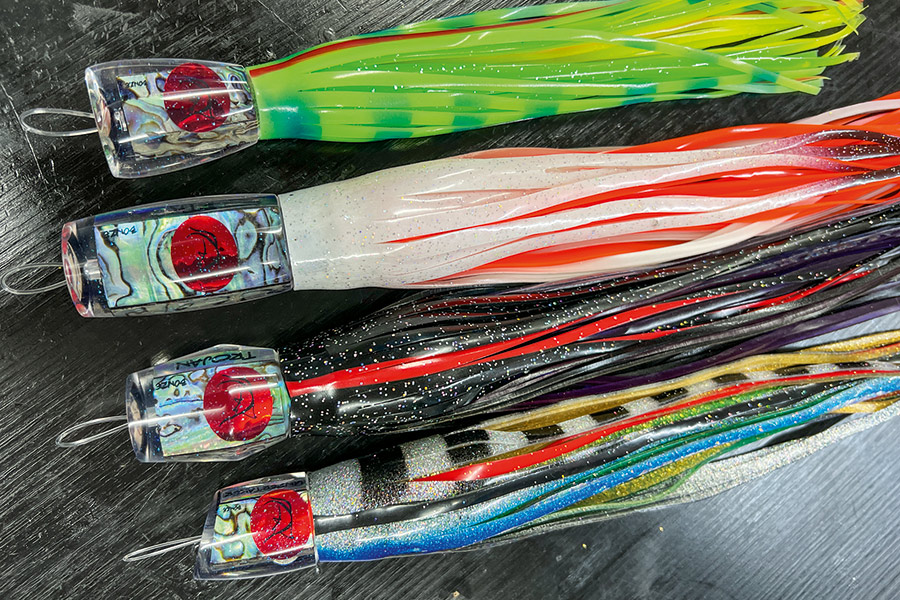
When picking a spread of lures, Luke recommends choosing them strategically as a complementary team.
Teasers
The small to medium lures we mainly run for striped marlin don’t create a lot of commotion. So, to help raise fish and excite them to the back of the boat, we run teasers. These lure are usually too large to run with hooks and often very splashy, which helps to get the fish fired up and get a better bite on our hooked lures. We run two teasers, one on each side of the boat. Again, contrast is important, with one being sub-surface (dredge) and the other on the surface (daisy chain).
I like to use a strip dredge which is very shiny and imitates a school of bait fish – the larger the better! This is run with a large fish/streamlined weight, and we want this below our prop wash so that a fish from all angles can see the dredge.
In some parts of the world, dredges are run shallow to allow raised fish to be seen and switched onto bait. However, because we are lure fishing, we want to maximise the visual effect of the dredge to raise fish into the spread, so I prefer it as deep as possible.
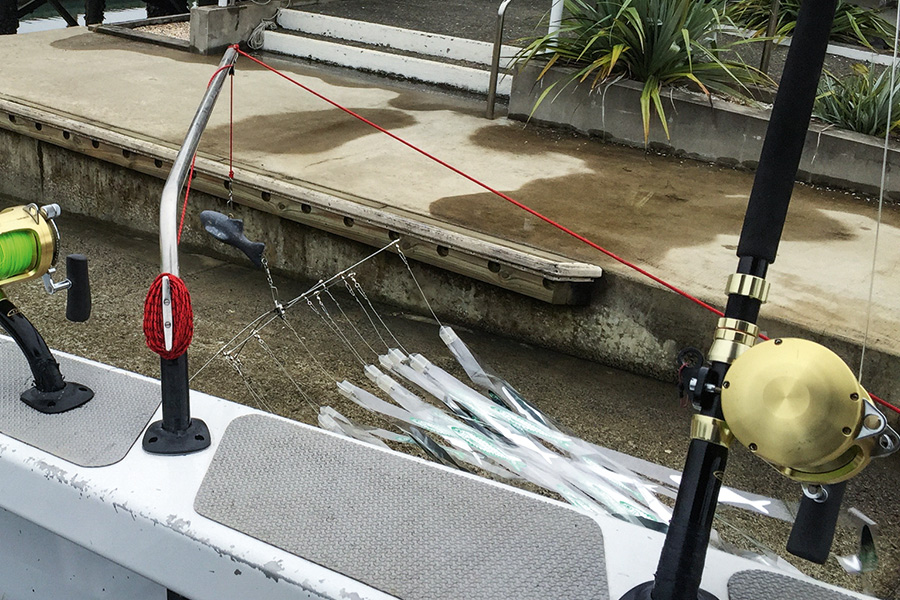
Luke's teaser setup includes a strip dredge run from a boom.
Placing the spread
These two teasers are run in front of the short lures. When adding teasers to your spread, you might need to drop back your spread to find room for these to run correctly. I like to run the dredge between the first and second waves with the surface teaser on the second wave. My spread then starts on the third wave.
You want to keep short lures a wave behind the teasers (third and fourth waves) so that any fish raised on them has a close option to eat. These lures are often straight running, easy-to-eat options.
Another point you will want to look at is running these corner lures out of the riggers as well. We run them from one-third to halfway up the outrigger. This helps get the lures outside of the teasers. I find this important as marlin have eyes on the side of their heads and therefore you want your lure in the marlin’s peripheral vision. A lure above a teaser seems to get less action as the fish don’t look up but more to the side when following a teaser. From there, I like to skip a wave and have the riggers on the sixth and seventh waves to pick up any fish not raised close by the teasers.
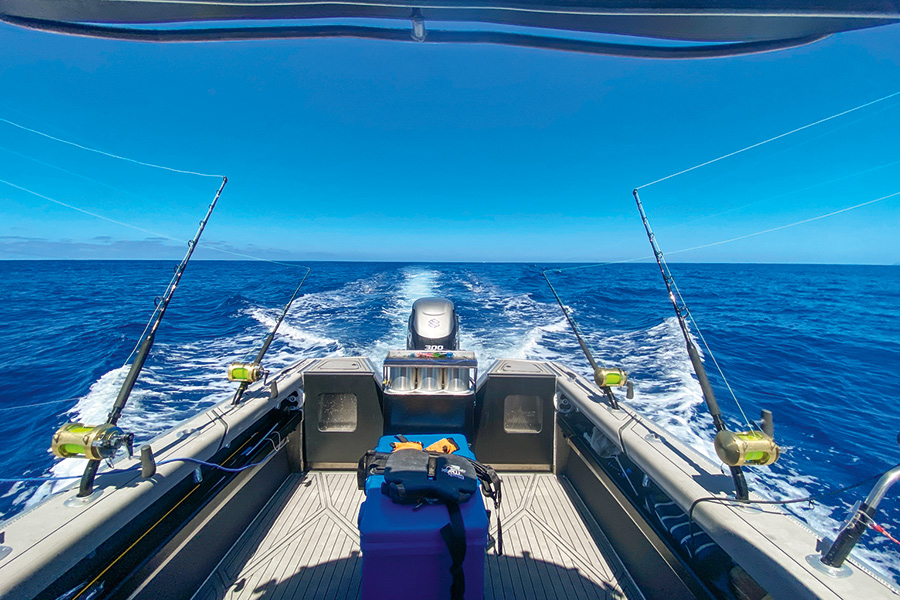
Luke runs all his lures from the outriggers, ensuring the corner lures run outside the teasers, making them more visible to the marlin.
Making sure your lures are running well
Lure fishing can get complicated very quickly, but a fundamental is to make sure your lures are running well and consistently. For best performance, you will need to play around with different lures in different positions; you want your lures typically popping every three to five seconds and not jumping out of the water. If they start jumping, the lure can tangle and you might miss a chance at a fish.
When running the lures on the waves behind the boat, we try to get them sitting around one-third to halfway up the wave. This also makes the lure very visible to a fish and should give the lure its best chance at running well.
As all boats have different outriggers and different wakes, there is no guarantee a lure that runs well on your mate’s short corner will run as well on yours. However, in general, you will find lures with short heads run better in the short positions, and those with longer heads run better in the long positions (because of the line angle the lure is run from). This is a good place to start when picking a spread.
Now that we have our spread of lures and teasers out, we need to find the fish! But that will have to wait until the next part...

December 2022 - Luke Davis
New Zealand Fishing News Magazine.
Copyright: NZ Fishing Media Ltd.
Re-publishing elsewhere is prohibited
Fishing Reports Visit Reports
Tauranga Fishing Report - 28/05/26
Tarakihi on the bite Trips are few and far between at this time of year,... Read More >
Canterbury Fishing Report - 28/05/26
Fresh and salt turning it on! It is not very often I get to say... Read More >
Bay of Islands Fishing Report - 28/05/26
Lures paying dividends We finally had a break in the SE winds that have been... Read More >
Manukau/West Coast Fishing Report - 28/05/26
Snapper and gurnard in the harbour The weather has finally taken a turn for the... Read More >


Major Bites
Minor Bites
Major Bites
Minor Bites
Comments