
Catching snapper on bibbed lures

You can’t troll lures for snapper, it’s just not done! Lures don’t go deep enough. Snapper are too spooky. Snapper don’t chase lures, you have to dangle them in front of their faces… I have heard all these statements before, and they got me thinking…
As an avid kayak angler, I’ve learned that many of the generally accepted fishing “truths” are more myth than fact. Yes, it’s possible to fluke captures using almost any tackle or technique, but over the years I’ve had too many snapper fall to lures behind my kayak for this to be a coincidence. I’ve taken them on soft-baits left streaming while moving to the next spot. I’ve also had several kahawai magically turn into pannies when trying for kingfish live baits.
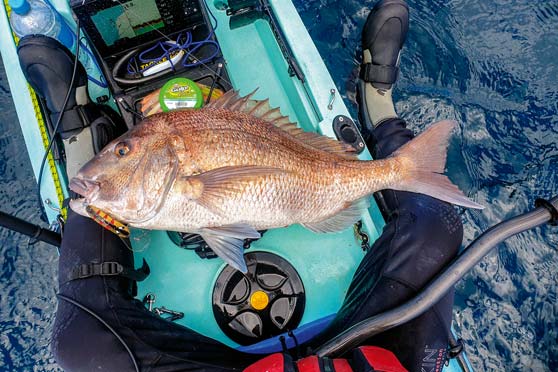
And then there are the many captures I’ve made on Aussie built bibbed deep-diving hard body lures. These fresh and saltwater lures are intended for such species as Murray cod and barramundi but have proven highly successful for targeting snapper. They’re designed for slower trolling speeds than the typical saltwater bibbed lures available here, making them perfect for towing behind kayaks.
Focusing on deepdivers
Given the number of snapper already caught on lures being dragged behind a kayak, I decided to give the technique more focus. It quickly became apparent that while deeper running lures naturally had more success, there were also significant differences in the way snapper responded to various patterns. Swimming style, in particular, has a significant role to play.
After two years of trolling bibbed lures whenever opportunity and conditions allowed to specifically target snapper I’ve made the following observations:
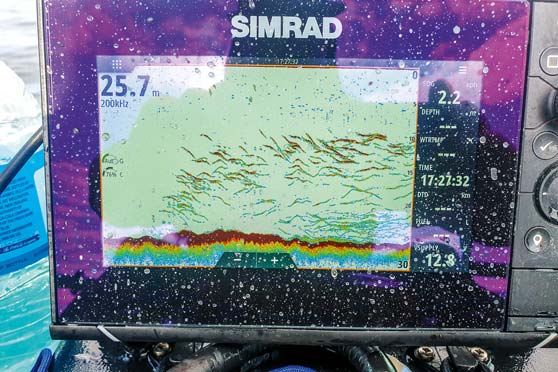
Sounders: A properly set up high-resolution sounder (fish finder) is almost as important as the lures and techniques. There’s little point in trolling lures through barren waters, though surprisingly I’ve caught the occasional lone fish doing this. A good sounder finds the fish, alerts you to the depth you need to work, and lets you know if your lure is working – if you’re seeing fish but not getting strikes, a change is needed.
Snapper regularly hunt in mid and upper waters well away from the bottom or structure provided there’s no traffic around to disturb them; I’ve even encountered schools on the surface in remote areas. This places them well within the range of trolled lures regardless how deep the water may be.
Kayaks are quiet enough to allow several passes over fish without putting them on edge. It is essential to keep noise to a minimum, and definitely no accidental paddle bangs on the side of the kayak.
If you’re stealthy, snapper will happily rise more than 10 – 12 meters to hit a lure passing above them. In fact, often the whole school will rise to the lure and stay at the new depth for the next pass. On several occasions, a loose school would start at around 20 meters and end up just five meters below the surface. Changing to a shallower swimming lure after each fish drew the whole school to the surface before they finally spooked and scattered.
Lures: Lure design is more important than colour: arched bodies and broad fronted bibs get more strikes than slender lures. This is due to the action of the lure creating a wider “wobble” that sends out a different sound pulse to narrower lures that “vibrate”.
Lures with flat sides such as my favourite Dr Evil are even better at transmitting sound pulses. I believe this alerts snapper to its presence before long before it becomes visible, putting them into hunt mode when it flashes into range. Similar lures without the flat sides sometimes need a second pass over the school before the action heats up.
Colour, of course, does have a role to play. For some reason I’ve found gold or bronze coloured lures are regularly the first struck when trolling different colours in a pattern. Changing lure positions in the pattern made little difference.
Stick with treble hooks when targeting snapper, especially if lures are originally rigged this way. Snapper seem to attack from various angles, but inevitably crunch down on the body of the lure, trying to crush and immobilise it. Since it’s a hard body they will then try and let go when it doesn’t feel like a fish. Trebles greatly increase the strike to hook-up conversion ratio.
Line: Using a fine braid main line and 25lb fluorocarbon leader helps ensure lures run with a good swimming and diving action. Heavier leaders aren’t generally needed as snapper tend to crunch on the body of the lure rather than the seemingly fragile leader. Given the price of some of the lures, there’s a temptation to run them on heavier gear, but this will impact on their performance.
When attaching the lure, always run a closed loop knot joining the 25lb fluorocarbon leader to a clip or ring in the fixed towing eye. The clip or ring ensures the lure is totally free to move while happily dealing with all the wear created as the lure vibrates and wobbles. Using an open loop with such a light leader is asking for a bust-off given how hard snapper hit on the strike.
Keeping quiet
With all the paddling, sounder watching, and lure trolling, it didn’t take long to notice how schools of fish responded to noise. Areas with little boat traffic often had snapper at least mid-water, well away from the bottom or any structure. On many occasions, I encountered snapper in the top 10 metres despite depth readings of 30 metres or more. All that’s needed is current, krill or bait schools to give them a reason to be there.
These fish are prime targets for trolled lures, but it’s essential to keep noise to a minimum as you pass over. Initially, they don’t seem too bothered by a kayaks shadow, but accidentally banging the side of the kayak with a paddle blade quickly puts them on edge, affecting your chances of a strike. On one notable occasion, my fixed mount VHF squawked into life on a high volume setting, and the snapper just three metres below the kayak scattered to the bottom (admittedly I’d already taken one fish, so they were a little on edge anyway).
Try not to have anything on board that rattles or bangs when hoping to encounter shallow water snapper. Sinkers rolling around or a spare paddle rattling inside the kayak are classic noisemakers. It’s surprising how well a kayak hull will transmit these vibrations to the water, spooking our quarry.
Boaties can join the fray
While kayaks have the stealth advantage when trolling for snapper, boaties have a tool in their arsenal that allows them to target snapper in deeper water where they’re less disturbed by noise – downriggers. I’m always surprised that so few Kiwi saltwater anglers don’t use this excellent bit of kit more often. It’s certainly a technique I’ll be exploring from the new generation of electric kayaks in the near future. I know of several highly successful anglers across the ditch using downriggers and bibbed lures to specifically target snapper.
All that’s needed is a little experimentation to sort out how far below the downrigger ball particular lures run (remembering line diameters, speed, and distance back from the release clip are factors influencing final depth). With this information any boat can work reef edges and depth contours, controlling the downrigger to keep lures in the appropriate strike zone and away from fouling structure.
For the technically minded there are even sounder/ downrigger combinations that talk to each other. This allows the electric downrigger to automatically maintain a set depth above the bottom as depths change, minimising risks to bottom weights and lures when working uneven ground.
Kingfish magically turn into snapper
Our humble snapper is definitely an aggressive predator. They absolutely attack trolled lures, and when hunting mid-water put up a fight that will give any angler a whole new level of respect. The strike and first runs of a good fish as you try and get your kayak turned to do battle will have you thinking “kingfish”. As they strive to reach the bottom they have their tails up no stress associated with being lifted into shallower water. This gives them far more power and endurance.
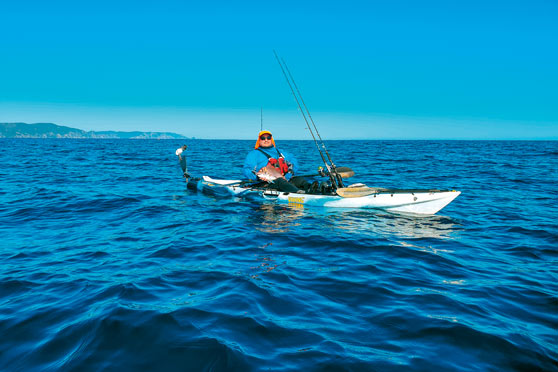
It’s often a massive surprise as the battle begins to slow and you start to get the first of the typical snapper head shakes – the kingfish has magically turned into a snapper! Snapper fight far harder and far longer on bibbed lures and will give you far more respect for just how good they are and New Zealand’s most popular sport fish.
|
----- Advertisement -----
|
This article is reproduced with permission of |

Fishing Reports Visit Reports
Manukau/West Coast Fishing Report - 15/10/26
Big spring snapper in 60 metres. The El Niño weather pattern isn’t going to be... Read More >
Rotorua Fishing Report - 15/10/26
Solid start to the season! The Rotorua lakes have all started the season well, and... Read More >
Tutukaka Fishing Report - 15/10/26
Big snapper in shallow. Things remain relatively quiet on the fishing front out of Tutukaka,... Read More >
Tauranga Fishing Report - 15/10/26
Bait and temperature on the rise. It’s been great to get out and see some... Read More >


Friday 23 October 2026
Major Bites
 - -
- - Minor Bites
 - -
- - Saturday 24 October 2026
Major Bites
 - -
- - Minor Bites
- -
Comments