
Braid - what you need to know

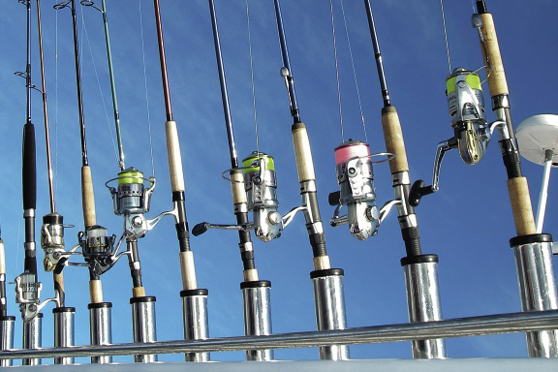 Am I the only soft-baiter hoping to see gel-spun polyethylene lines evolve further still? While there’s no denying PE lines – commonly known as braid (even when their fibres are actually fused) – have radically changed the fishing landscape, I’m already taking their wonderful qualities for granted and want to be offered even more!
So what would make the perfect soft-plastic line? As far as I’m concerned the perfect candidate should have:
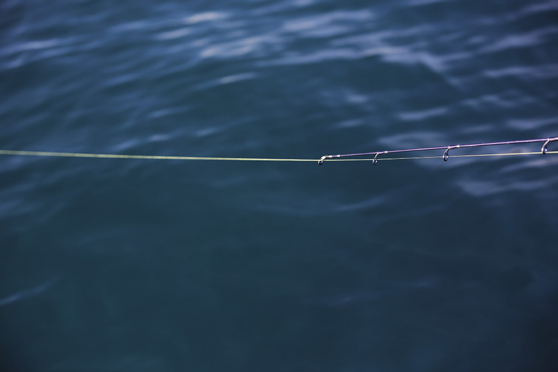 High-visibility
- Colour-fastness
- Thin but strong
- Easy and reliable knot-tying capabilities
- Good castability (coming off the spool readily and without catching or tangling)
- Minimal memory
- Low stretch
- Durable, with good abrasion resistance
- Slightly positive buoyancy.
As you can see, there are quite a few characteristics required. Small wonder then, that despite having used dozens of different braids over the years – each with different handling and performance attributes depending on its composition and manufacture – I have yet to find one that ticks ALL the above boxes!
NOW LET’S TAKE a closer look at the qualities required of gel-spun lines when fishing with soft-plastic tackle, but keep in mind that:
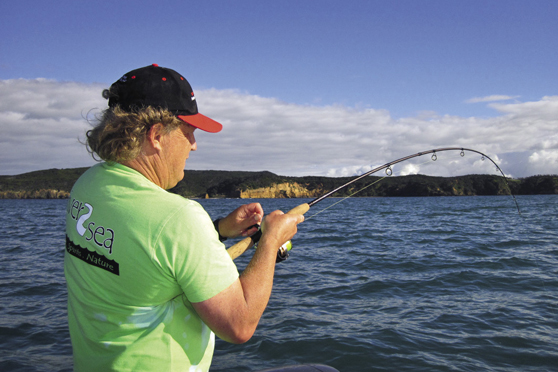 I’m writing this article from my own experiences with PE lines, but I am not a PE line manufacturing expert;
- The making of PE lines is a rapidly developing technology, so things may have improved or changed since I last used some products; and
- I simply might not have come across the right brand of line yet (so let me know if you’ve got a product that ticks all my boxes, please…)
High visibility
I can’t stress enough how important high-visibility lines are to competent soft-bait fishers. Bright colours such as fluoro lime/chartreuse, yellow and pink work best, as they really stand out from the sea and sky. High visibility lets us see and react to any bites more easily. Bites are indicated by the line 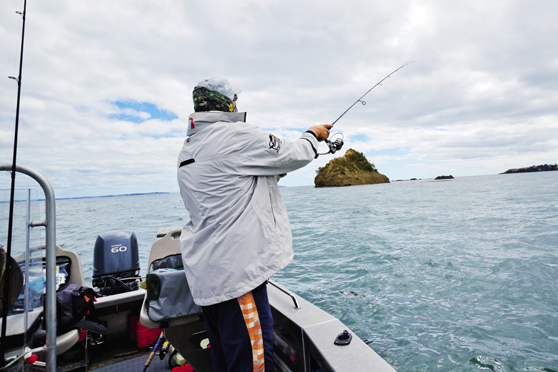 jerking, suddenly slackening or streaking away, long before they physically register on the rod tip. In fact, around two-thirds of my hook-ups come from my responding to ‘line bites’ rather than ‘rod bites’, resulting in many more fish being caught than would otherwise have occurred.
It is therefore to our detriment that PE material lines don’t readily absorb colours (as you have probably discovered when spooling up, with colour residue accumulating on your hands and fingers). While some brands retain their colour better than others, most become so faded after half a dozen fishing sessions that I remove the line, reverse it, and re-spool to take advantage of the brightness offered at the other end of the line as well.
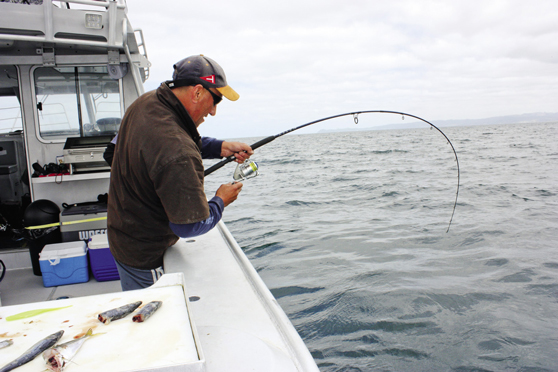 However, over the years I’ve made some interesting observations. When some of the thicker lines fade to become almost white, bites start getting easier to see again – which made me wonder if we’re going down the wrong track. Instead of using colours that quickly fade, perhaps the line’s fibres should be bleached a bright white instead?
This notion was supported three or four years back when I was given a spool of Berkley Nanofil to test (17lb/8kg from memory), a PE line that consisted of hundreds of molecularly-linked Dyneema nanofilaments shaped into what Berkley termed a ‘uni-filament fishing line’. While still relatively thin (though thicker than some other PE lines of similar strength), the unified filament process made it feel and handle like a smooth monofilament. In practice this equated to great casting qualities – my lures went a country mile – and while there was a slight tendency for the line to gently undulate when newly cast and lying on the water’s surface, this aspect decreased with use. But what I liked in particular was the colour – Clear Mist – basically white. I found this line so easy to see in most conditions, and despite hard use it lasted a couple of years, too!
 Unfortunately for us salties though, the New Zealand wholesale distributor decided to leave the Nanofil to the freshwater folk, and concentrate on pushing their Berkley Fireline brand, including the more recently introduced Exceed (which I can understand, as these products are very good).
But who knows what’s on the horizon? While engaged in writing this section, two spools of very white prototype braid were dropped on my desk to try! So after spooling the lighter 8kg (17lb) eight-strand line onto a Shimano Rarenium reel, I took it out and was stoked to see many of my specific requirements fulfilled. All that remains is to see how this braid lasts and whether the inevitable discolouration from constant handling becomes an issue.
|
|
This article is reproduced with permission of |

Fishing Reports Visit Reports
Raglan Fishing Report - 12/11/26
Big spring snapper. With the more settled weather over the last couple of weeks there’s... Read More >
Mercury Bay Fishing Report - 12/11/26
Snapper hit and miss. Most reports have been telling us it’s becoming more difficult to... Read More >
Northland Fishing Report - 12/11/26
The switch has been flicked on! Call it what you want, El Niño, global warming,... Read More >
Tauranga Fishing Report - 12/11/26
Snapper and kahawai in close. Again, we start on a positive note, with some nice... Read More >


Saturday 21 November 2026
Major Bites
 - -
Minor Bites
 - -
Sunday 22 November 2026
Major Bites
- - Minor Bites
- - Popular Articles

Softbait Fishing - Part 1 - gear selection
John Eichlesheim writes an article about selecting the right equipment for softbait fishing... Read More >
Softbait fishing Pt 2 - tips and tricks
Techniques, tips and tricks of softbait fishing – getting the most from your soft baits.... Read More >

Surfcasting - setting yourself up
Gary Kemsley helps sort out the necessary gear for intending surf fishers.... Read More >

Squid - How to catch them
Squid fishing is a rapidly growing aspect of fishing - Paul Senior shares some hints and tips to get started.... Read More >
Comments