
Bluefin Tuna Tactics
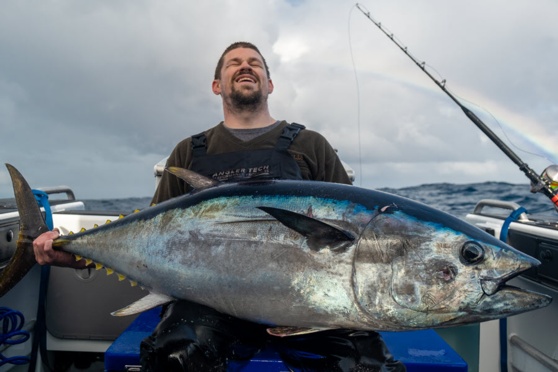
The southern bluefin tuna (SBT) fishery is just around the corner for the east coast of the North Island, with catches already happening on the South Island’s eastern shores meaning the migration is on its way and will be here before you know it! This fishery is relatively new to rec fishers and only came to light in 2017. Since then, we have learned a lot, trying and trialing many techniques but, as in all fisheries, we can never stop learning.
This article will highlight some key insights we’ve gleaned over the last five years and shine some light on the fishery to help those who want to get out and target these awesome fish. The SBT migration past East Cape and up the North Island runs from the start of June through to August. As the years go on, the season seems to grow – this may be a result of keener fishermen each year stretching the season. Nevertheless, for the guys who want the peak of the run, it seems June to August will give you your best chance.
Locations
For trailer boats, there is no better place to start than Waihau Bay, East Cape. This is because deep water pushes very close to the coast. SBT seem to travel up the 1,000-1,200m line, and this location offers your best chance to intercept them with the least boat travel. Please keep in mind there are strong currents in this area, and caution is advised.
Further north, ports such as Whakatane and Tauranga can access east of White Island and the Rangatira Knoll. From there you then move up to Whangamata, Tairua, and Whitianga, where boats will target them around the Mayor Knolls up to the Alderman Knoll and Mercury Knoll. These areas seem to have the highest concentration of fish before they continue past on their migration.
.png)
Finding the fish
When out fishing, keeping an eye out for birds has led to my best successes. Watch their movements keenly, as when they start ‘swinging’ or flying around the same area repeatedly, there is food on offer – usually in the form of fish feeding. Finding either whales or dolphins is also a great sign as both mean there is food in the area, and eventually, the tuna will find it and feed as well.
The Gear
Our SBT seem to range from 10-180kg with school fish of 60-80kg very common. Because of this large size range, you want to make sure you’re not under-gunned. However, these fish can become line shy, and hence the use of fluorocarbon has become common for leader material. It will pay to have your reels spooled with at least 500-1,000m of 50-80lb mainline.
.png)
“For southern bluefin tuna we prefer smaller lures ranging from 6-10 inches.”
If smaller reels are used, the choice of braid backing will give you the added capacity you will need. The main reason for the larger capacity is that these fish are schooling fish, and your chances of hooking multiple fish are increased. Therefore, it’s recommended to continue driving for a while after the first hook-up, hoping for a second or third and sometimes up to five or six fish at once!
From the mainline, we run a 200lb wind-on leader of 6m connected to a bite leader of 200-300lb mono. As mentioned earlier, in some cases, we will run 150-200lb fluorocarbon leader to get bites when the fish are picky. We keep the leader relatively short – 1.5- 2m – as we find it easier to wind the fish to the boat than leadering, leaving just a single grab on the leader to have the fish boat side. Tuna have a nature of circling under the boat, and it’s best to let the angler use the rod to keep the line away from the boat as the fish comes close. A lot of tuna are lost in these final metres, and it pays to be calm and not rush them boat side.
.png)
“One crucial tactic we employ with our tuna spread is running birds and squid chain teasers."
Lures
The never-ending question for all fishers – what lures to run! For SBT, we prefer smaller lures ranging from 6-10”. Because we are fishing in the winter months, the conditions can be sporty, so finding lures that will ‘hold in’ is key sometimes. All your standard colour patterns work, but lumo or green lures always seem to appear in photos. One crucial tactic we employ with our tuna spread is running birds and squid chain teasers.
These are run in front of the lures and help with a few things:
- The bubbles and splash help hide your leader
- They keep your lure in the water with the added weight in front
- The creation of extra noise helps the fish find and eat your lure
Note that these can disqualify your catch if fishing in a comp or for IGFA, however.
The added teasers in front of the lures have really improved our catch rate in the last couple of years, and can get a bite when it gets quiet. We will still keep some lures just on their own (what we call naked) to make sure we offer the fish a range of choices and options.
.png)
“Take lots of ice (more is better) and a good, insulated fish bag that can cover the whole fish.”
Hook rigs
For the best hook-up rate we run double hook rigs with 8/0 or 9/0 hooks. The hooks are close together, and we make sure they are hidden inside the skirts. The tuna eat the lures head first, so it pays to have hooks well forward in the skirt.
If you plan on releasing your fish, then a larger single hook is a better option. A single 10/0 in all size lures is best and makes for the best hook-up rate and also easier de-hooking – SBT don’t have a bill to hold onto, so this can be tricky!
.png)
Boat set up and speed
For SBT fishing, we like to troll at 5.5-6.5 knots. We run a standard staggered pattern of lures like we do when marlin fishing, usually running five lures, although we start with our first lure further back on the fourth wave. Outriggers will help keep your lures spread and from tangling, but if you don’t have the option of outriggers, a lot of guys will run skirted lures on the back three lures with two deep diving lures close to the boat. This setup will help keep tangles to a minimum.
Being prepared
If you intend to keep these large, sought-after eating fish, make sure you have the right means to look after them. Take lots of ice (more is better) and a good, insulated fish bag that can cover the whole fish. We recommended a marlin-style bag as they are long enough that you can completely cover the whole fish.
.png)
One other trick is to have extra ice back on land to replace what the fish has already burnt through. Once on board, we will dispatch the fish by iki and then bleed the fish while the heart is still pumping. Once bled, we gut and gill the fish – this allows us to pack ice in the gut cavity, which will help cool the fish from the inside. Getting the fish’s core temperature down is the key to maximising the eating potential of these delicious specimens!
As a side note if you’re heading offshore, please ensure your safety equipment is up to date. Lifejackets, EPIRB and VHF must all be in working order, and make sure to log sure you make a trip report with Coastguard and keep safe out on the water.
New Zealand’s southern bluefin tuna specialists – we have all the latest gear, advice and intel to help you land your dream fish this winter
.png)

June 2023 - Luke Davis
New Zealand Fishing News Magazine.
Copyright: NZ Fishing Media Ltd.
Re-publishing elsewhere is prohibited
Fishing Reports Visit Reports
Tauranga Fishing Report - 28/05/26
Tarakihi on the bite Trips are few and far between at this time of year,... Read More >
Canterbury Fishing Report - 28/05/26
Fresh and salt turning it on! It is not very often I get to say... Read More >
Bay of Islands Fishing Report - 28/05/26
Lures paying dividends We finally had a break in the SE winds that have been... Read More >
Manukau/West Coast Fishing Report - 28/05/26
Snapper and gurnard in the harbour The weather has finally taken a turn for the... Read More >


Major Bites
Minor Bites
Major Bites
Minor Bites
Comments