
Ban all nets - the American solution

The Americans have found a solution to their sport fishing problems. They have forced commercial fishing nets offshore, far away from recreational fishing centres.
The story starts in Texas in the late 1970s when the two most important sport species, red drum and seatrout, were being wiped out by gillnets and purse-seiners. Sport fishermen and environmentalists did not sit by passively. They got organised and went to the politicians.
The government was very aware of the huge voting lobby the sport fishermen represented so they acted. In 1981 gillnets were banned in Texas and in 1988 the state went one step further and banned all commercial nets within nine miles of shore. The results have been impressive. Within a couple of years sportsmen were reporting much improved catches. By the time five years had elapsed, even the scientists could measure the build up in stocks. Today Texas has some of the best recreational fishing in the world, certainly heaps better than we have here.
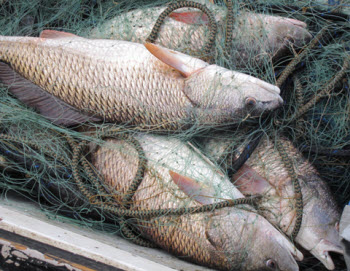 Despite all the predictions of disaster by the commercial fishing lobby the price of most fish has not climbed at all. The only fish that’s increased in price has been the very lowest grades; the fish that used to come out of those gillnets.
Why hasn’t the price of most fish gone up? The answer is simple.
With the gillnets gone, the wasteful killing of undersized fish stopped, and the tonnes of fish left to rot in gillnets also ended. When the trawl nets were banned inshore, the destruction of the seafloor’s ecosystems came to an end and the thousands of tonnes of fish they discarded were saved. With much of the waste eliminated, the commercial fishers could still make their money while the recreational fishery got better and better.
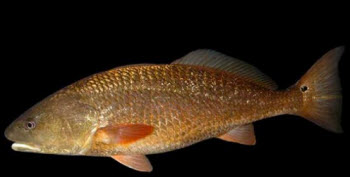
The other states around the Gulf of Mexico got the idea and today they all have gillnet restrictions in place. The latest state to join is Florida. It took Florida so long to act because the commercial fishing lobby had a stranglehold on the government, just as they seem to have here in New Zealand. In Florida the sport fishermen and environmentalists got together, like they did in Texas. At first, all they could get was a ban on the sale of their most important sport species, like redfish. This helped, but it wasn’t enough because it failed to eliminate wasteful fishing methods.
When the sport fishermen and environmentalists saw the commercial boys had the government under their control, the sport fishers went right to the public. They collected half a million signatures and got a referendum on the ballot to ban nets. The referendum passed with an overwhelming majority and by July, 1995 all gillnets, and any other nets larger than 500 square feet, were banned within three miles of shore. This pushed offshore all the purse-seiners, otter trawls, conventional trawlers, beach seiners, and gillnets that were being used to catch fish in shallow waters.
Just as in Texas, this meant the end of much of the fishing waste that plagued the industry and, just as in Texas, the price of most fish hasn’t gone up at all. Its only been two years since the ban, but Florida’s anglers have already reported a big improvement in fishing quality. No doubt, even the scientists will be able to measure the improvement in another few years.
What does the American experience have to teach the recreational fishermen here in New Zealand?
1. The power of the commercial fishing lobby can be overcome. To do that we need to organise, spend some money, and focus on the changes we want. We share a common interest with the environmentalists who also want to ban gillnets. It stands to reason that we work with them to achieve our common goals. Over 90% of all recreational fishers would like to see a gillnet ban. Hell, even the majority of commercial fishers would like to see a gillnet ban on reefs. That’s over half a million people right there – more than enough to get a referendum on the ballot.
2. In my opinion, the Quota Management System has failed us. Snapper, kahawai, kingfish and trevally populations are the same, or lower, than they were before the QMS. The system will do nothing for us, nor will the politicians, until they feel the force of our lobby.
3. Fisheries scientists are very slow to spot trends, and they are highly influenced by the pressures of the commercial sector. Recreational fishing results are a far more sensitive indicator of the status of the fishing stocks.
4. Because the QMS actually encourages waste by promoting high-grading, it has made the situation worse for those of us that fish inshore. Waste is the biggest enemy of our fishery. The only way to control it is to eliminate fishing methods that kill, but do not harvest fish.
Most waste comes from gillnets, beach seines, and shallow water trawls. The problem could be eliminated by one rule: no nets within five kilometres of any land exposed at low tide.
The other major source of waste is caused by gut-hooking small snapper. That could easily be eliminated by controlling hook sizes and configurations for both recreational and commercial fishers.
Think it over. Are you satisfied with the fishing? Are you willing to do something to improve it?
A Blast from the Past! This article originally appeared in NZ Fisherman magazine – July - 1998
A Blast From The Past!
|
July 1998 - by Mark Feldman |

Fishing Reports Visit Reports
Manukau/West Coast Fishing Report - 15/10/26
Big spring snapper in 60 metres. The El Niño weather pattern isn’t going to be... Read More >
Rotorua Fishing Report - 15/10/26
Solid start to the season! The Rotorua lakes have all started the season well, and... Read More >
Tutukaka Fishing Report - 15/10/26
Big snapper in shallow. Things remain relatively quiet on the fishing front out of Tutukaka,... Read More >
Tauranga Fishing Report - 15/10/26
Bait and temperature on the rise. It’s been great to get out and see some... Read More >


Wednesday 28 October 2026
Major Bites
 - -
- - Minor Bites
 - -
- - Thursday 29 October 2026
Major Bites
- - Minor Bites
 - -
- -
Comments