Choosing the Right Jetski
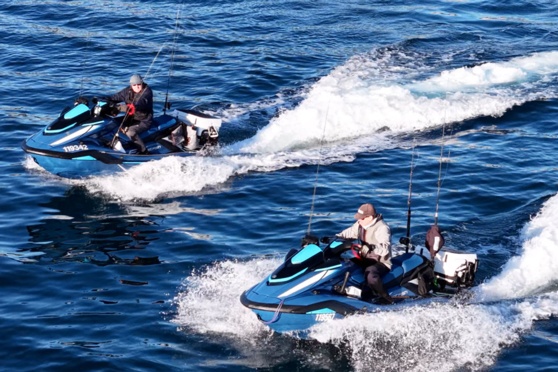
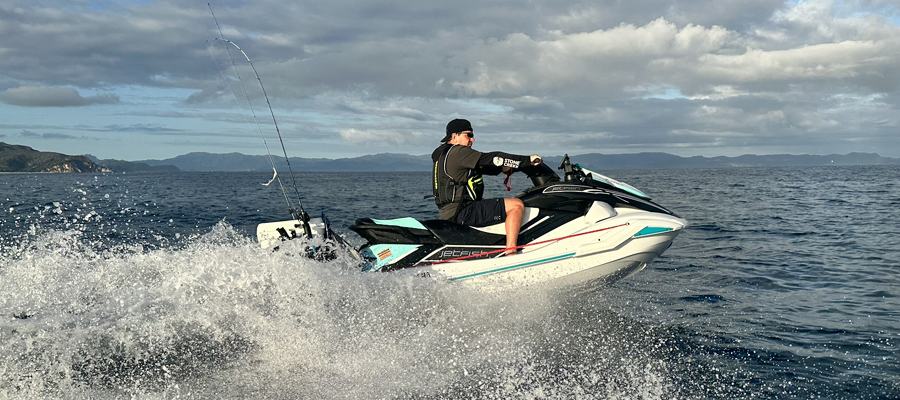
The first step to successful jetski fishing is choosing the right machine.
Not every jetski is equally suited to carrying fishing gear, travelling offshore, and spending long days on the water. Stability, hull design, fuel capacity, storage, payload, range, and towing requirements all need to be considered before you buy.
A good fishing jetski needs to do much more than go fast. It needs to provide a stable, practical platform while retaining the performance and manoeuvrability that make personal watercraft so much fun.
In this guide, we look at what to consider when choosing a jetski for fishing in New Zealand, including the features that make a difference to anglers and important considerations for a suitable trailer.
Size – three-seater or two-seater?
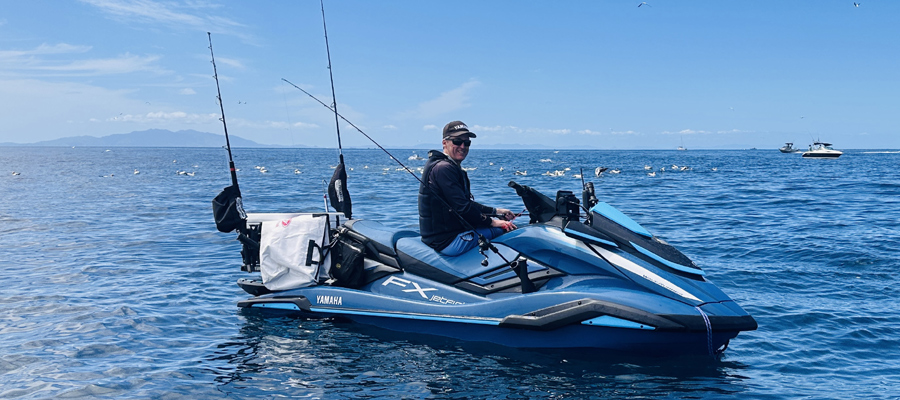
Consider if you’ll be fishing one or two up. There's not a lot of room on small watercraft like jetskis, so space and organisation are critical factors. Two adults fishing on a ski can be cosy to say the least, so any extra space on a bigger craft in those situations is worth considering.
Naturally aspirated or supercharged?
Current models of naturally aspirated jetskis can reach top speeds of around 100kph – plenty quick enough to get to your favourite fishing spot. These models generally run on 91 octane fuel, whereas supercharged skis require higher octane levels and are generally more expensive to run and maintain.
Fuel Economy
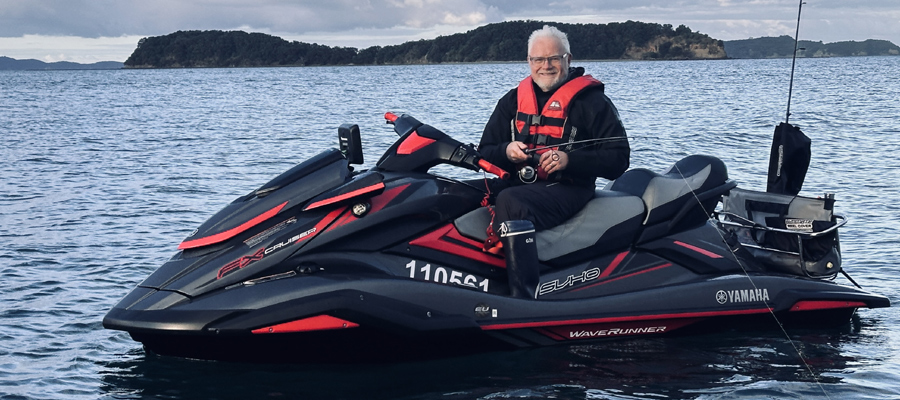
Fuel economy varies between makes and models, and several factors can cause considerable variation in manufacturers' general consumption figures. As you’d expect, fuel consumption varies massively at different speeds, sea conditions, and loads on the ski itself. Repeated hard acceleration will use more fuel than a steady cruise, and opening the throttle right up will rip through fuel like there’s no tomorrow! Straight-line cruising is better than lots of dodging and weaving, and most skis have a speed sweet spot where fuel consumption is lowest for distance travelled – usually around 20-25 knots. For example, the Yamaha VX Cruiser HO recorded fuel consumption is:
- 12.1 L/h at 21 knots
- 19.3 L/h at 33 knots
- 27.3 L/h at 44 knots
- 51.1 L/h at full throttle
Headwinds and swell or strong currents heading in the opposite direction from your travel will also increase consumption.
The table below is a useful reference for typical cruise speeds and fuel economy across various jetski types.
| Type | Examples | Economical cruise | Cruise consumption | Full-throttle consumption |
|---|---|---|---|---|
| Lightweight recreational, 60–100 hp | Sea-Doo Spark, Yamaha JetBlaster | 35–45 km/h | 8–14 L/h | 20–30 L/h |
| Mid-size naturally aspirated, 100–140 hp | Yamaha VX, Sea-Doo GTI 130 | 40–50 km/h | 12–19 L/h | 30–45 L/h |
| Full-size naturally aspirated, 150–170 hp | Sea-Doo GTI/GTX 170, Kawasaki STX 160, Ultra 160 | 45–55 km/h | 17–25 L/h | 45–60 L/h |
| High-output naturally aspirated, 180–200 hp | Yamaha VX HO, FX HO 1.8/1.9 L | 45–60 km/h | 19–28 L/h | 50–65 L/h |
| Supercharged performance, 230–250 hp | Sea-Doo GTX 230, GTR 230 | 50–60 km/h | 24–35 L/h | 60–75 L/h |
| Supercharged performance, 300–325 hp | Yamaha SVHO, Sea-Doo 300/325 | 50–65 km/h | 28–42 L/h | 70–95 L/h |
Stability, hull design, and trimming
The engineering and design challenge for all watercraft is the trade-off between stability at rest and handling while underway. Modern skis are amazingly stable at rest, which makes fishing pleasant and safe, provided you use some common sense.
Recent innovations for the best balance of ride and stability include the ability to trim the ski while underway – an extremely valuable feature and a significant improvement for riding in a variety of conditions such as wind against tide, or swell. Trimming works simply by changing the angle of the jet exhaust, which in turn changes the angle of the bow to stern in the water. Trim can be changed in small increments to optimise comfort and speed.
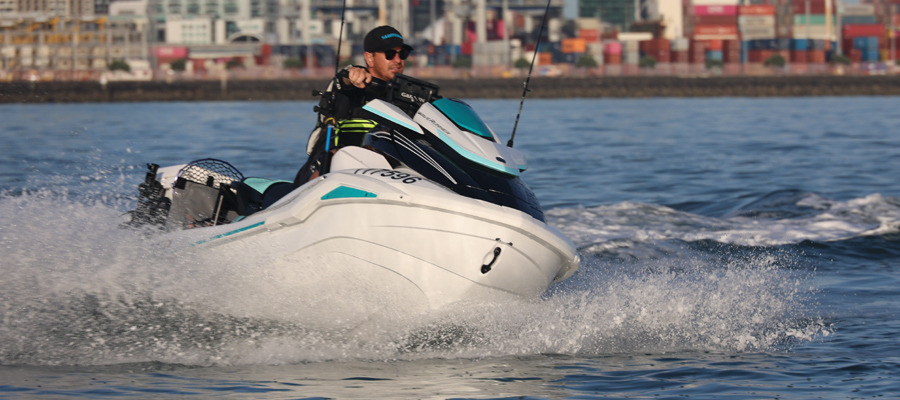
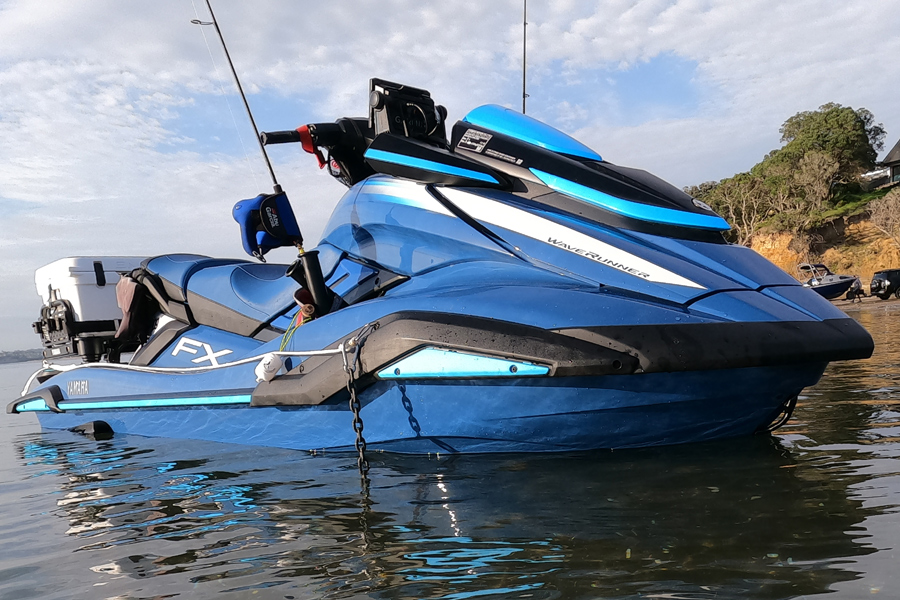
Other aspects of hull design include wider hulls and a lower centre of gravity. Yamaha’s 2022+ FX series added a new ride plate and moved sponsons 50mm forward to raise the bow slightly, giving a drier, more stable ride, especially in chop. Recreational and touring models tend to be a bit wider with a shallower V-hull, whereas performance skis have a deeper V-hull and sharper chines for a better ride in less favourable conditions. Generally, a larger ski will ride better and be more stable.
New or used?
As with any product that is improved over time, more recent jetski models tend to have engineering and design improvements not seen in previous models. Examples include the trim feature mentioned above, forward and reverse being simple hand throttles on the handlebar for precision maneuvering, and electronic innovation such as anti-theft technology. Cruise control is another excellent feature for calm conditions and incorporates a safety feature where letting go of the throttle takes the ski back to idle mode.
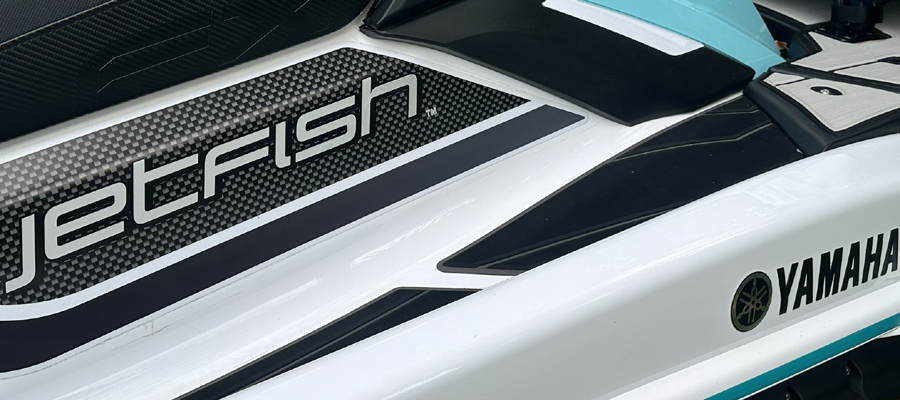
Modern fishing-specific models, like the Yamaha JetFish, are engineered and fitted with equipment like rod holders, chilly bins, and fishfinder/chartplotters, meaning less (or no) need for aftermarket upgrades to start fishing!
Budget considerations will also dictate options between new and used. A second-hand ski will be more affordable; however, you need to make sure it’s been well maintained and cared for. A proven mechanical and service history with minimal saltwater damage are likely to be good predictors of future reliability and ongoing maintenance costs. Prices of second-hand skis depend on age, size, condition, trailer spec, and extras installed. New skis come with a comprehensive manufacturer's warranty and, unless you buy from a dealer who will provide you with a warranty, second-hand skis don't. A quick checklist if buying a used ski would be as follows:
- Condition of trailer – check bearings and look for rust around the frame or components. A decent trailer will set you back anything between NZ $5,000-10,000 depending on components and construction.
- Engine hours and maintenance schedule with receipts.
- Models and condition of the electronics. For example, the fishfinder’s specifications and transducer quality, and the quality of the installed charts/charting system.
- Condition of hull seats and overall appearance of ski. Has it been garaged and cared for?
- Is the price consistent with the current market of second-hand jet skis and for the model you are considering?
- Are accessories such as rodholders, cooler, anchor, etc., included in the deal?
The cost of having a qualified technician check the ski before you agree to a deal is definitely money well spent.
Brands
The three main manufacturers – Yamaha, Sea-Doo, and Kawasaki – all produce reliable, high-quality jetskis. If you’re buying new, brand preference and experience, pricing, warranties, proximity to a local dealer, and features/accessories fitted for fishing are all essential considerations.
Talking to your local dealer and taking a demo ski for a run is invaluable for making decisions around brands and models. Is the ski good to ride through sea conditions and does it feel both comfortable and stable at rest? Both are important factors for enjoying a great fishing experience.
Trailer selection
Galvanised trailers are generally cheaper than aluminium models, but over time will rust. They are also heavier than comparable aluminium trailers; however, that’s less of an issue with smaller craft like jetskis when it comes to towing. Galvanised trailers that are finished with a powder coat will weather better if being used in salt water than uncoated versions.
Regardless of the materials used for construction, any trailer needs to be maintained and looked after if it’s going to serve you well. Thorough washing after immersion in salt water is essential, preferably using a specialised salt-removing product such as Salt Attack. A thorough rinse around hubs and all fastenings is recommended, as is ensuring that the internal areas of hollow sections for galvanised trailers are thoroughly rinsed. Some trailers will have a hose plug fitted specifically to rinse these internal areas, so it's just a matter of plugging the hose in and leaving it for a minute or two – nice and easy!
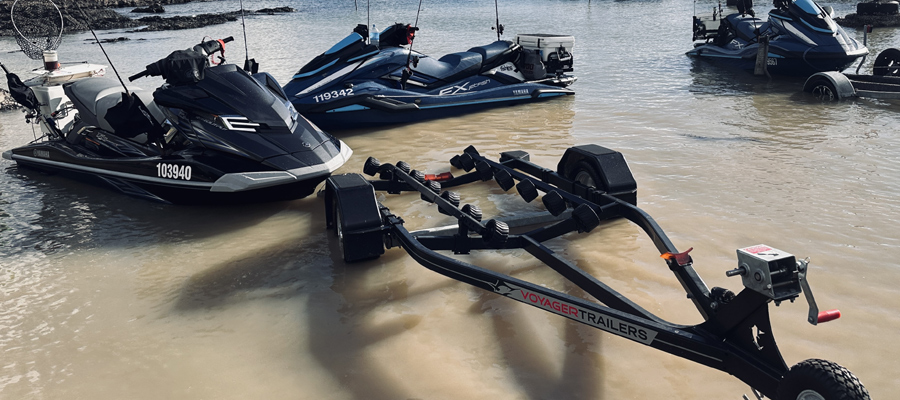
When it comes to trailer fit-out, a series of rollers or the bunk-style option will provide support for the ski while travelling, although there are pluses and minuses for both. The main benefit of a bunk-style setup is that it offers even support to the keel of the ski through a significantly greater surface area when compared to rollers. It does require deeper immersion to launch/retrieve the ski than a rollered trailer, and that can be quite critical when beach launching.
A winch rope or strap in good condition and a safety chain attached to the bow eye (the U-shaped fitting mounted through the bow) complement rear tie-downs to secure the ski to the trailer. Rear tie-downs provide extra security and a backup in the event the bow eye attachment fails for any reason, as both the trailer winch hook and the safety chain are secured to that point. Simple strap tie-downs do the job, and stainless-steel components are preferable.
Other maintenance should include a regular check of wheel bearings and early attention to any spots of rust that might be cropping up. Liberal use of good anti-corrosion products such as Corrosion X or CRC will keep things moving freely and minimise areas of rust developing.
Check lights and indicators are in working order and a spare wheel is a top idea If you’re towing any distance.
Another handy hint is to ensure your trailer is locked to your vehicle and can’t be removed. Returning from a day out and discovering someone felt they needed your trailer more than you is the last thing you need at the end of a great day on the water. Heading off to arrange a temporary trailer also provides an opportunity for thieves to load and escape with your ski! It may sound crazy, but it has happened with jetskis and boats.
Common questions
What should I look for in a jetski for fishing?
Stability, hull design, fuel capacity, storage, payload, range and towing. A fishing jetski has to be a stable platform, not just a fast one.
Is a two-seater or a three-seater better for fishing?
It depends how many of you fish. Two adults on a small ski is tight, so a larger craft is worth considering if you fish two-up.
Naturally aspirated or supercharged?
A naturally aspirated ski can reach about 100km/h and usually runs on 91 octane. Supercharged skis need higher octane and generally cost more to run and maintain.
Continue Reading


Sunday 29 November 2026
Major Bites
 -
 -
Minor Bites
 - -
Monday 30 November 2026
Major Bites
- - Minor Bites
- -