
What size softbait to use
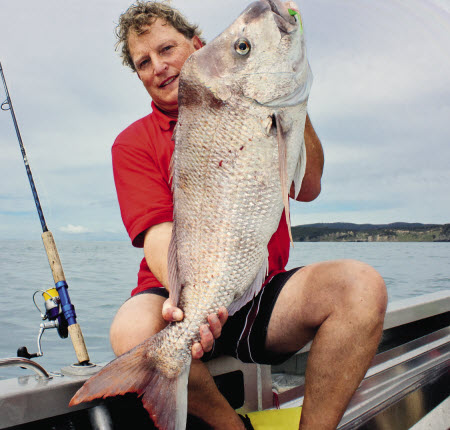 Soft-plastic lures can be incredibly effective on snapper in the right hands, and almost any type, brand, size or colour of soft-plastic will entice a bite at times.
But there are also occasions when being much more specific in one’s choice – and knowing why – pays huge dividends.
Much of this comes down to picking the best possible lure size for the situation. My experience indicates that soft-plastics from two to 10-inches long (and even larger!) can entice and produce snapper, but most of us ignore the biggest and smallest of these candidates, narrowing our selection down slightly to the more consistent 4-7in sizes. After all, while the very smallest lures do sometimes attract bites from decent fish, anglers generally have to wade through too many small fish to make them practical, and the largest soft-baits can mean that many modest-sized (yet worthwhile) fish are intimidated by the lure, so don’t bite.
However, plenty of difference between sizes remain, and more often than not a certain size will attract a lot more attention than others.
Several factors determine the size of soft-plastic lure that’s likely to be effective including: the time of year, the prey being eaten (‘matching the hatch’), and the size of the fish targeted. In addition, the lure’s casting and sinking abilities, its visibility, and the quality of its sonic vibrations are also important.
Time of year
Many anglers firmly believe you should fish with bigger soft-plastics during the warmer months and with smaller ones over the winter period. This supposedly addresses the problem of the snapper’s metabolism slowing down in response to cooler temperatures, making them more likely to want a quick snack than a full-blown meal. And I agree to a certain extent (there’s no doubting that small chunk baits will often do the business on occasion where larger ones fail completely). However, I have used a mix of 7-inch Gulps and 5-inch Z-Mans almost exclusively over recent winters and caught good numbers of medium to very large snapper. After all, a 7-inch soft-bait is still not that big.
When winter soft-baiting, we’re often casting well out, probing shallow, otherwise unfishable locations with our comparatively modestly sized offerings (compared to whole yellowtail or mullet-head baits, say), which we jiggle enticingly in the strike zone on lightly weighted lead-heads. This is a great way to cover lots of likely looking area and present our baits to plenty of potential candidates. Some of them are going to want to eat our tasty looking morsels.
That said, I would rarely use a 7in soft-bait when fishing, say, the Rangitoto Channel in summer – despite it being alive with snapper at that time – as you’re realistically only going to encounter fish to about 3.5 kilos. Consequently, 4 to 5-inch offerings will do the job better, and that brings us to our next determining factor…
A size to suit the fish you’re targeting
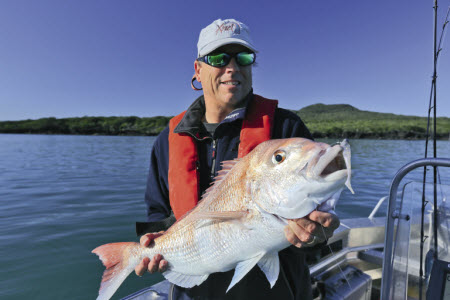 Obviously there are exceptions, but just as when you’re fishing baits, bigger snapper are more likely to be attracted to bulkier soft-plastic lures than smaller ones (and vice versa, with greater numbers of smaller snapper being caught on 3- to 4-inch soft-plastics).
It took me a long time to really appreciate this point initially – which is mostly why I didn’t catch a snapper over 20lb (9kg) on soft-plastics for five years, despite catching literally thousands to around 8.5kg. Then I started using 7-inch Gulps, and caught a bunch over the next two years!
However, if you want to catch lots of nice, tasty pannies for dinner, rather than the more occasional large fish, use smaller soft-plastic lures. Again though, there will always be exceptions – especially when the snapper are feeding on reasonably small prey items, such as anchovies/juvenile pilchards, shrimps, crabs, sea worms and the like. Which brings us nicely to ‘matching the hatch’…
Imitating snapper food
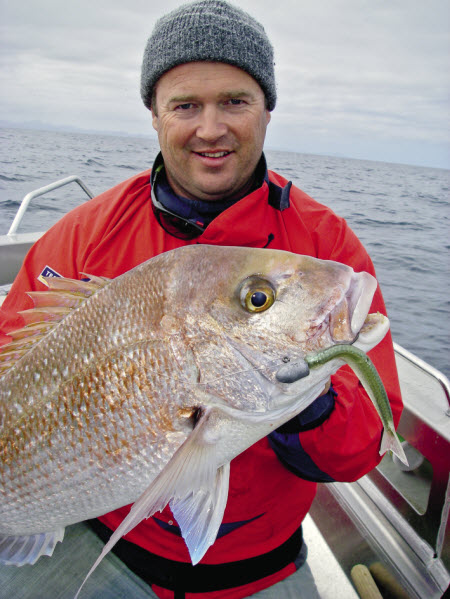 In situations such as those mentioned above, it is possible to catch a wide range of snapper sizes – including some surprisingly big fish – by using soft-plastics that are roughly the same size and colour as the prey they’re eating. This strategy is called ‘matching the hatch’ and becomes necessary when snapper become so focused on the predominant form of food present, that they become less able to recognise other potential prey items.
An alternate strategy, used to good effect in work-ups, is called ‘odd man out’, where you deliberately select a lure that stands out from the zillions of other small baitfish. This generally means using bigger and/or brighter lures, which often results in fewer bites overall, but those you do get tend to be from larger, more aggressive fish.
As for bottom-feeding scenarios, try modest sized 4 to 5” models with wriggly paddle or grub tails in ‘New Penny’ (light brown) colours. If the water’s murky or dark though, bright yellow, chartreuse or luminous colours can increase the numbers of bites. A heavier lead-head (¾ to 1oz weights are typical) ensures your offering stays down and trundles along the sea floor where the snapper are feeding.
Whatever strategy you deploy, ensure your lead-head is armed with a hook that’s going to suit the size of soft-plastic tail you’re using, as well as handle the size of fish you may hook. This generally means a 3/0, which is great for most soft-plastic lures and should handle the biggest of snapper – but 2/0 can suit 3 to 4” soft-plastics better. This size hook’s shank is usually shorter, so doesn’t stop the tail wriggling to the same degree as a larger hook, and the smaller gape sees the hook point remain closer to the lure, making it more likely both will end up in the snapper’s mouth.
Nowadays we see far more lead-heads with shorter-shanked hooks than were previously available, and that’s good; while they can look a bit odd when fitted into the longer soft-plastic lures (i.e. 7”), they allow more ‘wiggle’ and still hook-up efficiently!
Casting and sinking attributes
The size of a soft-plastic lure has a big bearing on how far it can be cast and the speed at which it sinks afterwards. For example, it often pays to use large-ish 6 or 7” soft-plastics when prospecting extensive areas of territory, as the extra weight enables better casting distances. However, the extra bulk also means the lure is held up by any current more during its descent – which can be a good or bad thing: good, if you’re fishing reasonably shallow territory and want the lure to spend as much time as possible in the strike zone whilst sinking; bad if you’re in deeper water and it won’t sink fast enough to reach where the fish are feeding. In the latter instance, simply use a heavier lead-head to reduce or overcome this problem.
On the other side of the coin, a smaller, slimmer soft-plastic is less affected by the tidal flow, so penetrates the water column more efficiently to get down deeper – useful to know when your heaviest lead-head won’t quite get down with a larger soft-plastic attached (or perhaps you’re too lazy to change to a slightly heavier lead-head).
Attracting increased attention
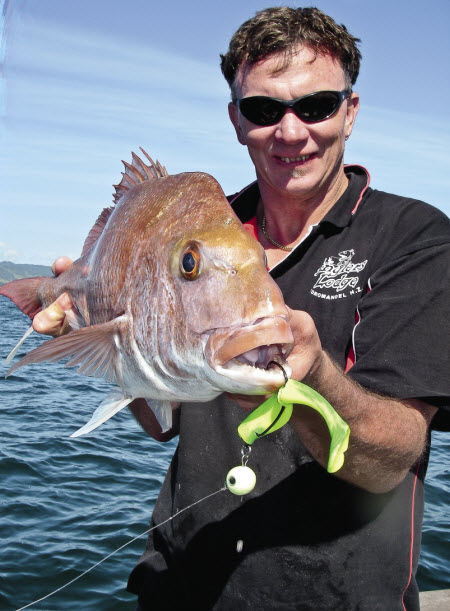 Sometimes the water is dark, murky, or both, making it harder for snapper to see your lure. While utilising soft-plastics with bright greens or yellows and/or fluorescent/luminous qualities will certainly help, sometimes there’s no beating size – a big, glowing soft-plastic lure can get bite after bite when everything else fails miserably.
For example, I recall fishing on a Wavedancer Charter a couple of years ago. We’d done pretty well, but then there was a lull. So, feeling slightly bored, I opened up a packet of massive and brightly coloured Waveworms I’d brought along to target kingfish, and put one on. It immediately attracted bites and hook-ups, while all around me the other anglers continued to work their various lures without reward. More interesting still, the snapper caught were not especially big, averaging around 2.5-4kg, so despite these lures being half their length, they couldn’t resist them.
But it’s not just increased visibility that can make a significant difference; decent-sized lures with an inherently mobile tail (i.e. a paddle-tail or curly/grub tail) can create a lot of disturbance when dragged through the water, during the descent and on the retrieve. The vibrations travel very effectively through the water and are picked up by fishes’ lateral lines, alerting them to the lure’s presence and often triggering strikes. Keep in mind though, that while a big lure is capable of generating lots of ‘submarine noise’, the bigger and more heavily constructed it is, the heavier the lead-head needed to make it thrash nicely through the water.
Finally, there are usually plenty of different ways to ‘skin a cat’ – especially where soft-plastics are concerned – so if you don’t have what seems to be required,it’s time to experiment with other sizes and colours. After all, ‘Every dog has its day’ might well have been coined with soft-plastic fishing in mind.
 |
This article is reproduced with express permission of
written by Paul Senior - 2013 Originally published in New Zealand Fishing News ----- Advertisement -----
|
Fishing Reports Visit Reports
Tauranga Fishing Report - 28/05/26
Tarakihi on the bite Trips are few and far between at this time of year,... Read More >
Canterbury Fishing Report - 28/05/26
Fresh and salt turning it on! It is not very often I get to say... Read More >
Bay of Islands Fishing Report - 28/05/26
Lures paying dividends We finally had a break in the SE winds that have been... Read More >
Manukau/West Coast Fishing Report - 28/05/26
Snapper and gurnard in the harbour The weather has finally taken a turn for the... Read More >


Major Bites
Minor Bites
Major Bites
Minor Bites
Comments