
Using Shellfish for Surfcasting
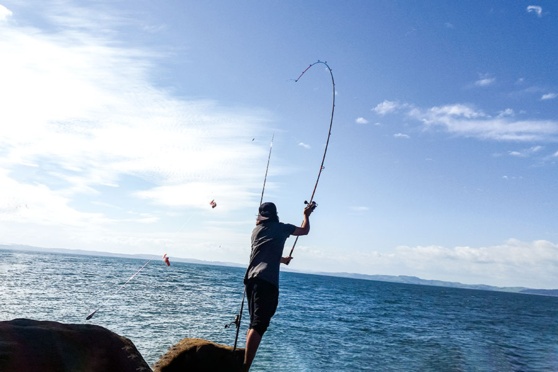
Summer is a time of increased angling opportunity, suggests keen surfcaster Peter Hwang. It is the time when many fishos get experimental, especially around the presentation of different baits, and in particular shellfish.
Whether it is for food or bait, shellfish are one of the most accessible forms of kai out there. They can be found on beaches, around and under rocks, and at the supermarket! While people enjoy collecting shellfish for culinary creations, to many surfcasters, shellfish are great baits. Shellfish bait can make a huge difference when targeting specific species and they also have the added advantage of not being attractive to sharks. However, there is a knack to presenting them well.
Despite its hard exterior, the shellfish on the inside truly is a softie, which makes it one of the most difficult baits to use. One of the most common mistakes is not securing the shellfish to the hook. If not tied on, the bait is likely to disintegrate during casting and is vulnerable to pickers who often get in ahead of the bigger fish.
When I first used shellfish bait, it was when fishing from a wharf. I simply cut it into small chunks and placed it on a sabiki rig – perfect for smaller fish. But when surfcasting, I found shellfish challenging to use – these baits aren’t easy to keep on the hook. Thankfully, with trial and error over a number of years, I have developed an effective way of getting the best from shellfish baits. For this article, I will concentrate on tuatuas and pipis as I find these the most effective when targeting snapper and trevally over a sandy bottom.
The Baiting Up Process
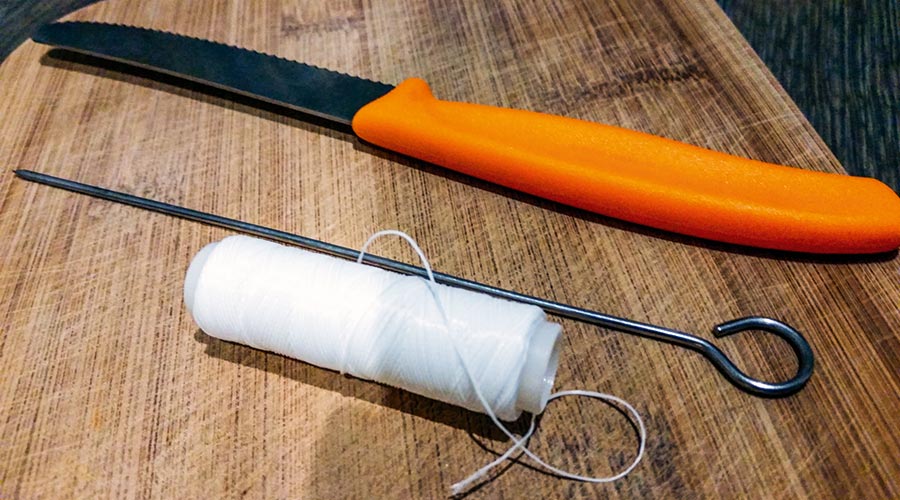
For this to work, you will need a bait needle (get yourself a cheap, thin metal meat skewer); bait elastic or bait cotton; and a knife with a rounded end such as that found on a household butter knife. A rounded end knife will make scraping the meat from the shellfish easier and safer.
Step 1
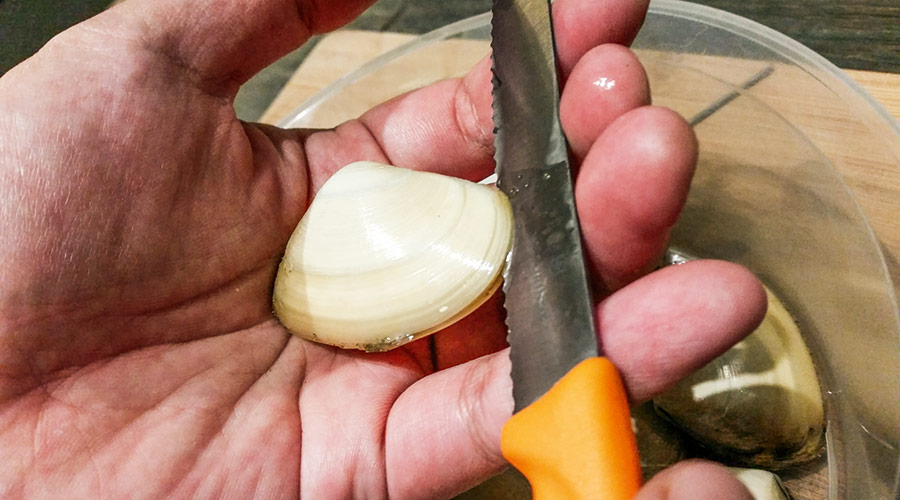
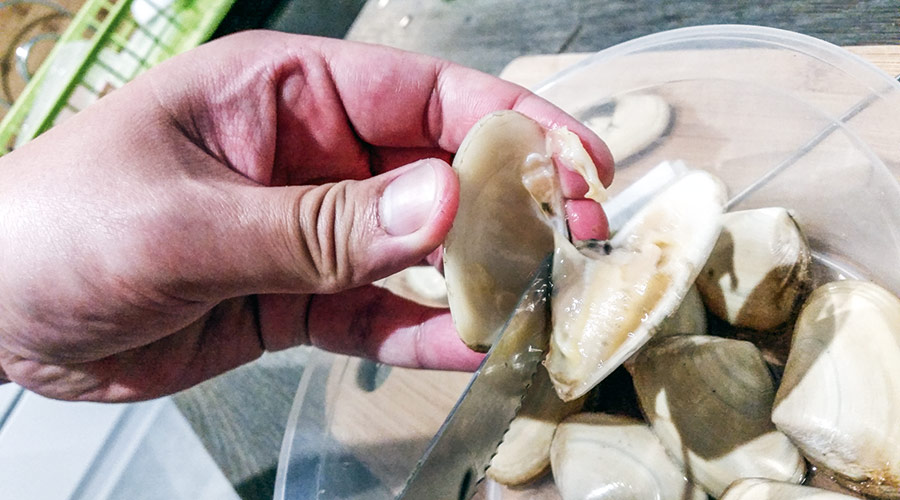
Slip the knife between the shell. Remember, do this slowly as the last thing you want to mix with your shellfish bait is your own blood. The first cut will help to detach the muscle that is holding the shellfish tightly closed.
Step 2
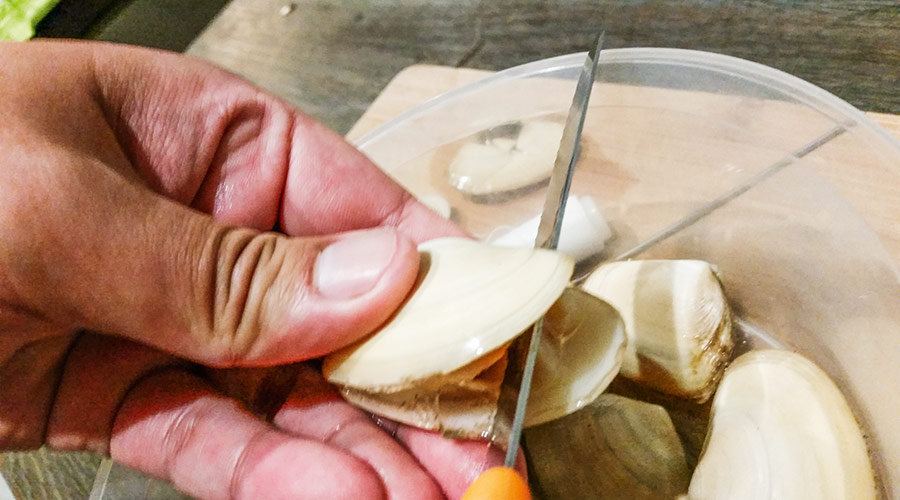
After you slip the knife through the shellfish, twist the blade to open the shell fully. If you struggle with opening shellfish, put them in the freezer where they will open up in due course. Another option is to lightly steam them open, boiling them just enough that the shell parts.
Step 3
After you have opened the shell, use the knife to scrape out all the meat. Repeat until you have enough to make multiple baits.
Step 4
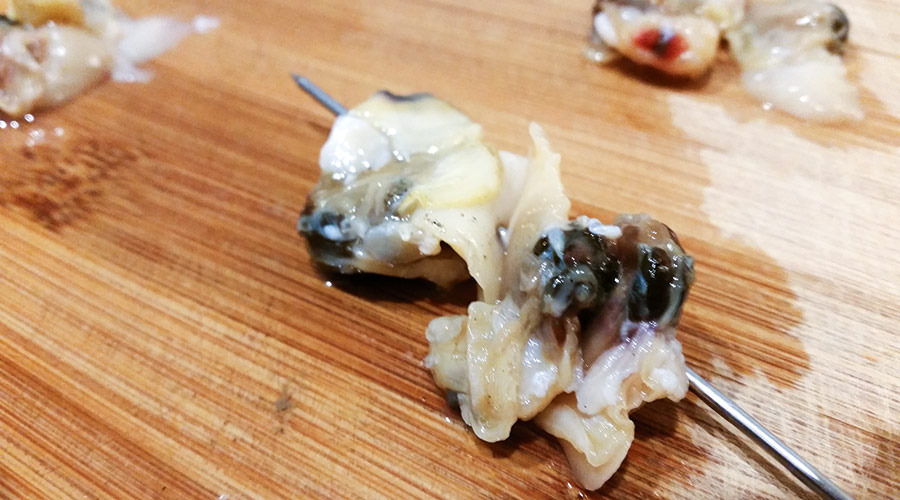
With the shellfish all shucked clean, place the meat onto the skewer – as many as you want. Personally, I use 3-4 shellfish per bait which is a perfect match for a 3/0-4/0 hook – an ideal size, especially when targeting trevally.
Step 5
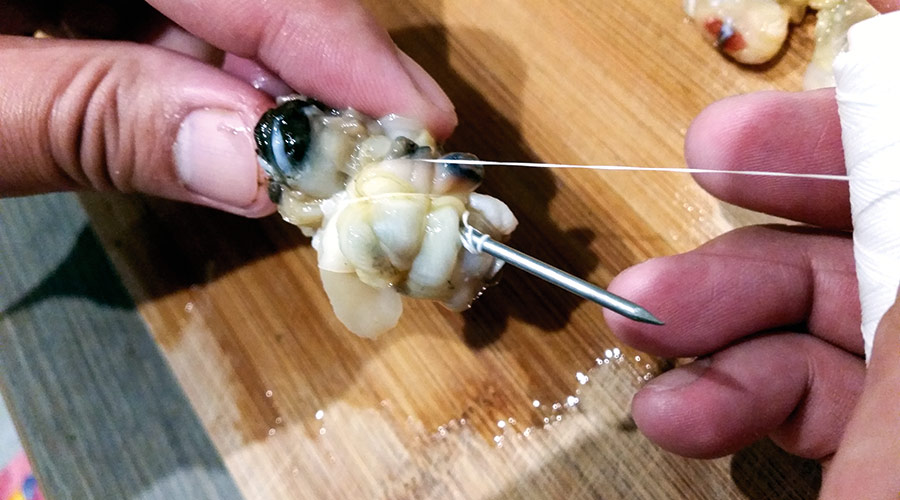
Wind the bait elastic around the skewered meat. The skewer helps to keep the shellfish bait in one place and hold its shape. It also prevents the bait from slipping around while tying. Basically, you are forming a sausage shaped shellfish bait with the aid of the bait elastic.
Step 6
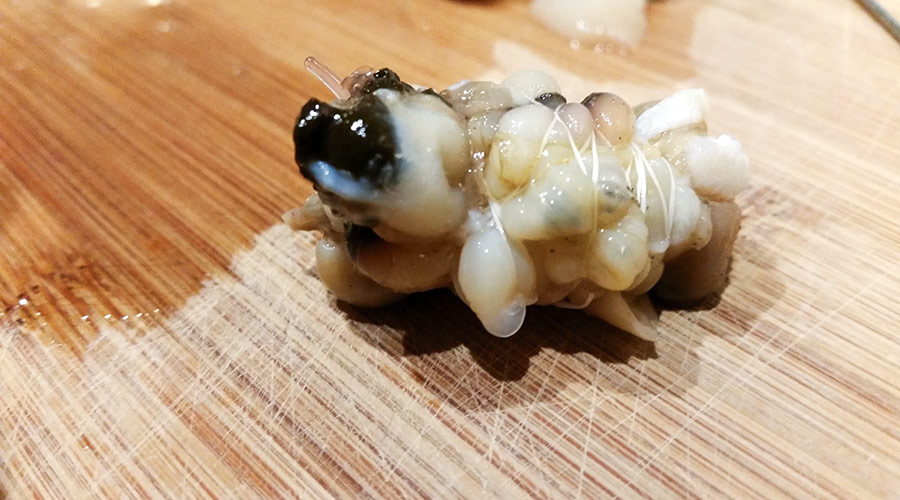
With the shellfish well bound up, slip it off the skewer and now you have one bait all ready to go. Repeat until you have enough pre-prepared baits for your session on the beach.
Step 7
From here, work your hook through the shellfish, which is ideal if you are using a running rig. For the ledger rig, you just hook your ‘shellfish sausage’ through the top and you are all ready to go. If you feel that the bait isn’t going to hold then tying extra bait elastic around will secure if for casting – better to have more elastic securing the bait than see it disintegrate with the force of the cast.
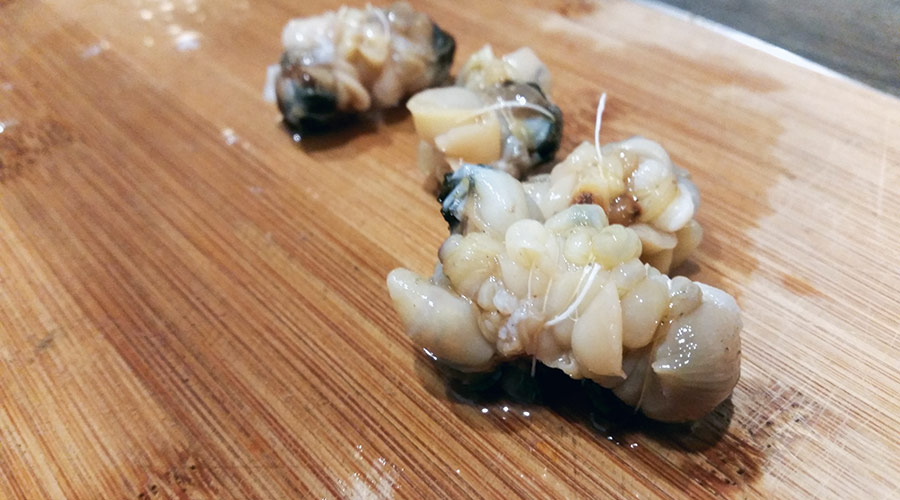
Pre-tying your shellfish baits this way will give you more time soaking baits than preparing them.
This method isn’t just limited to tuatuas or pipis but also works on mussels and other shellfish that you are willing to use as bait. Scallops, if prepared well, can make a superb bait by itself, or it can be tied in with lots of elastic to enhance other baits, even fleshy ones, giving you the best of both worlds. It is all about utilising the scallops to their fullest.
I mentioned above that lightly steaming your shellfish is one way to open them, but this also toughens them up a little, as will salting them down with rock salt. This will turn a sloppy, slimy meat into a tough leathery bait, which will prevent pickers from stealing it too easily.
Remember to be very considerate of what you are doing when harvesting pipis/tuatuas or any shellfish in general. Hand harvest them with minimal impact on the bed. Try to just take the bigger shellfish, leaving the smaller ones to mature. From a bait perspective, the bigger the better – there is very little flesh in the smaller shells. The supermarket or any fish shop will often stock good-sized shellfish.
When harvesting shellfish for bait, I will just take enough for one or two trips as fresh is best. Shellfish doesn’t freeze well and turn to mush if left in the freezer for too long. You should also be aware of what your daily limit is – this can vary considerably from area to area.
Finally, keep the environment clean. Be aware of what you are flushing down the stormwater drains as this eventually finds its way to the sea. Shellfish can only survive in clean water and as they are filter feeders, will pick up any contaminants and potentially pass them on to human consumers!

January 2022 - Peter Hwang
New Zealand Fishing News Magazine.
Copyright: NZ Fishing Media Ltd.
Re-publishing elsewhere is prohibited
Fishing Reports Visit Reports
Hauraki Gulf Fishing Report 11/06/26
Workups the best option mid-Gulf for quality snaps and kingfish Fishing across the Hauraki Gulf... Read More >
Bream Bay Fishing Report - 11/06/26
Normal transmission returns! It seems only the hardy have been wetting a line these last... Read More >
Raglan Fishing Report - 11/06/26
Solid snapper hook-ups out deep With the continuation of more settled weather there’s been some... Read More >
Canterbury Fishing Report - 11/06/26
Brave the cold, reap the rewards With a big southerly blow through here yesterday, it’s... Read More >



Major Bites
Minor Bites
Major Bites
Minor Bites
Comments