
Using lures to catch live baits

While lure fisherman will maintain that they have everything that they need in their tacklebox, Adam Clancey likes to be prepared for any situation…
This means carrying a good arsenal of tackle as well as being prepared to switch and change techniques as conditions and the target species dictate. One of the key parts to a day’s fishing is the gathering of a good supply of live baits. They may be used to catch anything from snapper and john dory to kingfish and marlin.
There are many skills that help with catching a good supply of live baits. Knowing the areas they hang out, the time of the day to target them and the appropriate method to catch them in a given situation are all important.
The main species I target as live baits are jack mackerel, slimy mackerel, kahawai, piper, koheru and yellow-eyed mullet. Many of these species are easier to target in the pre-dawn hours or using a light to attract them at night, as they will often go off the bite once the sun is up. At other times schools of bait must be located by using your electronics and boat positioning. Knowing what bait looks like on the sounder is important – usually it is a tightly massed ball high off the bottom.
Once you have located your bait the next trick is to catch them. Using sabikis or baitfish jigs has long been recognised as the number one way to catch live baits but, like all fishing, there are plenty of skills and tips to make this way more successful.
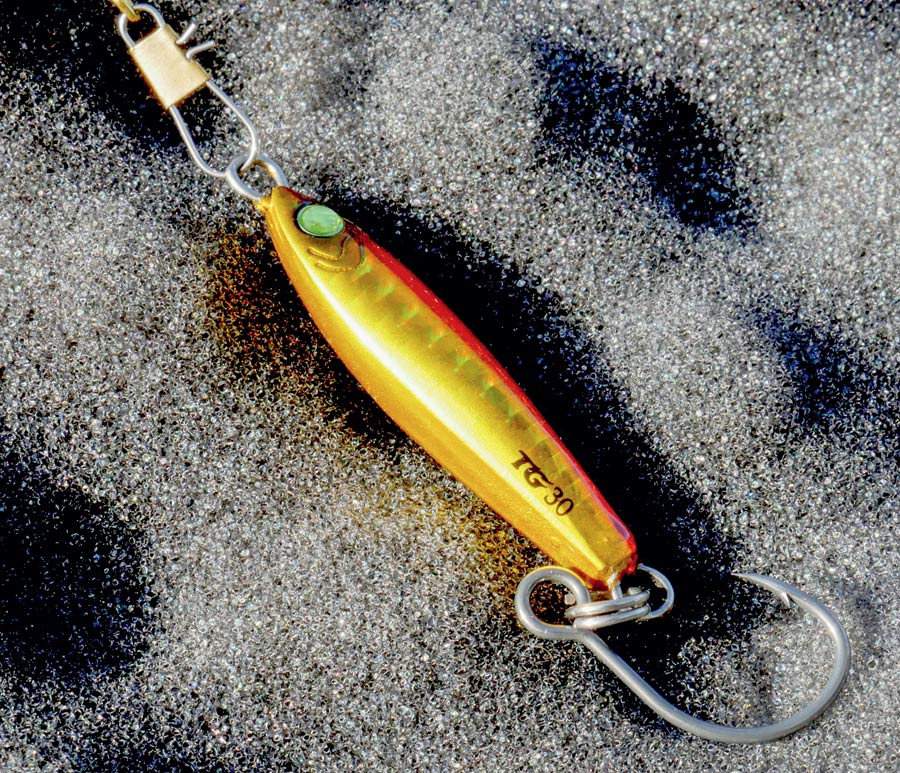 Using a jig instead of a sinker works well on larger bait fish that are feeding.
The first tip when using sabiki flies is to have your rods set up and ready to go. Use a rod that has a nice soft tip and don’t crank the drag up too high, as multiple hook-ups are common and a gentle touch will avoid bent hooks and help when the bigger fish grab your sabikis, which is a common occurrence.
Hook size can be a real game changer when the bait is spooky, so always take a range of sabikis with varied hook sizes. You can even target anchovies and pilchards using sabikis with really small hooks and these make deadly live baits. It pays to invest in quality sabikis as they tend to be constructed with better materials and have better hooks. They are not an expensive item so make sure you carry plenty in your tackle box.
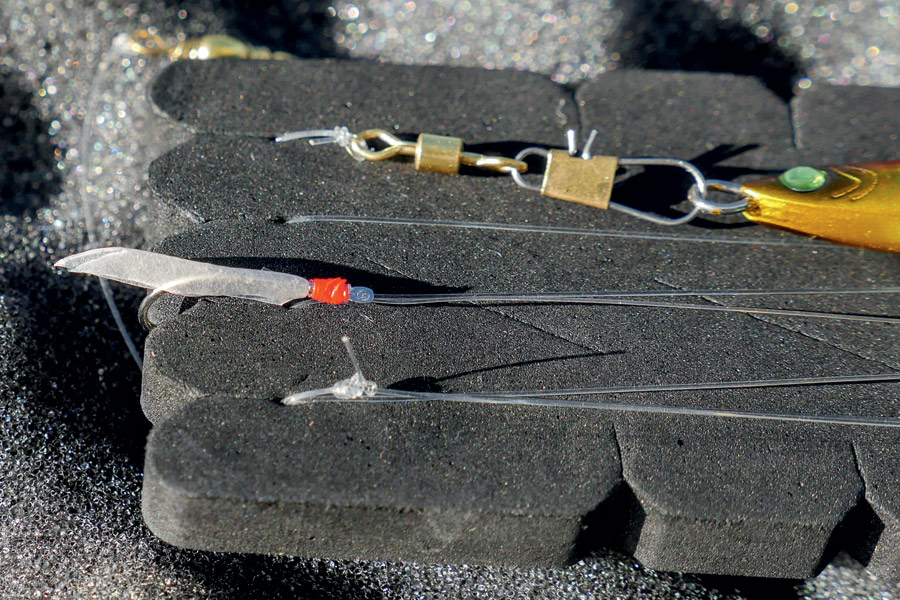 The simple white sabiki is often best and using the right hook size is important.
Fishing sabikis can be done in many different ways: from anchored or land-based positions (wharves can be particularly effective), or while drifting. One of the main ways I use sabikis is to get close to a drop off or some foul and anchor up and berley the bait fish in. In this situation, adding small bits of bait will often enhance the effectiveness of the bait flies.
The other good trick that works well if the fish are shy is to take the sinker off the bottom of the sabiki. Good depths are from 3-10 metres for this method. Often bait schools will be deep and fast moving so you need to move the boat around and pick up the schools on your sounder. When targeting bait this way, let your sabiki free fall into the school and use a yoyo technique to attract hits. Expect bites as the sabiki falls through the water column.
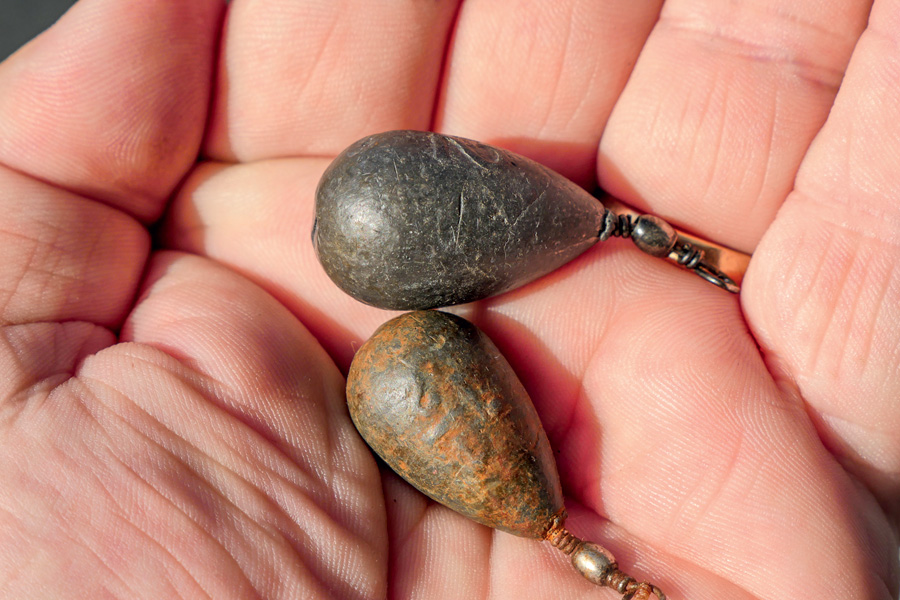 Teardrop sinkers are useful. Carry a range of sizes.
Selecting the right colour bait flies can be vital. There are a few standard ones which seem to cover most situations. The standard white sabiki may be the plainest of them all but it is also the best all round performer. Pink grub types work well on piper and mackerel in some conditions and lumo green is a good after dark option.
Most fish love to eat sabikis so it pays to always try and fish the lures in the zone where the bait is holding. Fishing them hard on the bottom will result in a lot of unwanted catches such as small snapper and reef fish. When you hook up try keep the line tight and the rod with a nice curve to absorb the shock of the runs. Although the fish may only weigh under half a kilo, when you get several on the line at once the weight can be similar to a reasonable-sized snapper. Always use a net to land fish as it is common for bait fish to fall off as you lift them out of the water. Above all else handle the bait as little as possible and get it in the live bait tank as soon as you can.
Storing sabikis after use can cause a few issues as the little hooks tangle up very easily. Keep your sabiki attached to your rod until you have finished with it and then store on a piece of foam rubber.
|
|
|

Fishing Reports Visit Reports
Raglan Fishing Report - 25/06/26
Trophy snapper in close The snapper fishing out deeper continues to be the most consistent... Read More >
Northland Fishing Report - 25/06/26
Swords aboard! With some of the smoothest seas and lowest winds we have seen in... Read More >
Bay of Islands Fishing Report - 25/06/26
Kingfish and snapper in the bay Having spent the week weighing kingfish, I decided that... Read More >
Tauranga Fishing Report - 25/06/26
Good variety on offer Great to have a couple of trips after a few quiet... Read More >



Major Bites
Minor Bites
Major Bites
Minor Bites
Comments