
Sri Lankan sojourn – tropical trout, high tea and hot curry
- 2 Comments
The Great Tea Debate – Shanghai to Ceylon
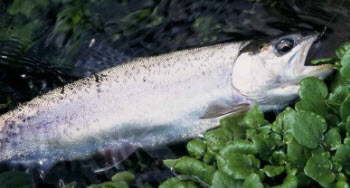
My Chinese workmates were initially upset by my announcement of a proposed holiday visit to Sri Lanka. According to them – and most of their 1.2 billion compatriots – the tea in China is far superior to the Ceylon varieties, introduced by the imperialist British to subjugate the working classes (besides, only heathens would spoil a good cuppa cha with milk).
To be honest, the Chinese do have a bit of a point. I’m happy to accept that the British have long attempted to foster world domination through other subterfuges like opium, warm beer, cricket and Margaret Thatcher, but I draw the line at a world tea conspiracy led by some Dr Evil in MI6.
Fortunately, I managed to extricate New Zealand from implication in the global tea fiasco, and once I’d confessed my innocent intentions of visiting Sri Lanka to search for rainbow trout and world-renowned surf breaks, the great tea debate came to an amicable end. (I didn't have the heart to explain that the British had introduced trout!)
The British Raj and Salmo gardinieri (Oncorynchus mykiss)
The idea of fishing in Sri Lanka originally blossomed after reading an old travel book that mentioned the British during the 19th Century, to their eternal credit, had released trout in the streams and rivers of their highland tea plantations. During my wanderings I’ve grown to greatly admire the eccentric Victorian Brits and their love of fly-fishing. Their passion for sport and their fondness for their homeland drove them to extraordinary lengths to introduce trout to the furthest outposts of their empire.
On previous excursions in other theatres of British imperial influence (like the Himalayan kingdoms of Bhutan and Sikkim), I was astounded to find rainbow trout of impressive size in many of the lakes and rivers. Time had taught me to always pack fishing gear when travelling.
As an additional enticement to visit Sri Lanka I’d heard rumours of an abundance of game fish in the rich currents of the Indian Ocean off the southern coast, as well as other alluring features including legendary surf, miles of tropical beaches, and a rich culture steeped in ancient history.
Although organisation has never been my strongest suit, I did manage to map out a blitzkrieg-type travel plan. This involved hiring a car and travelling directly to the central tea-growing highlands to investigate trout fishing opportunities, then driving to the southern coast and using the remaining days to explore the coastline working my way back along the coast to Colombo. The only remaining hurdles were convincing my wife that I’d steer clear of Tamil guerrilla activity and squeezing everything into an eight-day visit.
Warzone health tips
Things had all gone smoothly with the ever-efficient Thai Airways flight via Bangkok arriving on time at the glorious hour of 1am. If you’d somehow forgotten that the country continues to suffer the ravages of a decades-long civil war, you’ll receive a wake-up call upon arriving at Colombo airport. There is understandably a huge military presence throughout the island and at the time of my visit (December 1999) it was only considered safe to visit the southwestern quarter.
Two health hints for intrepid Kiwi tourists intending to visit: take malarial tablets if you intend to travel extensively in rural areas, and don’t wave your fly rod canister at the nice men in the machine gun emplacements.
The best laid plans of mice and men tend to be offset by Murphy’s Law when travelling. The state of Sri Lankan roads is consistently poor: they are heavily congested and studded with potholes, military roadblocks, assorted livestock and wildlife. DO NOT expect to go anywhere fast. The upside is the beautiful scenery and the patient, friendly people, so don’t forget to stop and smell the flowers.
A touch of class
The 150km drive from the airport to Nuwara Eliya took seven hours and involved climbing a magnificently engineered zig-zag road to an altitude of 1900 metres. The highland country is uniquely distinct from the sweltering coastal areas, with cool temperatures throughout the year (16°C) and no mosquitoes!
I was lucky to arrive as the early morning mist dispersed and the grey of dawn gave way to a stunning sunrise. Before me lay a magnificent vista of lush green hills carpeted in tea bushes and a patchwork of terraced vegetable gardens and brightly painted cottages. I hadn’t slept for 36 hours so decided against chasing trout and instead relaxed and spent the afternoon lapping up the old world colonial flavour of this hill country town.
I treated myself to a night at the Grand Hotel (NZ$100), one of several impressive Victorian establishments, and hacked my way through a sedate round of golf at the country's oldest club.
There is an incredible variety of interesting colonial hotels and converted homesteads throughout Sri Lanka, providing exotic accommodation and excellent value for money. These old-world charmers are worth the trip alone and although many are a little run down, they still ooze sophistication and class from that bygone era. Take time out for high tea and scones or soak up the nostalgia at the Hill Club where the bar walls are covered with a huge collection of hunting and fishing paraphernalia from yesteryear. There's even a turn-of-the-century mounted salmon from the Waimakiriri River, which has mysteriously found a home here!
Licence to kill
Despite numerous enquiries around Nurawa Eliya, no one appeared to have any knowledge of trout in the area. It seemed that their existence had largely been forgotten since the end of the British era. Streams in and around the town that had previously been stocked were sadly now polluted by the steady encroachment of the island’s exploding population.
My last hope was to explore Horton Plains, an area of National Park perched on the island’s highest plateau where several streams offered a faint chance of finding my elusive quarry. A dilapidated jeep picked me up in the pre-dawn gloom and we scaled the fabulous bush-covered slopes of the plateau, chased by the rising sun and treated to an incredible view over the escarpment and across the coastal plains.
Further disappointment followed at the small rangers’ outpost. They could neither confirm nor deny if there were trout in the park streams – fishing was strictly prohibited!
It’s a long way to travel just to give in, so I tried to explain the concept of ‘catch and release’, which only met with an incredulous, “Why?” My dilemma was deepening so I decided that a small cash donation to the park service in lieu of a license might be worth a shot. The red lights ahead miraculously turned green and I was soon tramping through the tussock and forests with an enthusiastic young guide in tow.
In the early morning shadows we spotted several sambar deer ghosting back to the forest, and before heading for the streams, we trekked the three kilometres to ‘Worlds End’. Here, the cliffs of the plateau take a dramatic 700-metre plunge to reveal a breathtaking view of the lowlands.
Boy Friday goes fishing
The streams here are small and picturesque and remind me of the Coromandel rivers I fished as a youngster. My guide, whom I had temporarily christened ‘Friday’, led me to a stretch of river where a series of rapids and deep pools meandered towards the escarpment.
Friday was a little vague on the existence of the elusive trout, but my suspicions were aroused by his recital of several complex curry recipes for cooking ‘river fish’.
Selecting a small Red Setter on a long leader, I started my exploration in a deep pool where a slight peat-like coloration limited the visibility. The water looked good, but half an hour passed and Friday had exhausted his recipe list, the day was heating up and I was beginning to question the fundamental sanity of my little adventure.
Luckily, fish seem to be able to sense complacency. Halfway through a retrieve I was rewarded with some feeble tugs quickly followed by a solid hook-up and a fat 2lb (1kg) rainbow hit the air.
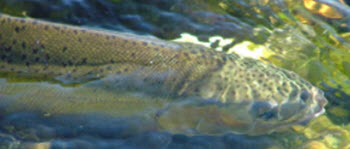
Friday had been preoccupied in the telling of a tale about rouge Sri Lankan elephants, but leapt into action at the sound of splashing. As I played the fish towards the bank, Friday, with the stealth of a grizzly bear, launched himself into the stream in hot pursuit. It took all my concentration to guide the fish away from his grasping hands – though he did manage to take a momentary hold on its tail.
A short struggle ensued before the trout slid back into the pool and returned relatively unscathed to the depths, leaving young Friday visibly distressed at the sight of lunch disappearing without a heavy sprinkling of chilli powder and grated coconut.
That was the best rainbow I managed to catch, with only two other specimens of just over a pound (for one of these I had to cheat by using a small spinner). However at the end of a long quest it’s the success of a mad scheme that really brings inner satisfaction, not always the landing of a trophy fish.
Friday was not convinced about the spiritual and sporting side to fishing and complained openly to his colleagues about the stupidity of this catch and release approach. In the hope of future enlightenment for Friday and friends, I donated a spinner with the hook carefully broken so that they might with time and failure also learn to cherish the pure joys of angling.
Cold beer and belly-burners
After the cool, sedate lifestyle of the highlands, the coastal plains offer a stark contrast. As you descend into the languid tropical heat of the coastal areas you enter a new world of bustling villages, lush jungle, paddy fields and incredible white sand, palm-fringed beaches.
The list of attractions is extensive and there’s ample variety to satisfy everyone’s taste for the exotic. The Sinhalese cuisine deserves special mention and any article would be incomplete without singing the respectful praises of the nations warm culinary delights, like the roti and the curry. The food experience is a voyage of discovery in itself, and although this road is often fraught with hidden dangers, an equal application of caution and courage enables it to provide a most memorable experience.
A warning to amateur players: ‘spicy’ really means ‘the scorching fires of Hades’. Mother Nature says: “What goes in must come out,” so remember that too much bravado at meal times will only end in tears.
Sun, surf and elephants
If you’re a keen fisherman and need some inspiration between cold beers, just visit any of the village fish markets. The best time is early morning before the ice melts and the flies arrive!
Another option is to stroll the beaches in the evening as the flotilla of canoes and fishing boats return with their day’s catch. You’ll see a dazzling array of inshore and offshore species depending on the season. Large yellowfin and wahoo were in abundance when I visited, but the blue water just beyond the coral reefs provides a full array, from sailfish and marlin to bluefin tuna and swordfish further offshore.
The difficulty for anglers is the lack of a recreational fishing infrastructure. Despite the game fish being frustratingly close, you will need to bring your own outfits and venture out with the local fishermen. I was perfectly satisfied catching trevally, mackerel and reef fish on my fly rod in river estuaries and off the headlands.
One evening I was lucky enough to witness the ancient art of stilt fishing, which has been practised here for centuries. They say that the prime pole positions on the reefs are handed down through generations of fishermen and jealously guarded within families. To see these artists ply their trade with the backdrop of the fading sun across the Indian Ocean is a magic sight.
I also took the opportunity to do a bit of wildlife spotting and visited Bundala National Park for an afternoon, and was surprised by the huge diversity of wildlife, including elephants, deer, monkeys, crocodiles and snakes, as well as innumerable native and migratory birds.
The beaches in Sri Lanka compare with the very best tropical jewels in other exotic spots like Zanzibar and the Caribbean. They must be seen to be believed.
There are two monsoons, and depending on the time of year, the reef and beach breaks around the Southern coast can be legendary. Surfboards are available and the snorkelling and diving on coral reefs and wrecks is also said to be outstanding.
The coast is dotted with villages and fascinating ancient forts left from a legacy of colonial occupation by the Portuguese, British and Dutch. A must-see for the history buffs on this coastal stretch is the Port of Galle which some suggest could be the Trashish of biblical times where King Solomon traded spices and gems.
Next time I return it will be with game-fishing outfits and lure bags, and if you’re ever considering a tropical holiday with a difference, remember Sri Lanka, the exotic isle of serendipity.
A Blast From The Past!
|
August 2000 - by Kent Fraser |

Fishing Reports Visit Reports
Tauranga Fishing Report - 28/05/26
Tarakihi on the bite Trips are few and far between at this time of year,... Read More >
Canterbury Fishing Report - 28/05/26
Fresh and salt turning it on! It is not very often I get to say... Read More >
Bay of Islands Fishing Report - 28/05/26
Lures paying dividends We finally had a break in the SE winds that have been... Read More >
Manukau/West Coast Fishing Report - 28/05/26
Snapper and gurnard in the harbour The weather has finally taken a turn for the... Read More >



Major Bites
Minor Bites
Major Bites
Minor Bites
Comments