
Shallow water fishing
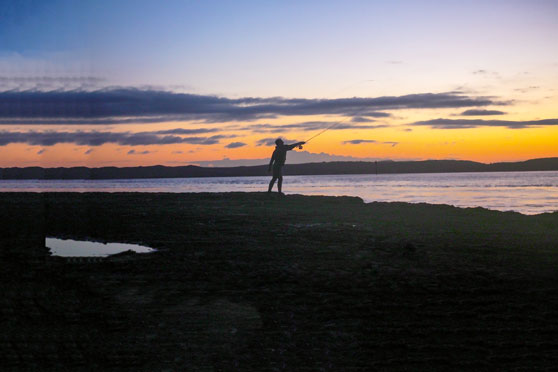
Here in the Bay of Islands the best shallow water fishing is a bit later in the year. The ‘season’ starts in autumn and extends well into winter, and sometimes even into spring – right through the coolest months of the year. It happens when sunburn isn’t a problem and you don’t have to get up quite so early to catch the dawn bite.
It is quiet on the water too, since much of the competition has melted away and is sitting by the fire. Without question, it is my favourite fishing time of the year.
Last winter I received a lesson in how good this shallow water-cool season fishing could potentially be in the Far North. I had gone searching for flounder during a warm patch of weather in August. To my surprise I found a pipi and cockle sand flat that was covered in a pock-marked arrangement of freshly-dug holes. These had been made by some sort of fish that wasn’t the familiar eagle ray. They looked like holes dug by snapper when they’re feeding on shellfish on the flats. The thing was, in this instance, there were hundreds of them!
It seemed that a whole school of snapper had invaded that flat the previous night. I wasn’t expecting that sort of behaviour in August, nor the size of the holes in the sand. It looked like some big fish were involved – from legal-sized snapper right up to monsters – and all happening in water that was not much more than a metre deep at high tide.
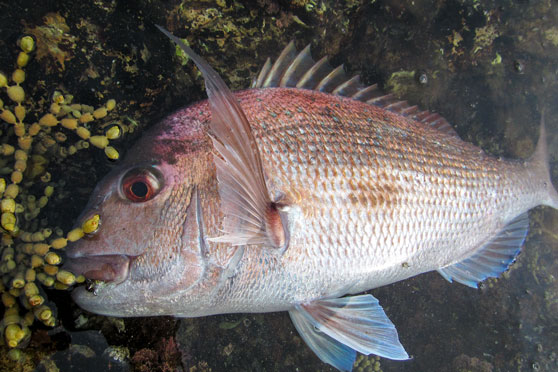
Local fishing gossip seemed to confirm my observations. One waterfront resident had been catching four-kilo snapper off his front lawn, while others were getting them in flounder nets and several significant catches had been made by oyster farmers while they worked on their barges. All the evidence pointed to a big run of snapper in the Bay of Island’s shallowest water, but I’d missed it because it was August and I simply hadn’t expected anything like it!
It was a very good reminder you have to ‘keep the faith’ right through the cooler months. Fish move easily between the open coast and harbour areas, so an inshore run of fish can happen at any time. If the right weather and water conditions come together, the fishing can change dramatically in a day.
Shallow-water fishing in autumn, winter and spring can be very good, but timing is everything. Look for onshore breezes and periods of low rainfall. Avoid the cold snaps. A southerly or southwesterly blast will push warm surface water offshore and shut the bite down.
Similarly, some areas are more affected by rainfall and freshwater run-off than others, so it pays to know how much fresh water has penetrated into the local shallow water spots before you fish them.
All this might possibly sound like too much hard work, but in reality it’s very easy: if local people are smiling and waxing lyrical about mild winter weather conditions, then go fishing!
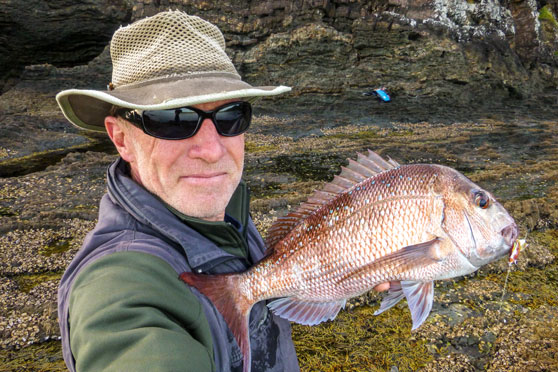
My preferred fishing areas include locations with channels rimmed by oyster banks and stable weed beds. These are highly productive zones with lots of food for snapper.
If there is any anchovy action in these areas at any time of the day, then so much the better. Anchovy work-ups in the reaches of upper harbours can often be the driver that really gets the inshore shallow water fishing going. While the anchovy action in the Auckland region seems to peak in early autumn, it is only just getting started in the Bay of Islands and the Far North as Easter swings by.
There can be anchovy workups at any time of the year, but in the cooler months there seems to be a more pronounced inshore push by anchovies into harbours, estuaries and bays – and there seem to be a lot more of them. Whether or not this push is associated with spawning is hard to say, as research into the subject is insufficient, but a suggested anchovy spawning temperature of between 15 and 20 degrees Celsius correlates with the water temperature found in the inshore waters of the Bay of Islands and Far North at this time of year.
This anchovy food source combines with the water temperature that big snapper prefer. In the hot, warm-water shallows of summer you’ll only get babies. The mid-range water temperatures that exist in early to mid-winter are much more to an adult snapper’s liking. Temperatures in the inshore zone will fluctuate at this time of the year, but the right water temperature can occur at any time in the north during the cooler months.
I found that out during a fantastic cool-season fishing session a couple of years back. It was June and a wall of small kahawai had cornered a million anchovies in a small bay where they were feeding on them ferociously. Luckily, I had the presence of mind to tie on a great, big feathery fly that would help me avoid the kahawai and give the snapper a better chance of finding the hook.
Standing on a small rock that was surrounded by the feeding frenzy, I fished down low and sunk the fly right under the kahawai. The outcome was a line-up of excellent winter snapper that ranged from two kilos through to five kilos – all from water a metre and a half deep, all on flies, and all off the shore! I kept a couple of 40cm fish and returned the rest to the water. It was great fishing.
Other events around the same time involved anchovy bait-balls over clean white sand off some of my local beaches and swirling walls of trevally underneath schools of kahawai. It was a pleasure to catch trevally again after a long time without any.
Then I progressed to ‘ambush points’ on the lee side of little rocky outcrops the current wrapped around at the start of the incoming tide. I figured the anchovies would have to get around these structures on their way into the harbour zones and could be easily ambushed there. Sure enough, there was generally a nice snapper or a trevally waiting for me in every little spot. They would hit my silvery Clousers like it was their last meal.
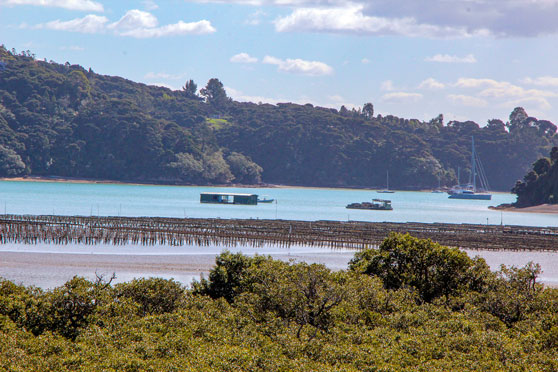
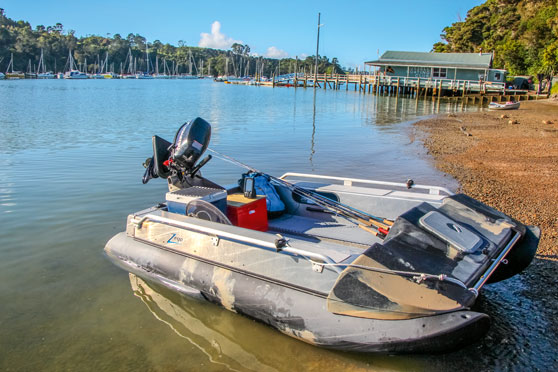
With the inshore waters quiet and few other boats around, I found locations close to home and close to boat ramps worked just as well as any others. It was excellent shallow water fishing and I’ll be looking for more cool season action very soon.
|
----- Advertisement -----
|
This article is reproduced with permission of |

Fishing Reports Visit Reports
Tauranga Fishing Report - 28/05/26
Tarakihi on the bite Trips are few and far between at this time of year,... Read More >
Canterbury Fishing Report - 28/05/26
Fresh and salt turning it on! It is not very often I get to say... Read More >
Bay of Islands Fishing Report - 28/05/26
Lures paying dividends We finally had a break in the SE winds that have been... Read More >
Manukau/West Coast Fishing Report - 28/05/26
Snapper and gurnard in the harbour The weather has finally taken a turn for the... Read More >



Major Bites
Minor Bites
Major Bites
Minor Bites
Comments