
Micro-jigging explained pt 2
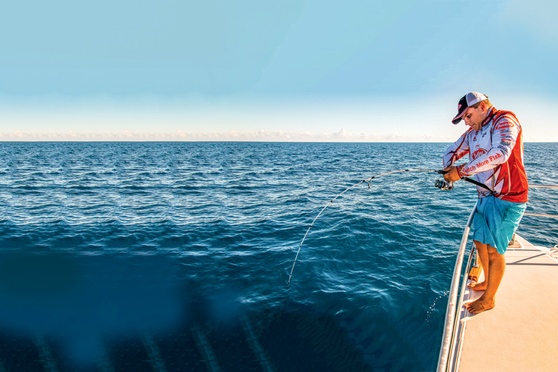
The tackle that’s associated with this style of angling is as vast as you might like it to be. Seeing just how much gear is available for this particular style of fishing is no shock to me. The Japanese have been perfecting it for many years and the tackle and techniques we see and use today have mostly come from them.
There are four key pieces of kit that you need to get started:
- Micro-jigs
- Assist hooks
- Split rings
- Split-ring pliers
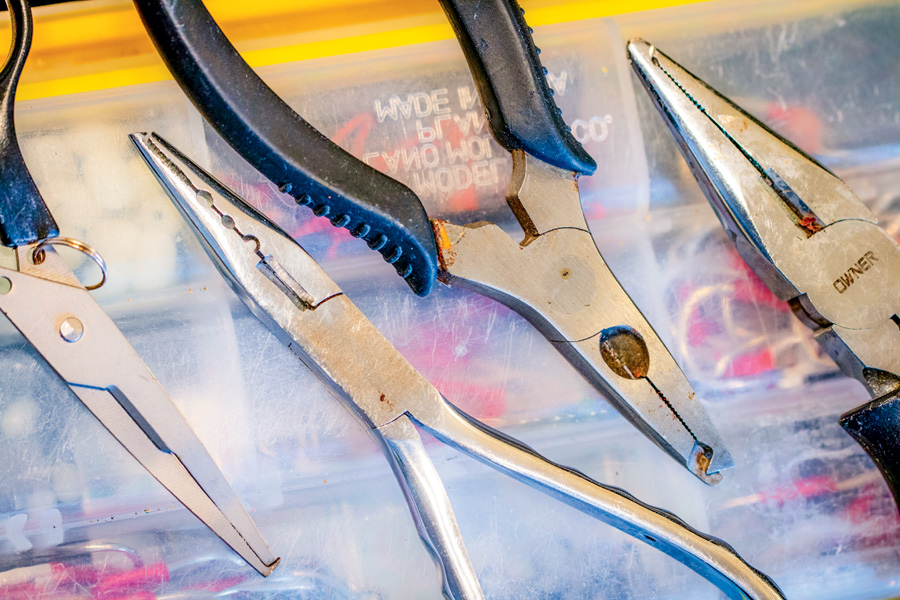
You simply can’t do the job properly if you don’t have these items. Make sure you don't skimp on this gear or it will be your undoing for sure. Get a good set of pliers and attach them to yourself via a lanyard or zinger so you don’t lose them or have to look for them.
Let’s count them down, starting with jigs.
Jigs
A micro-jig’s size is governed by its weight which, in turn, relates to the depth you’re fishing. A simple way to think about it is to look at the grams the jig weighs and equate that to the metres you’re fishing. For example, a 20-gram jig is good for fishing in 20 metres of water. Obviously, there is quite a grey area in the measuring system – you can fish a 20 gram jig in 30 metres of water – but the as a rule of thumb, its works pretty well!
Get a range of different shapes (see part one in the October issue) for different drop speeds and actions. And definitely get a spectrum of different colours.
Assist hooks
A lot of micro-jigs these days come with hooks already attached. This can be both a good thing and a bad thing, depending on the quality of the hook. When you’re picking assist hooks, bigger isn’t always better. Nearly all after-market assist hooks are medium to heavy gauge and regardless how small they are, the tackle you’re using won’t straighten them out!
Split rings
There are a number of companies that make split rings, but of them all I believe Owner make best. Try the Owner Hyper Wire P-12 size #3 or #4, which are readily available at most tackle stores.
Pliers
A good pair of pliers is crucial for this style of fishing. A decent set of split-ring pliers will set you back between $40 and $100. Halco do a good pair of entry to mid-level pliers, with brands such as Owner making very high-quality sets at the upper end of the spectrum. There are plenty of options from different brands to choose from, but the most important thing is that they fit the size of the split-rings you’ll be fishing with.
One other accessory that I’ve found useful is a jig bag. A jig bag will keep your jigs neat and tidy for storage, but easy to find when you want to change them out.
Putting it together
There are four key components when putting your jig together: the body, a solid ring, a split ring and your assist hooks. Your solid ring is what you tie your assist hooks to. Your split ring connects the solid ring with the hooks to the body of your micro-jig. See the image to the right for more detail.
When you’ve put all the pieces together and are ready to start fishing, it is important to remember to tie your leader to the solid ring of your rig. Tying off to the solid ring, rather than to the body of the lure itself, makes it much faster to switch out either the lure or the hooks. Simply open up your split ring and slide parts in or out.
The practicality of working with split rings shows best when fishing terrain with varying depths. In a reef pinnacle or reef drop-off situation, you could be fishing in 20 metres of water with a 20-gram jig, dropping off into 60 metres of water, where you’ll need to switch to something heavier. In this situation, you can wind your jig to the surface and quickly change the weight of your jig to 60-grams and be back in the action in less than a minute, fishing water that you couldn’t fish effectively fishing with that lighter jig.

Retrieves
After you’ve tossed your jig overboard and it’s on its way to the bottom, you need to consider how you’re going to retrieve it. There are many ways to do this and some of them are very simple indeed.
First off, watch your line as it sinks. As soon as your jig is in the water, regardless of where you are, it’s fishing for you and it could be hit! Line strikes are the only way to tell.
When you have your jig to the desired depth, you can simply tuck the butt section into your armpit and lift and drop. A slow lift or a quick lift – it’s up to you. Mix it up and see what the fish are up for.
Sometimes all they want is a very slow short lift while at other times you might have to make your jig race up off the bottom. Regardless of what retrieve style you use, you really need to get out there and test the water with a multitude of actions. One of my favourite retrieves is one of the simplest – a simple lift of the rod tip followed by a jig ‘free fall’ until the rod tip is at water level again. Then repeat.
What I like about this retrieve is that it is a one-handed action that doesn’t wear you out, so you can do it all day – and it gives the fish plenty of opportunity to not only find your jig, but eat it too!
Sometimes if your jig is moving too fast or traveling too far away from the target, they won’t bother trying to eat it – it’s too much trouble to try to catch for the size of it. This is where a shorter lift keeps it in their face.
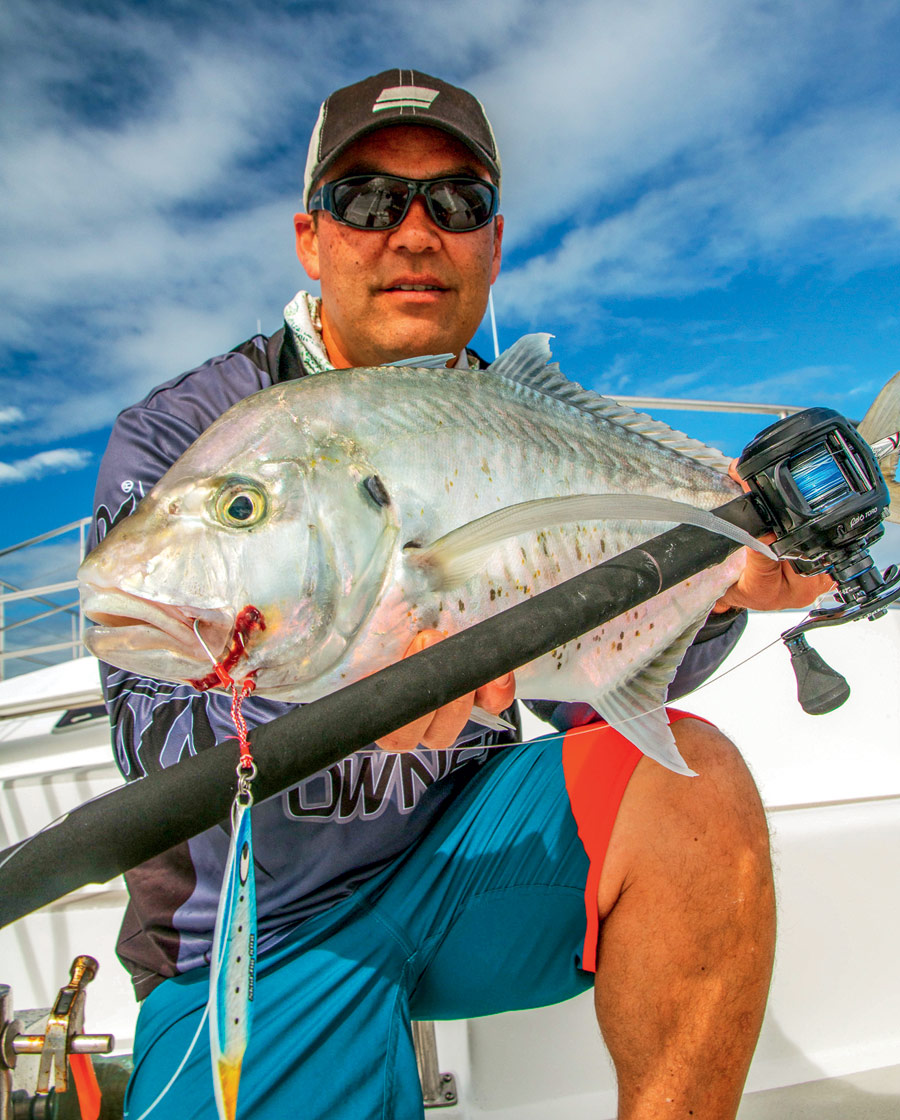
One of the reasons this style of fishing is gaining so much credibility so fast is because of the number of fish it catches and the diversity of species.
That’s because fish, regardless of their size, eat many, many more small food items than big ones. This is a simple economics rule: smaller creatures are both more numerous, not as smart and swim slower than larger creatures.
The ‘swim slower’ part of the equation is simply put down to their power to weight ratio and the fact that they run out of steam faster. The fact that they are in such large number means that they don’t need to think outside the box and are like a herd of sheep. Large numbers of small fish can stand some collateral damage without it affecting the overall viability of the species. And the sheer number of them makes them an easy target.
So since so many predatory fish (the majority of the species we as humans want to catch) eat so many small items every day, it doesn't take an astro-physicist to work out why micro-jigging works so damn well. The jigs you are tossing into the water are within the size range of the majority of the food items the prime fish species we want to catch like to eat – and they’re not always small fish! Big fish eat small food items and lots of them!
Rods, reels and lines
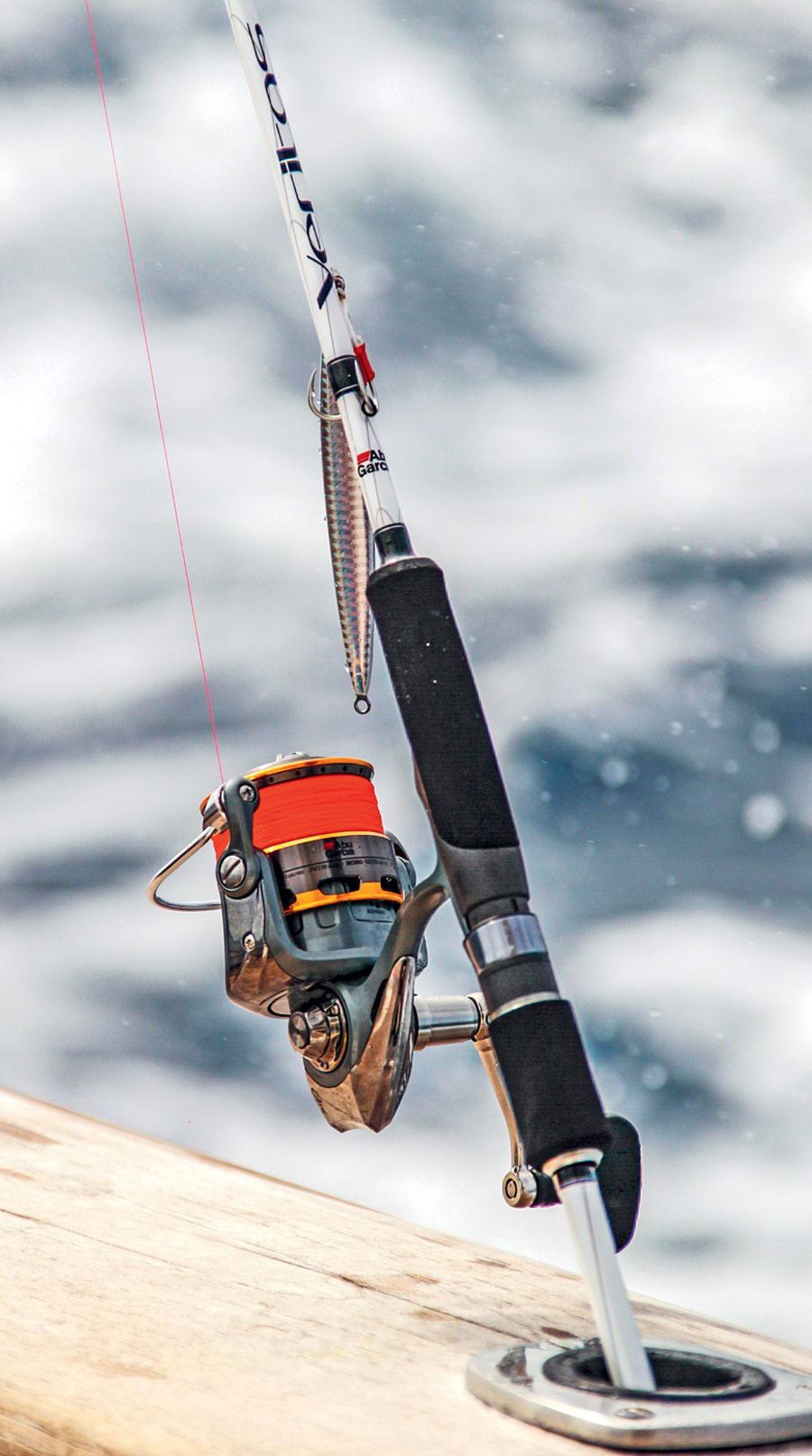
Looking at the rods, reels and lines used for this style of fishing, you can safely say that there is something going on with the rods, but the rest of it looks pretty normal. Normal spinning-type reel – check; normal type braid – check; but whats with that kooky looking rod?
To be honest the rod is where it’s at. To do this type of fishing you can use a hand-line but to do it in comfort and style, you need one of these rods.
The bottom line with micro-jigging rods is that they are very parabolic (parabolic – bending easily from the tip to the butt in an even curve), which serves two purposes.
One, it softens the blows of a fish’s heavy head shakes and two, it brings the power play of the loaded rod back toward the angler. This is an excellent feature of the rods and something you will only, truly realise once you have one in your hands and have it loaded!
By bringing the power of the loaded rod back down towards the angler, it allows you apply much more pulling force down the line without you realising it. It’s very comfortable and user-friendly and the physics are something you just don’t not get out of you seven-foot snapper spinning rod!
The butt sections are also different. They’re longer – much longer! This is so you can tuck them into your armpit and use your hand as the fulcrum point for effortless all day jigging
To be fair to the reels and line, you should be using a lightweight spin reel in 2000 to 4000 size. Braid or gel spun line is essential for this type of angling and I would use Berkley Ultra 8 over any other because it tangles less around the tip top guide when your drop your rod tip back to the waterline after each lift.
Wrap it up
Micro-jigging is something you must try, but if you’re going to have a go, make sure you do it properly – a little bit of extra attention could mean you’ll catch a a lot more fish. You might be surprised!
When the soft baits are not cutting it and you feel you need to be down on the bottom and in more control, this is the system for you. So far, my tally stands at an average of 4:1 success ration fishing micro-jigs against soft baits. No need to tell you it’s the micro-jigs that are the four, ‘cos I already did!
|
|

Fishing Reports Visit Reports
Hauraki Gulf Fishing Report 11/06/26
Workups the best option mid-Gulf for quality snaps and kingfish Fishing across the Hauraki Gulf... Read More >
Bream Bay Fishing Report - 11/06/26
Normal transmission returns! It seems only the hardy have been wetting a line these last... Read More >
Raglan Fishing Report - 11/06/26
Solid snapper hook-ups out deep With the continuation of more settled weather there’s been some... Read More >
Canterbury Fishing Report - 11/06/26
Brave the cold, reap the rewards With a big southerly blow through here yesterday, it’s... Read More >


Major Bites
Minor Bites
Major Bites
Minor Bites
Comments