
Making berley

It might be messy and smelly and a bit of a hassle to deploy sometimes, but Adam Clancey knows berleying works!
I was out with some guys filming an episode of Daiwa Fishy Business. We were drift-fishing in about 40 metres of water using a combination of soft-baits, micro-jigs and bait, and were enjoying reasonable success. Then one of my fishing buddies asked whether he should put out some berley, adding that he had nothing to weigh it down.
My immediate reply was, “Absolutely! Just put it in a berley bag and tie it to the cleat.”
He then questioned the value of berleying in this depth of water – which got me thinking about the value of berley and how it works. After all, berley works in more than one way to attract fish.
Humble beginnings
In my youth my angling destinations were limited to spots that were easy to get to, or places I could get a ride to – mostly wharves and rocky headlands close to home.
Being of limited income at the time, catching my bait on location was a must; the only bait I would take was a simple dough made of flour and a little water. My berley was a loaf of old bread. This combination consistently proved effective, enabling me to catch plenty of piper and sprats for bait, along with parore and trevally at times. Better still though, occasional kahawai and kingfish would zero in on the commotion created by the baitfish feeding on the bread. Hence, lesson one: by using berley to attract baitfish, the predators that feed on the baitfish can also be brought in.
Ground-baiting
Let’s start with a berleying technique that’s slightly left-field to the ones more popularly deployed – that of ‘ground-baiting’. Popular amongst the coarse-fishing fraternity, it comprises laying out small chunks of food to attract fish into a relatively confined area, where an offering concealing a baited hook is also positioned.
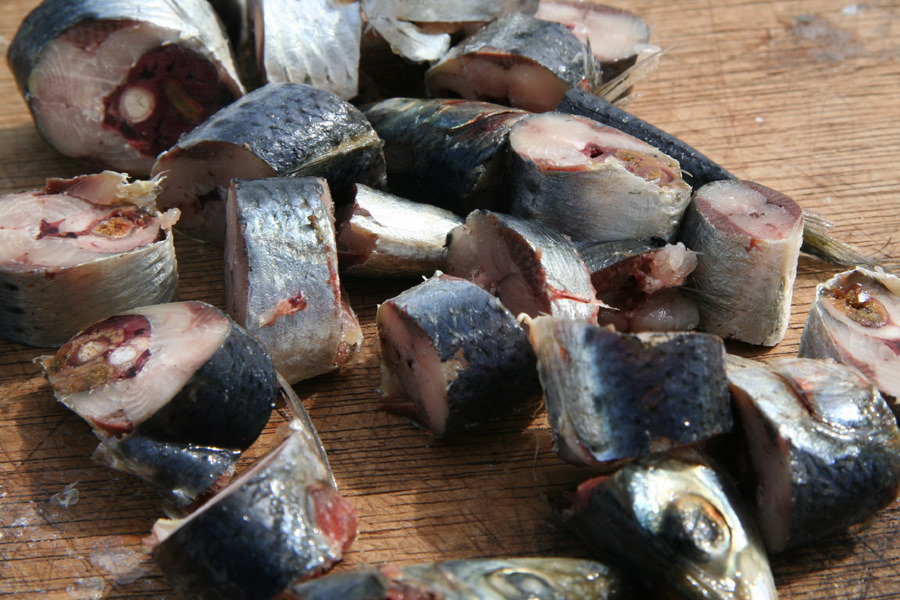
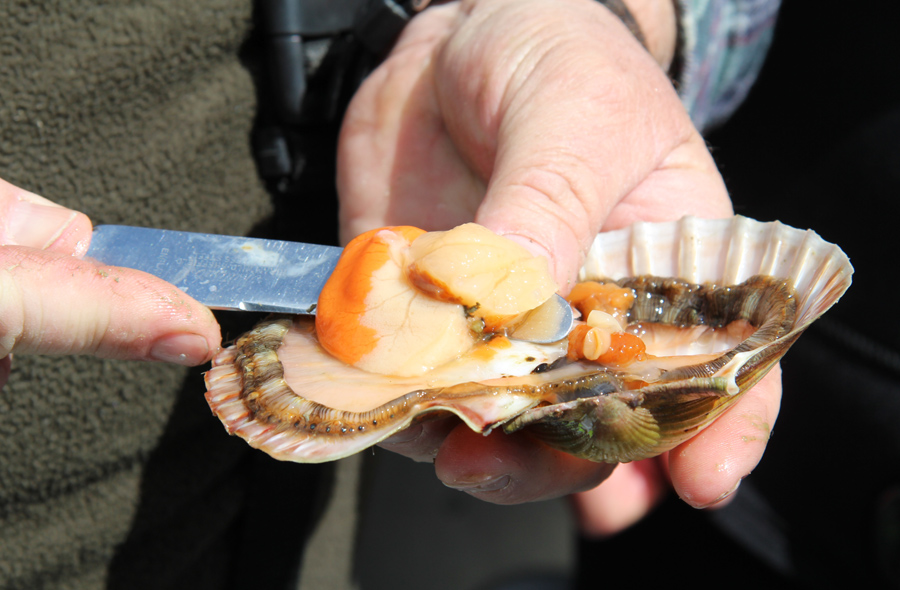
Effective ground-baiting involves distributing enough berley into an area to attract the fish in, but not so much that they become full and stop feeding. Chopped-up pieces of pilchard or cracked-open shellfish (especially kina) are good, as are the frames and heads of many fish.
I was lucky enough to witness the results of ground-baiting firsthand after watching hours of spear-fisherman/cameraman Darren Shields’ underwater video footage. It’s amazing how big snapper are attracted from all over when two or three kina are cracked and tossed into a likely area.
The keys to good ground-baiting technique include making sure you don’t over-bait an area and that your hook baits are positioned close to the ground-bait. While your bait does not have to be the same as your ground-bait, it does need to be something that’s likely to tempt the fish being targeted.
The magic of berley
A good analogy of how berley works is when you smell cooking onions at a sausage sizzle: it makes you hungry, prompting you to look for the source of the smell.
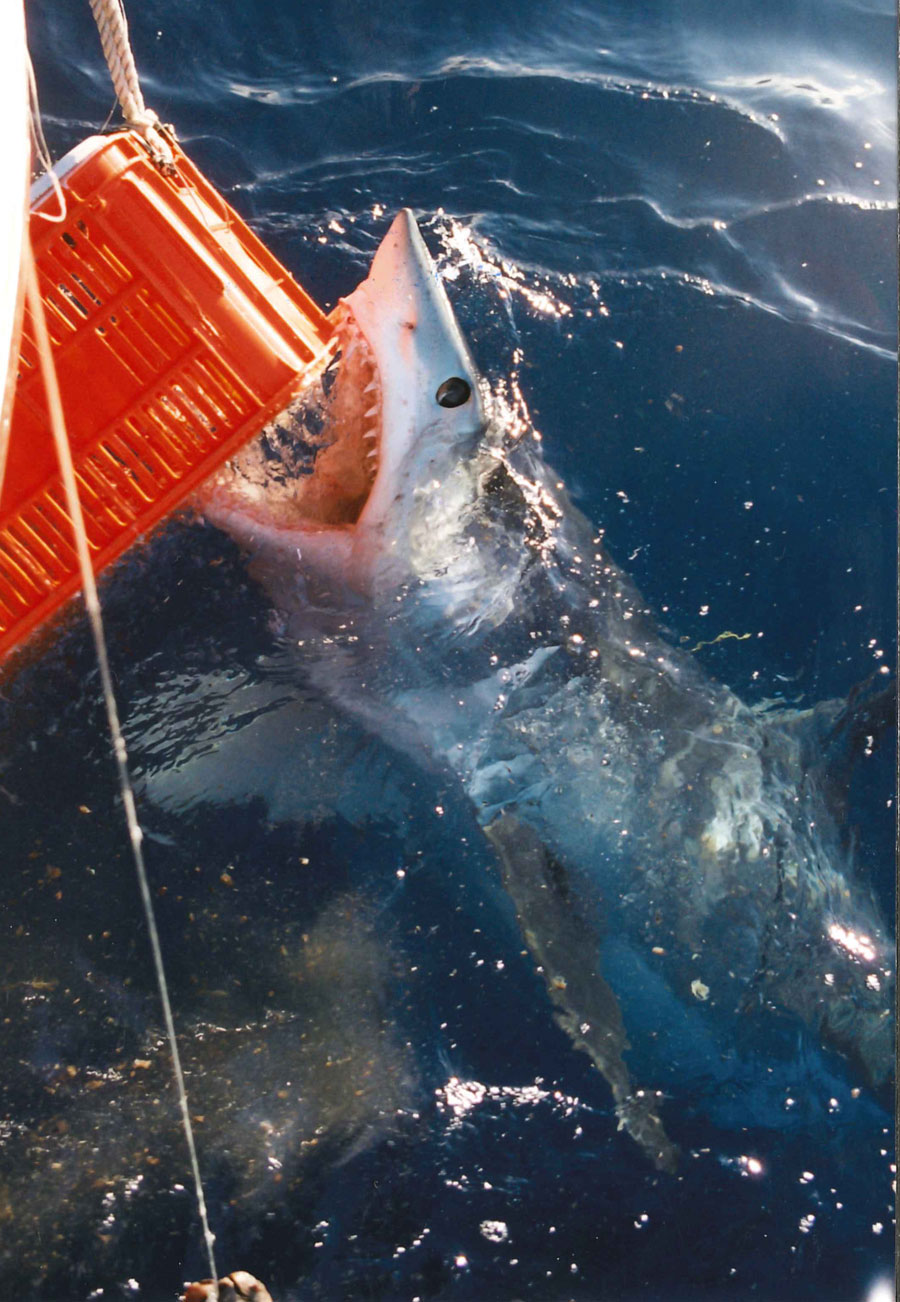
That’s why effective berley trails tend to be those that provide a constant and unbroken source of tidbits, attracting fish from far away but feeding only their hunger. (Which is why there’s little more annoying than a boat that cuts across your berley trail!) That’s where a frozen block of finely-minced fish product comes in handy, the slowly thawing particles washing away in a steady stream. Fortunately, there is plenty of commercially-produced berley available, and it comes in a wide variety of concoctions, from shellfish to tuna and salmon. These frozen ‘berley bombs’ can be suspended over the back of the boat (especially in shallow water) or put in a weighted berley pot – such as a Wobble Pot or similar – which takes the berley down to near the bottom when the wind and/or current are strong, a length of cord holding it at the desired depth.
Another way to berley is to get a fish frame such as a skipjack tuna or kahawai, tie it through the gills with a rope, and dangle it over the side of the boat or off the rocks. This works well if there’s a bit of wash, as small bits break off and create a reasonable scent trail that attracts fish.
Fish have a highly developed sense of smell; certain berleys attract them while others trigger a feeding response, so it pays to use both attracting and ground-baiting berley techniques when out fishing.
Berley also has its place when lure fishing, as the goal is to attract fish close enough for you to catch them with whatever technique you’ve chosen.
Berleying the natural way
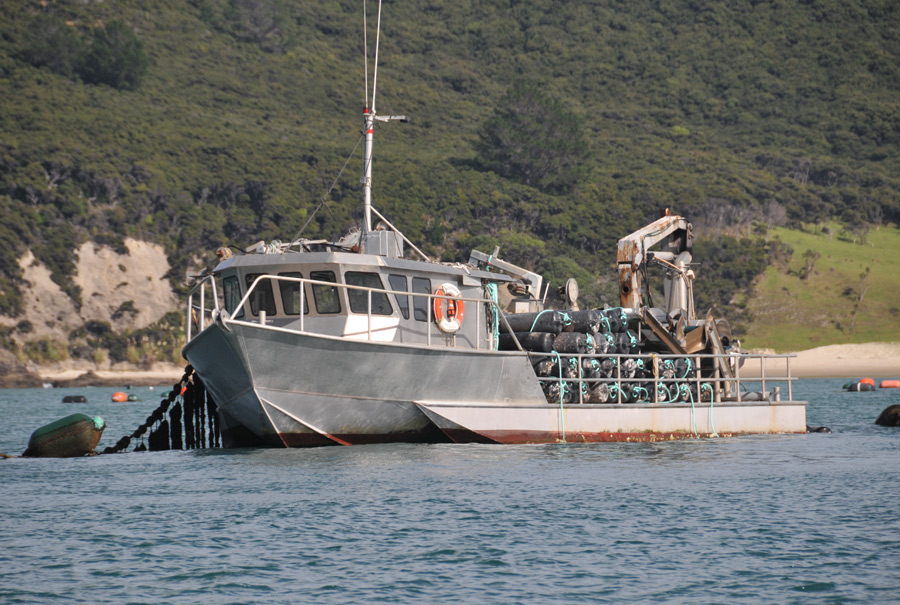
There are also some places where natural berley trails occur, and anglers can take advantage of them, such as mussel farms when harvesting is taking place, or down-current of salmon farms in the canals of the South Island, where salmon food drifts through the cages to feed eager wild trout waiting below. These trout grow to immense sizes by gorging on the free food.
D.I.Y. berley
Making your own berley can be cost effective. In addition to using up any old leftover bait and fish scraps of kahawai, trevally and kingfish, you can add such things as rice, bread, crushedup shells and sand. The only stuff you shouldn’t use is anything rotten, as this may have an adverse result.
Even if fishing in a strong current, berley can be very effective, attracting all sorts of fish from miles away, and able to do so from any part of the water column, from the surface to the seafloor, depending on weighting and where it’s positioned.
I have always maintained that if you berley a location long enough and regularly enough, it will turn into a good fishing spot.
Bonus berley tips
- Regulate the flow as much as possible, either by keeping it very frozen so it slowly disperses and/ or by cutting just a few holes in its plastic bag before putting it in an onion sack or berley pot. If it disperses too quickly, the trail feeds the fish too much, diminishing their appetite, and if it’s placed deep down, out of sight, you may not be aware when it runs out.
- If fishing for bottom-feeding fish in deeper, currentaffected water, be sure to use a well weighted berley pot that’s tied off forward of the stern (keeping it away from angler’s lines) and up a bit off the bottom, as the current flow’s better here and the pot’s less likely to get snagged.
- Try fishing a small live bait next to your weighted berley system: john dory, kingfish and even snapper will be attracted by the berley trail and find your offering wriggling enticingly nearby.
|
----- Advertisement -----
|

Fishing Reports Visit Reports
Hauraki Gulf Fishing Report 11/06/26
Workups the best option mid-Gulf for quality snaps and kingfish Fishing across the Hauraki Gulf... Read More >
Bream Bay Fishing Report - 11/06/26
Normal transmission returns! It seems only the hardy have been wetting a line these last... Read More >
Raglan Fishing Report - 11/06/26
Solid snapper hook-ups out deep With the continuation of more settled weather there’s been some... Read More >
Canterbury Fishing Report - 11/06/26
Brave the cold, reap the rewards With a big southerly blow through here yesterday, it’s... Read More >



Major Bites
Minor Bites
Major Bites
Minor Bites
Comments