
Madai and Inchiku Jigging Part 2
I tell ya, Japan really does lead the world in technology and innovation when it comes to catching snapper.
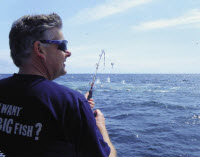 In fact, they seem so far ahead of us here in New Zealand in this respect that it’s not funny. Fortunately though – probably due to how good our snapper fishery is here – we do not need that same extra edge required when huge numbers of Japanese anglers compete for the increasingly few remaining fish. I am fascinated by their abilities and the technology in Japan, to the point it’s on my bucket list to go there and fish for madai (snapper) with Japanese anglers.
First up from this part of the world were slow-jigs (also known as ‘madai’ jigs), which are very effective, but I believe the new inchiku-style lures are even better at catching snapper. And I’m in a good position to claim this, after only using soft-plastics, slow-jigs and, more recently, inchiku jigs while onboard Wavedancer, the charter boat I skipper. It’s in everyone’s interests to find out what the flavour of the day is at the time, as this can change regularly for various reasons, so I usually rig my guest’s lines with a variety of different lures and rigs and see which do the business. For quite a while now Inchiku jigs have tended to perform the best. I believe it’s due to their erratic action, along with the pulsating soft-squid lure, which the snapper often seem to attack – if you use them the right way.
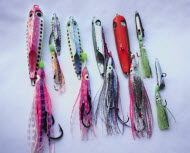 There are a few brands out there already. They’re all very similar and work well. Qualities to look for include having decent hooks and that the plastic-squid lure is soft and supple. The latter makes quite a difference, as it is the tentacles that really come to life underwater if nice and supple; those with stiffer tentacles might last a little longer, but they don’t get eaten as much. Consequently, you’ll need to come to terms with the fact that the squid-skirt part of the lure must be treated as a consumable, and that they will need to be replaced at times.
When looking after anglers on Wavedancer, it’s important for me to be able to change the skirts quickly and easily. That’s why I have a good supply of skirts and hooks ready to go – and go through them we do, so make sure you can get replacement hooks and skirts for any lures you purchase. I have been using the Prowler range of inchiku jigs with much success. I particularly like their hooks, as they’re a good size and solidly built. Hooks and skirts are available as spare parts and easy to change out. I also like their price!
These lures come in different weights and I have seen them from 10g up to 300g. The smaller 10g lures are known to be very effective when the snapper are being fussy in the shallow water; don’t be put off by the diminutive size of these lures – they are proven to be deadly.
To determine what size is suitable at the time, aim to use the smallest (lightest) one that enables you to get to the bottom when drifting and then lets the lure keep bouncing along the bottom for a few minutes afterwards, until the angle of the line becomes too great, requiring the lure to be wound in and dropped again.
Inchikus come in many colours. My favourites are blue/silver and anything with pink. No surprises here, really – these are very standard colours for any lure used to target snapper.
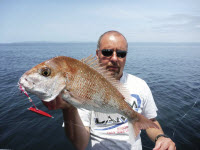 However, catching snapper on lures is more than selecting the right lure on the day: the gear and technique used are also vital to consistent success. For a start, you should have the right rod and reel. Although soft-plastic tackle will do the job, like anything else that’s specialised, a rod designed for the task will perform better – and it’s even more fun! I’ve found that comparatively short (less than two metres), lightweight rods with a parabolic action are well suited to inchiku jigging duties, and their ideal ratings should be around PE 0.5-1.5.
PE is the system of weight measure used to rate rods so they accommodate the correct poundage of braid. Just add a zero to the PE rating to get the poundage, and then convert it to kilos if you wish. This means PE 1 equals about 10lb (4.5kg), so PE 0.5-1.5 equates to around 5-15lbs (2.2-7kg).
There were not many good rods available for this sort of fishing when I started, especially not reasonably priced ones, so I designed my own. Called the Ocean Angler Powerflex Multi-Purpose rod, it measures 5’8” (1.7m) in length and suits dropping and working lures from a drifting boat in moderately deep water. I’ve been stoked by the performance, as it’s been everything I’d hoped for when inchiku jigging, with the classic Daiwa Sealine SL20 reel that accompanies it helping to bring out its better qualities.
I suggest using braid between 4 and 8kg for the best results, and tying on 2-3 metres of 7-10kg fluorocarbon leader. Much more than this and you will detract from the lure’s action.
As for the action, I am discovering that fish will often take a lure that is still or paused after being worked or twitched. So I’ve been concentrating on resting the lure on the seafloor, or letting it remain still, and this has often produced some great catches.
I also visualise and concentrate on having two parts to my technique: the first is to attract the fish to my lure, and the second involves getting the fish to attack it. Try this:
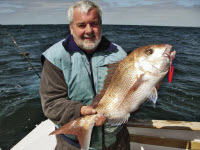 Drop your lure to the bottom, wind out the slack, then give it two or three twitches, a couple of lifts or a slow-motion mechanical jig, before letting it rest on or near the bottom for up to 10 seconds. The twitching and working of the lure attracts the fish, while the pause triggers them to bite. I reckon fish see the pause as a good time to attack a baitfish, as it’s at its most vulnerable and they don’t have to chase it.
However, it always pays to mix up your technique with different types of twitches and to let your lure sit on the bottom for varying lengths of time. Try and visualise making your lure look nervous and twitchy or injured and dying.
I am also a great fan of winding up and dropping, as fish often take inchicku jigs while on the drop, or after the first lift, so regularly winding up and dropping is a no-brainer. This is especially the case when there are baitfish around, as the snapper can be feeding on them well off the bottom.
Best of all, inchiku jigs often work well when nothing else is turning a scale, so are becoming my go-to lures when there is not much sign or surface activity around. Look for even a few marks on the sounder, drop your inchiku jig down, and see what happens. You may well be surprised.
– And leave your bait behind.
 |
This article is reproduced with express permission of |
Fishing Reports Visit Reports
Tauranga Fishing Report - 28/05/26
Tarakihi on the bite Trips are few and far between at this time of year,... Read More >
Canterbury Fishing Report - 28/05/26
Fresh and salt turning it on! It is not very often I get to say... Read More >
Bay of Islands Fishing Report - 28/05/26
Lures paying dividends We finally had a break in the SE winds that have been... Read More >
Manukau/West Coast Fishing Report - 28/05/26
Snapper and gurnard in the harbour The weather has finally taken a turn for the... Read More >


Major Bites
Minor Bites
Major Bites
Minor Bites
Comments