
Long-lining tips and techniques
- 1 Comment
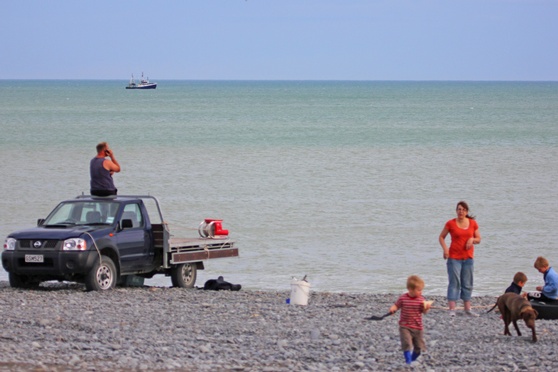
The long line towards success
Long-lining is not rocket science, but there are some tips and tricks to improve your success as Peter Langlands explains…

There is no doubt long-lining is increasing in popularity, offering an effective way to secure a feed while perhaps spending quality time with friends and family down at the beach.
Doing well with long-lining is not rocket science – I believe the key to maximising and diversifying the catch is often determined by simply having a range of fresh baits on offer. For example, when long-lining at a new location for the first time, I alternate between three main bait types to gauge what is out there, before narrowing down the bait types to suit whatever turns out to be present.
These three main bait types are: oily fish baits, crustaceans and shellfish baits. Each type will attract different fish species, so alternating them often brings a varied catch. Oily fish baits work well on snapper, kingfish, kahawai, school sharks and trevally, while crustacean baits attract rig, flounder, elephantfish and snapper. As for shellfish baits, these are especially effective on trevally and blue moki.
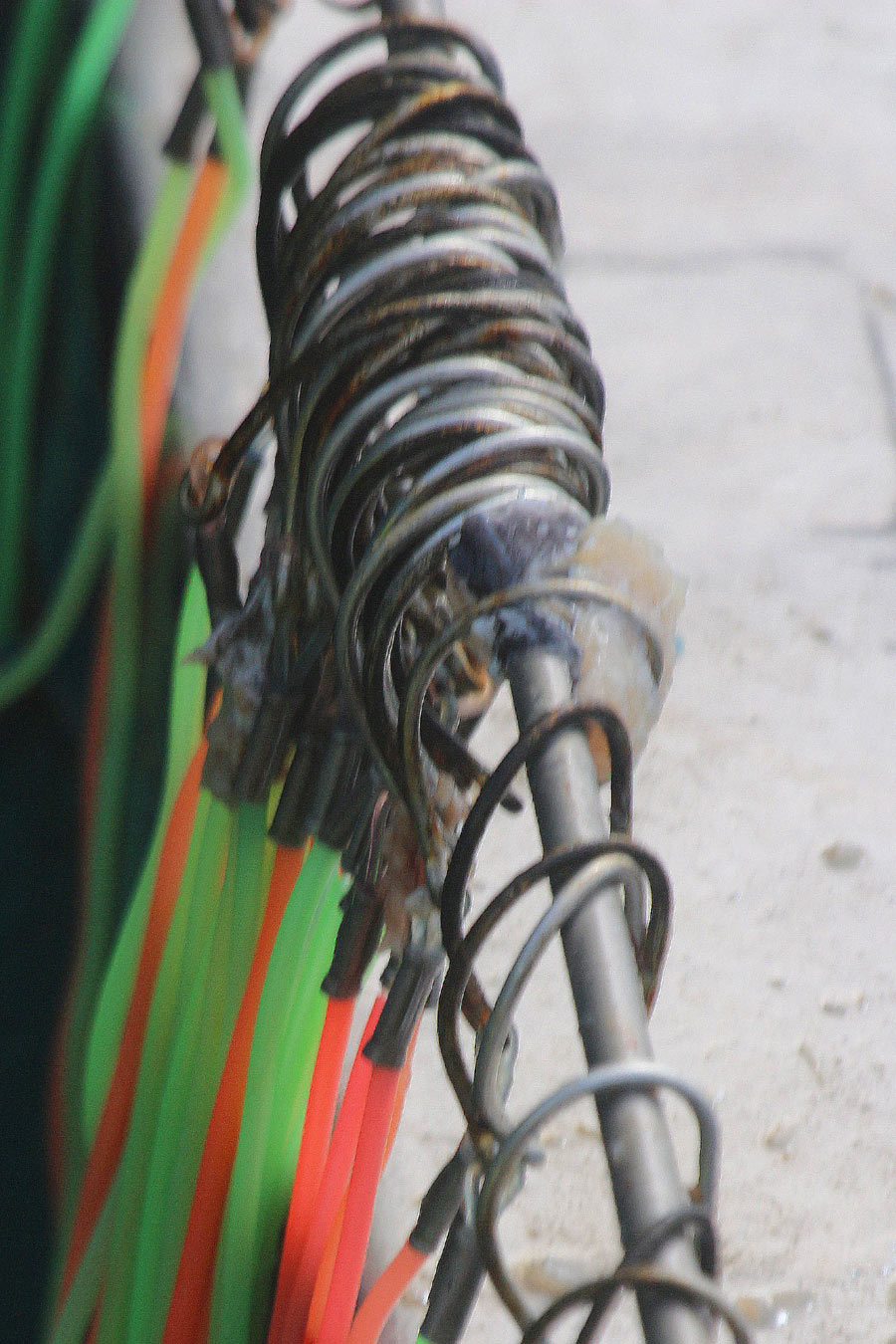
Long-lining is so often very effective because the baits are sitting hard on the bottom where many fish feed. Also, having 25 baited hooks in the water means more scent, so they act as a berley trail at the same time. Better still, the movement of hooked fish is likely to attract other fish into the vicinity which may themselves become hooked.
While we tend to think of a simple 25-hook long-line set off the beach, there are many other long-lining options, some of which, though already promising, are still in their exploratory stages in New Zealand.
For example, a basic 12- to 15-hook long-line can be deployed from a kayak; you can track the reef contours and set close in to the foul with breakaway traces should the gear become snagged. Using a series of small floats can also assist by preventing the baits from snagging up when setting a long-line around a reefy area.
Pelagic (open water) long-lines can be used too, with hooks spread far apart to target species such as kahawai, kingfish, warehou and even salmon. The line can be rigged with floats at each end and tracked as it drifts. Lighter long-lines can also be set in estuaries and muddy harbours, using smaller hooks with baits placed on the bottom to catch species such as flounder and large yelloweyed mullet. Trials so far with lighter long-lines for flounder are very promising, and as seasonal net bans come into place, being able to long-line for flounders is becoming an increasingly practical option.
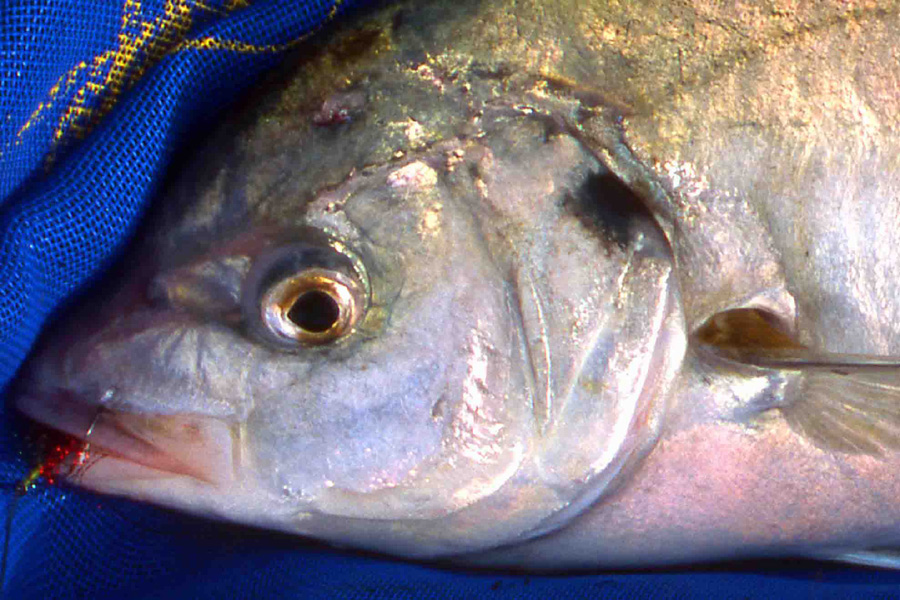
Another very important consideration is getting the weighting of the line correct. You want the baits sitting on, or just above, the bottom; baits too far up in the water column will often catch juvenile fish. However, having said that, there are times when spreading baits through the water column works well, especially over foul territory; simply use a series of floats and weights along the line to help spread the hooks vertically and increase the diversity of the catch.
Many fish concentrate just beyond the breakers, so resist the temptation to head towards the horizon to fish at maximum range! Consequently, if your initial set is unsuccessful, try different distances until your catch rate improves. Look for deep gutters in the surf break as a clue as to where fish will be concentrated in the surf zone. These are often marked out by heaps of shells on the beach. Setting at low tide and fishing the incoming tide is the most effective. Placing long-lines on the sandy drop-off just wide of reefs can also work well, as can setting it across water-colour changes.
Using two 12-hook long-lines (as long as there are at least two people on the boat) can be more effective than using one 25-hook long-line – at least until you ascertain how snaggy the area is. You can also cover different areas to work out where the fish are concentrated.
Having quick-change clip systems is recommended, as is fluoro tubing on the traces; in addition to attracting fish to the bait, the tubing offers some protection from toothy fish such as school sharks. Smaller circle or Mutu-style hooks are best because they usually self-set in the corner of the fish’s mouth, enabling you to release any unwanted fish unharmed (catching more than the limit can be an issue with long-lining at times, so this may be useful).
Long-lining is often a group activity. The more people there are to share the rounds with the gear and collect baits, the easier it is. Three is a good number. Going thirds in purchasing a beach torpedo system makes it a lot more affordable, but, of course, the catch must be shared three ways, too.
Also, a long-line left to passively fish while you do some line fishing can be a good insurance policy to make sure you have a few fish to take home. Short sets of no more than two hours allow you to release any unwanted fish alive and reduce the chances of large, toothy fish nosing in.
Now finish the day with a beach BBQ, and share the deliciously fresh seafood with friends and family!
Bonus bait tips
It pays to use fresh baits and secure them to the hooks with bait-elastic.
Salting fish baits can increase their firmness and hence longevity on the hook.
Often you will catch paddle crabs when using oily fish, which can be used for subsequent sets into the night for rig and snapper.
Many fish are visual feeders, so try flasher hooks (baited) at intervals along the line – say, every fifth hook. Flashers will increase catch rates of trevally, gurnard, kahawai and, in the south, blue cod as well.
|
|

Fishing Reports Visit Reports
Outer Hauraki Gulf Fishing Report 06/08/26
Mixed fortunes The coming week of weather looks like a tale of two halves for... Read More >
Canterbury Fishing Report - 06/08/26
Canals hit and miss It’s cold, damn cold! Truly feels like winter has finally arrived... Read More >
Bay of Islands Fishing Report - 06/08/26
Snapper and kingfish firing First, my apologies for missing reports during July – it’s been... Read More >
Bream Bay Fishing Report - 06/08/26
Winter snapper bite slow Nothing much has changed since the last report a fortnight ago.... Read More >


Major Bites
Minor Bites
Major Bites
Minor Bites
Comments