
Early winter trout options
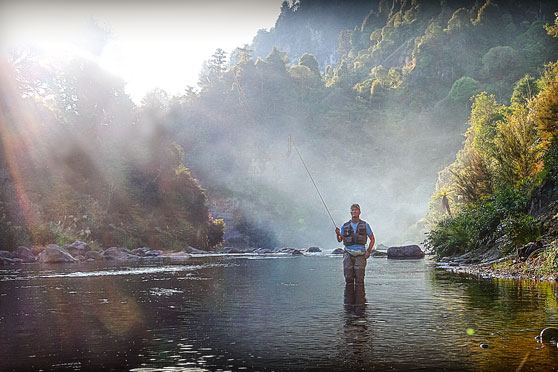
Gone are the long, balmy evenings, the cold creeps in quickly and the daylight hours are reduced dramatically. Breathable waders once again become the norm for the river angler and for those who stand out in the lake edges, the trusty neoprene waders are a must.
On the bright side, most of the visiting overseas anglers have now left our shores and either headed off to fish other exotic destinations around the world or travelled back home for their own northern summer.
Fishing guides around the country are winding down their busy fishing season and now that the tourists have left, most of our waterways have far less angling pressure than they had over the summer months, so there are some positives for the local angler.
Across New Zealand during the months of April, May and June the weather starts out settled and dry but quickly becomes more changeable, leading into mid-winter. As the conditions change, so too will your tactics if you are to remain successful.
Often fog will blanket the river valleys for the first couple of hours of dawn light, revealing only the mountain tops. It’s a stunning landscape until the sun finally breaks through the mist, exposing bright, beautiful blue skies above with little wind. If you are up in the hills at this time of the year you will have every chance of seeing a feeding deer on the river flats before the sun breaks through the mist.
Around the Central North Island, Eastern Region and the Auckland-Waikato fisheries, many of our back-country rivers remain open until the end of June, giving opportunities for a couple of extra months before anglers are restricted to the Taupo and Rotorua regions.
So, what are the fishing options before the winter spawning season gets truly underway?
In the North Island the obvious options are to target early runs of spawning rainbow trout that enter the tributaries of Lakes Taupo and Rotorua after the first freshes have hit during the autumn months.
Don’t forget that the waterways that feed these lakes – particularly the Tongariro River and the Ngongotaha Stream – already hold some very large brownies. Brown trout run the tributaries earlier than rainbows, entering rivers during the summer months. Often the fish that run early in autumn are some of the biggest spawning fish of the season.
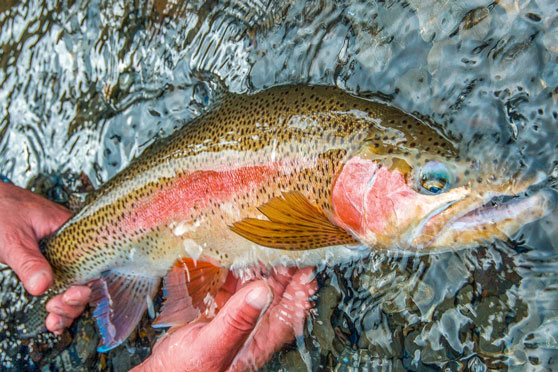
Brown trout take much longer than the rainbows to run through to their spawning grounds and will often spend up to three months longer in the rivers.
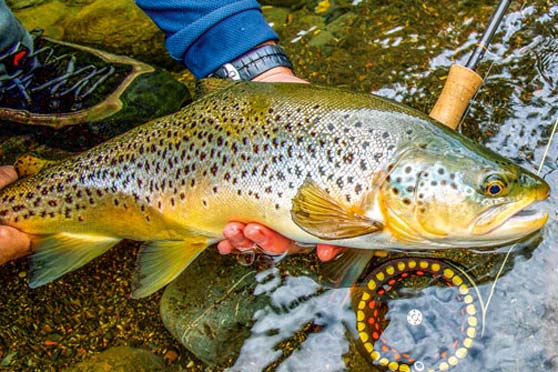
As a rule, these normally lake-resident fish, especially the rainbows, hug the bottom once they enter the rivers, not moving far to intercept food, so upstream nymphing is the most successful technique to catch them.
This is highlighted in waterways such as the Hinemaiaia, where the heavy European short line nymphing techniques are deadly.
In the North Island, fewer people chase the fish that come out of the major river systems and their feeder streams like the Waikato, Whanganui, Rangitaiki and Mohaka Rivers. And yes, the tributaries that flow into these watersheds all have very good spawning runs of fish.
Like fish found in the large lakes, these river fish will enter feeder streams after a fresh and drops in the barometer, just like fish in the Taupo fishery. Sometimes, these tributaries can hold surprisingly high numbers of large fish, but at other times the same water will be almost devoid of fish.
River resident fish differ from lake-dwelling trout in that they will still swing long distances to intercept food, so your flies, especially the nymphs, do not have to be so heavily weighted. When the conditions are right, and the run or pool is not too deep, these fish may still rise to take a dry fly. However, this is the exception and most fish are taken sub-surface on various nymph patterns.
As the air and water temperatures cool, many of the fish will move out of the oxygenated pocket water that they held in over the summer months. Most fish will then occupy more traditional lies in the rivers, such as the runs and pools where food is more concentrated and river currents are less taxing. When conditions are good, some good action can still be found up in the bush.
In the Rotorua district, the first frosts of the year will see those anglers who concentrate on the winter spawning areas begin to congregate at fingerling release sites. The first frosts usually occur in May but can be as early as the start of April.
Once these large lake fish come in to spawn en masse, trout up to six kilograms will be caught. On Lake Tarawera the twin streams, Te Wairoa and the Waitangi popular. Many fish have already started stacking up along the north-eastern end of Lake Rotoiti, from the Waiiti Stream back through to the dump and pipe areas. Ruato Bay will also be starting to fire.
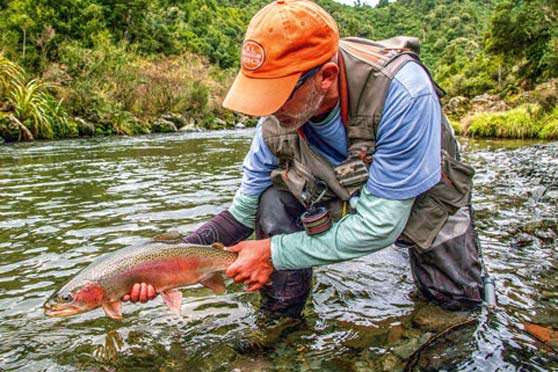
These places will be busy with anglers, as they’re all close to the road and the fish are stunning. Most of the fishing will be done in the hours of darkness, anglers fishing up until midnight and starting again at 5am.
Floating lines and luminous flies are very popular, and many anglers will fish two flies; perhaps a dark fly such as a Craig’s Night-time or Scotch Poacher tied 50cm away from the luminous fly.
During the daylight hours, many anglers fish with Booby Glo-bugs, fishing them static. It’s almost stray-lining, like snapper fishing, but with flies.
Other anglers retrieve standard Booby flies in a range of colours using fastsinking shooting heads. This is also a great way for the boat fly fisherman to target fish, especially over deep-water drop-offs like those found around river mouths. Try it at the Delta at the mouth of the Tongariro, or the log pool on Lake Okataina. It is a fantastic way to fish and can produce some awesome fishing before these fish settle down to spawn.
Leading into winter, the thermocline in the lakes become less defined as the water temperature falls. The fish tend to be scattered because the smelt become more widely spread and trout leave the depths and move up into the shallows to feed.
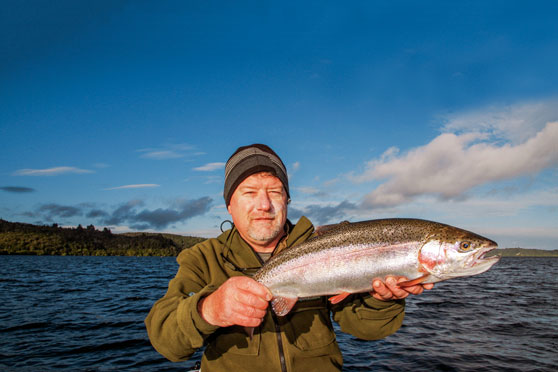
For boaties, methods like jigging won’t be quite as effective as they were over the hot summer months. Traditional methods such as harling and trolling once again come into their own and the use of a downrigger can produce some great boat fishing.
Remember that most Rotorua lakes have some restrictions on them from July 1. Get to know and understand the fishing regulations for the winter months, especially if you’re near Rotorua.
Come July, the best fishing will be concentrated more towards the Taupo winter fishery and the Tongariro and Tauranga-Taupo rivers. But don’t pack up your six-weight just yet – get out and enjoy what’s left remainder of our back-country fishing before you have to give it a three-month rest.
|
|
This article is reproduced with permission of |

Fishing Reports Visit Reports
Tauranga Fishing Report - 28/05/26
Tarakihi on the bite Trips are few and far between at this time of year,... Read More >
Canterbury Fishing Report - 28/05/26
Fresh and salt turning it on! It is not very often I get to say... Read More >
Bay of Islands Fishing Report - 28/05/26
Lures paying dividends We finally had a break in the SE winds that have been... Read More >
Manukau/West Coast Fishing Report - 28/05/26
Snapper and gurnard in the harbour The weather has finally taken a turn for the... Read More >



Major Bites
Minor Bites
Major Bites
Minor Bites
Comments