
Czech/Euro Nymphing techniques with light fly-rods
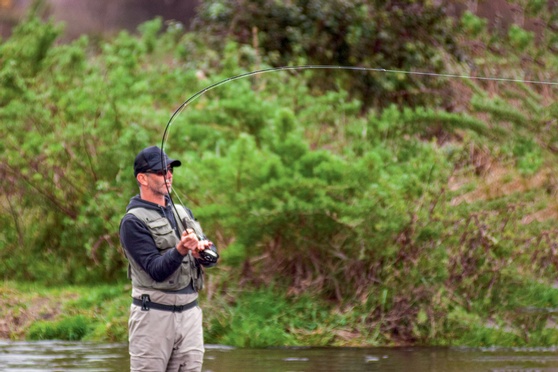
Czech/Euro Nymphing was introduced to New Zealand by members of the NZ Fly Fishing Team, who picked it up from foreign competitors. And even if some anglers struggle a little with some of the fine points of the technique, there are still benefits to be had by adopting the specialist light rods designed especially for this style of fishing, even on big waters like the Tongariro, suggests Creel Lodge host Grant Alley…
I find using the long, light rods designed for trout fishing using the Czech/Euro nymphing style very rewarding. These rods offer more versatility, present more fishing opportunities and playing a trout with lighter gear is, in my view, great fun and easier than using heavier rods.
To clarify, ‘Euro’ nymphing is made up of a few distinct styles. Czech nymphing is also known as short line nymphing, French nymphing is a variation with a longer leader and Polish nymphing is yet another variation.
It basically involves throwing a short line to close-in fish in fast water using light gear. It can be a very productive method and has several advantages. One is that there is less pressure on the fish due to the softer rod flex and reduced water drag produced by the lighter line weights. Using this tackle, I recently landed an 8lb brown in very fast water, managing to manoeuvre the trout through the current to the riverbank, and have done the same on many occasions with five and six-pound rainbows.
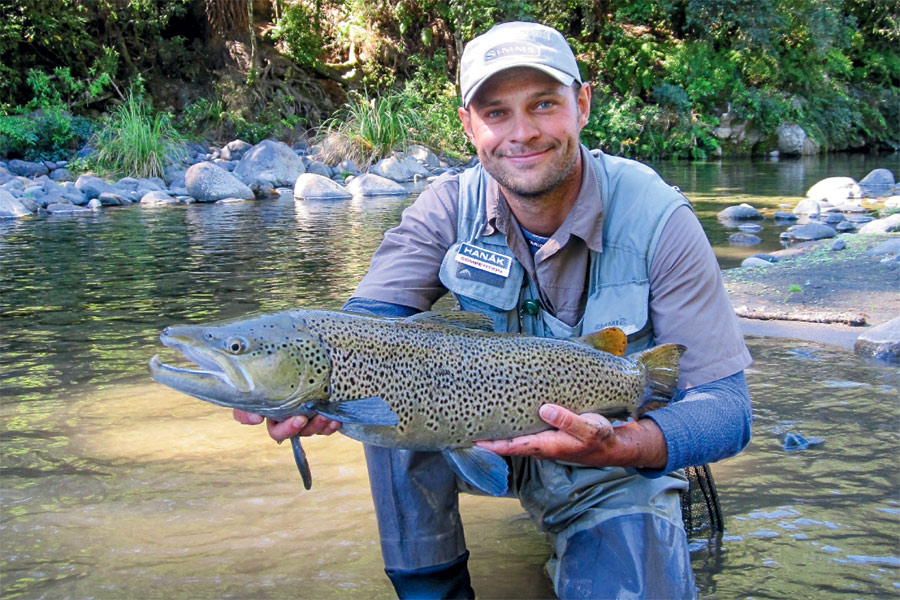
The light Euro Nymph rods can handle even the largest fish.
If you are happy nymph-fishing your favourite pool with an eight or nine-weight rod with matching line and a large indicator, then so be it. But if your shoulders or arms ache after seven hours of flogging the water, maybe it’s time to consider the benefits of lighter gear.
Years ago, I was introduced to Czech Nymphing by Roman Heimlich of the Czech Republic, a long-time member of the country’s fly-fishing team. I recall the first day we went out: his rod was a four weight – and being more than a little sceptical, I asked Roman if he thought such a light-weight rod would subdue a big Tongariro rainbow. He simply shrugged his shoulders and off we went for the day.
It was March, and by day’s end I had the technique somewhat sorted. The last fish of the day was a 14lb brown for Roman. He looked at me and said: “does that answer your question?” Our total fish of varying sizes for the day was 34. Previously I had almost given up on Czech/Euro nymphing through frustration but am glad I persevered.
Spawning trout swim through all terrain, not simply resting in the distinct pools where the majority of anglers’ fish. When the carparks are full in the winter months, having the ability to put a fly into less obvious spots can pay dividends. The Tongariro is a great place to learn about fishing with lighter gear. Other, smaller rivers seem much easier to fish with light gear after fishing here. With practice, you will be able to put a nymph under a bank, or into fast, low or clear water where previously, a heavier floating line and indicator would have sent a trout into a state of panic.
Thin lines cast easier in the wind and after casting a light-weight fly rod a few times, anything heavier feels like a fence-batten. A very delicate presentation can be made as there is less water disturbance with the light line.
Suitable leaders can be store-bought or you can make your own. Attaching a micro ring to the lower dropper and tip section will allow you to quickly change your Czech nymph for a dry-and-dropper or even a straight dry-fly set up, when appropriate. If it becomes windy, replace the reel containing the Czech-line with one loaded with a size three to four size, weight-forward nymphing line and small indicator.
There are dozens of videos, books and magazine articles on the subject of light-rod trout fishing, many written by competition anglers. Some of the technical detail goes over my head, but much can be gained by studying this information. Of course, nothing beats having someone show you how it’s done!
A lot of water has gone under the bridge since my introduction to this style of fishing and many fish have been landed since. I live on the Tongariro and this method is now my go-to technique. When the fishing pressure comes on, the Euro nymph technique has a distinct advantage over other methods. You’re not required to cast long distances and smaller pockets and faster waters are far better covered.
If you are looking to try this style of fishing, the following setup is an easy introduction. The most important thing is to use a rod built for the purpose – 10ft in length, preferably with a flexible tip and a very strong butt section, in 3 or 4 weight. Brands such as Vision, Hanak (European), Orvis, Primal, Redington and Echo are all viable options.
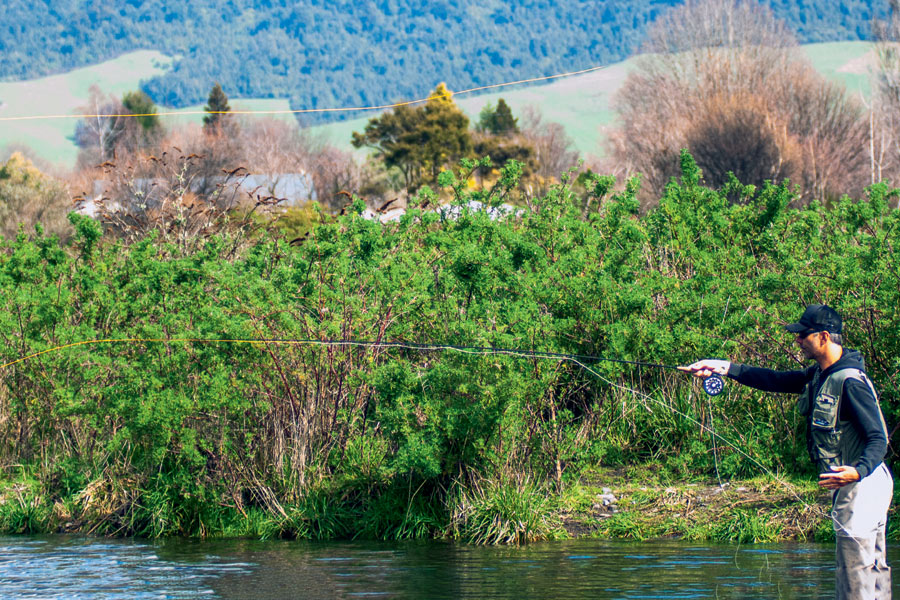
Try a #4 Euro rod as a regular nymphing setup.
The Europeans are the originals, having made these rods longer than anyone else. However, other rod makers are now producing equally good models. It is important to try these rods and find one which feels right for you, as they can range in price from $300-$900. To complete the set up you will need a Euro Nymph line, a leader of around 2.5-3m and a weighted point fly (depending on water flow and depth) with a dropper approximately 50 to 80cm above it. When you have the technique under control then experiment with different leader types and lengths. For example, a 2.5-3m leader will give you control over your cast whereas anything longer will simply go all over the place. Similarly, if your rod is not a Euro Nymph rod, you won’t be able to cast smaller flies when the situation requires it, especially during the summer months on those beautiful small rivers and streams. While any weighted nymphs can be used, barbless jig hooks with inverting tungsten beads allow for better drifts and less snagging. The weight of the nymphs should be determined by the depth and water speed, but don’t go overboard. Ridiculously large nymphs sometimes have to be used to compensate for using the wrong rod with a leader that is far too long.
The theory that a heavy rod is required to handle a big Tongariro trout with half a chicken for an indicator is rubbish. The heavier the rod and line, the more drag there is on a fish and the more a fish will pull. With the lighter tackle, experience has shown me that they will often stop or swim upstream when hooked, and are generally easier to control, even in rapids.
If you find the Euro nymphing method difficult, try using just the light rod with a weight forward floating line, and continue nymphing and dry fly fishing as normal. No matter what method you use to catch trout, just get out there and enjoy yourself.
|
|

Fishing Reports Visit Reports
Tauranga Fishing Report - 28/05/26
Tarakihi on the bite Trips are few and far between at this time of year,... Read More >
Canterbury Fishing Report - 28/05/26
Fresh and salt turning it on! It is not very often I get to say... Read More >
Bay of Islands Fishing Report - 28/05/26
Lures paying dividends We finally had a break in the SE winds that have been... Read More >
Manukau/West Coast Fishing Report - 28/05/26
Snapper and gurnard in the harbour The weather has finally taken a turn for the... Read More >


Major Bites
Minor Bites
Major Bites
Minor Bites
Comments