
Choosing the right lures
 The widespread acceptance of polyethylene braid lines for fishing has resulted in big advances in rod and reel technology to handle the increased pressure these lines can apply. Sam Mossman explains how to up-spec lure hardware to cope with the strain.
There have been many huge changes in fishing tackle over the last few decades, with the latest wave primarily kicked off by the arrival of PE (polyethylene) braided lines in 1993. ‘Braid’ has largely supplanted nylon monofilament in many fishing disciplines, with its high-strength (per diameter) and very low stretch characteristics providing some significant advantages.
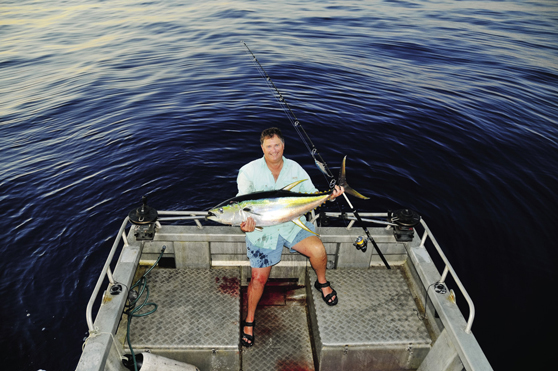
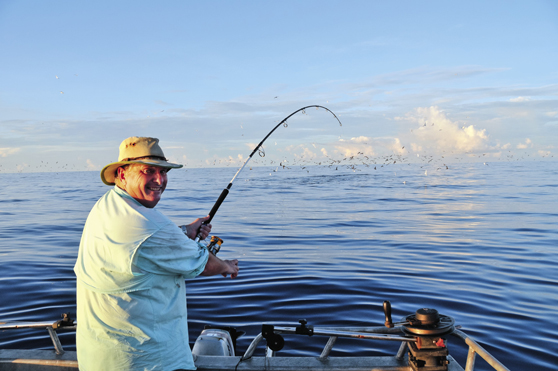
 Put another way, the greatly reduced diameter (per strength) of PE line means spool capacity is less of an issue and much smaller reels can be used with higher breaking strains of braid. Nowadays, large, powerful fish such as kingfish, tuna, giant trevally and even marlin are regularly targeted – and caught – on eggbeaters and jigging reels that have been greatly strengthened to handle braid line use. Rods, likewise, went through a rapid up-spec, and the development of nano resin systems has resulted in many of today’s light but near bullet-proof sticks. Assuming proper rigging and knotting techniques (such as the FG/PR suite of knots) are used, terminal tackle can now be the weakest link in modern rigs.
 The principles of toughening up terminal tackle to cope with the pressures exerted by modern braid lines apply all the way from the heavy casting gear used on big fish down to tiny lures and light rod-and-reel combos used on snapper, kahawai, skipjack and the like. While the ratio of tackle size and strength in relation to fish size and power is similar in each case, the strain transferred to the terminal tackle is much greater with braid lines, as there is little of the pressure-absorbing stretch that nylon monofilament provides.
Buy right
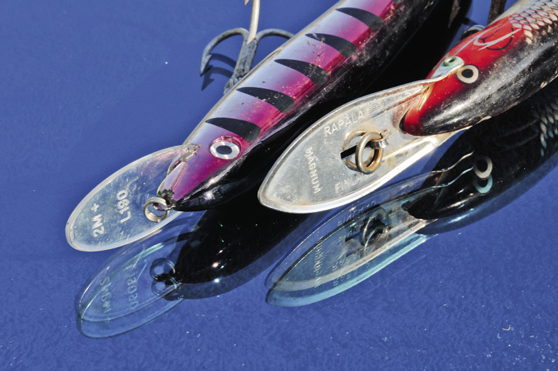 When shopping for full-bodied lures such as bibbed or bibless minnows, stick-baits or poppers, look for through-body wire construction. The same principle applies to metal jigs as well -– you don’t want the lure eyelets or tow points to be pulled out under the pressure of loaded-up 24kg or even 37kg tackle. Having all the wire eyelets and the tow-point connected is one way to achieve this. Then, even if the lure is destroyed, you can still save the fish. To be fair, some of the space-age plastics now used in lure manufacture can take a massive amount of pressure.
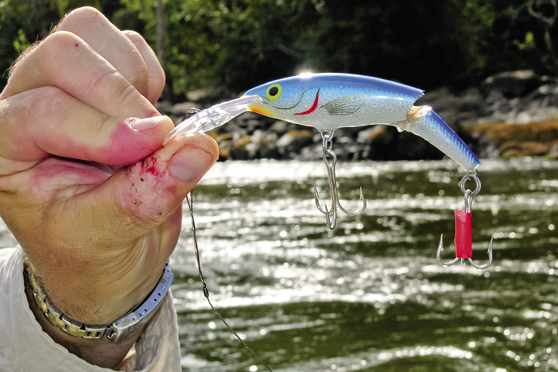
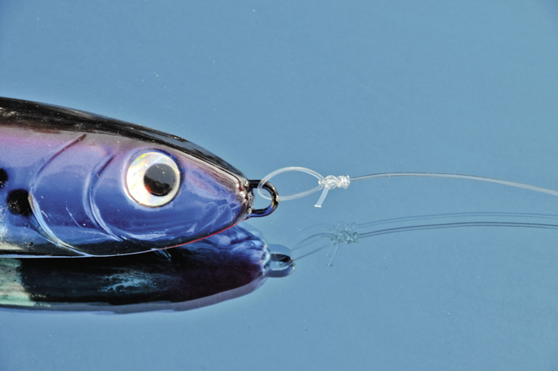
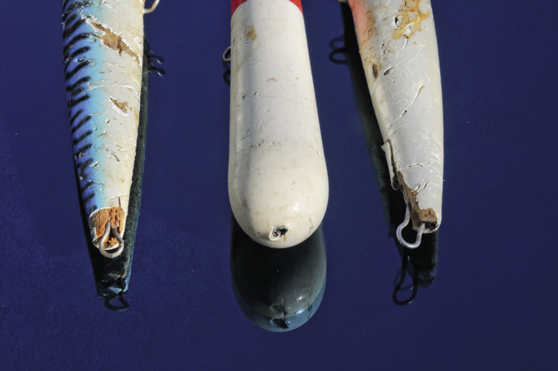 Lures with an action – either inbuilt or imparted by the angler – need to move freely on the end of the line for best results. This can be allowed for by tying a fixed loop knot such as a Perfection Loop or Lefty’s Loop. A thing to watch for here is the loop knot chafing on the tow point over time. To avoid having to check and re-tie the loop knot all the time, a knot (such as a Uni knot or Improved Clinch) can be tied that seizes down tight on the tow point. It won’t move or chafe, but can restrict the lure’s action (especially minnows and stick-baits), making it less attractive to the fish. The cure for this is to have an extra ring attached to the tow-point eyelet and tie the line to that. Many commercially-made lures (Halco and Rapala are examples)
  incorporate this extra ring when produced, but these can be added in the form of a split-ring, provided it is high quality and really strong.
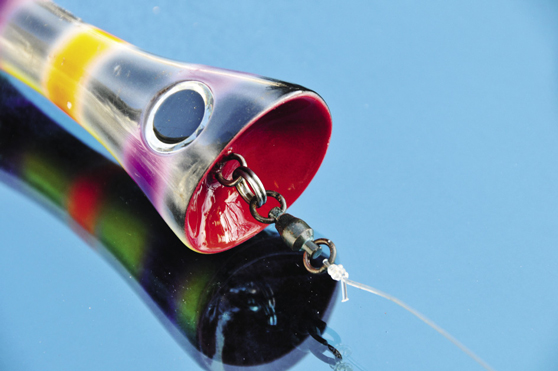
One variation is a strong swivel tied (or crimped) semi-permanently to the leader’s end with an equally strong split-ring attached. This, with the aid of split-ring pliers, has the added advantage of allowing lure changes without re-doing knots or crimps and consequently chipping away at your leader length. It helps keep twist out of the line, too. Such a system works best with larger lures, the action of which are not greatly affected by the extra weight of the swivel and split ring on the nose.
Lore of the rings
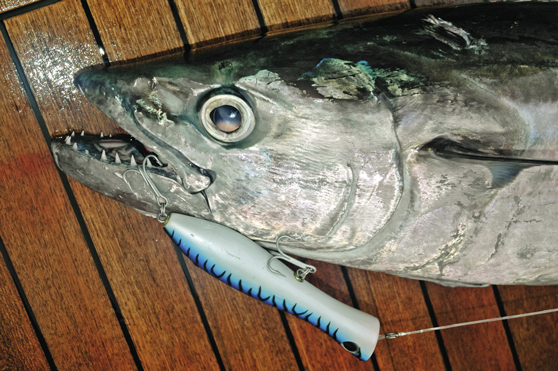 Aside from adding a strong but flexible tow point on active lures, the other obvious use for spilt rings is to attach the hook or hooks to the lure. This is a high pressure point, especially when there are two hooks – often trebles – attached. What can happen is this: when a fish is initially hooked on one hook, the second hook often ends up along the body of the fish as it fights. If the fish then foul-hooks itself on the second hook (especially when the fish’s body is curved in preparation for its next tail stroke), a tremendous amount of pressure can be put on the split-rings when the next tail stroke is made, with the fish bringing all of the swimming muscles along one side of its body to bear.
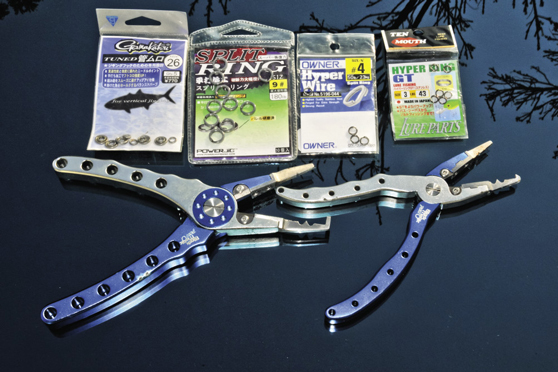
 Be sure to buy the highest quality split-rings you can when toughening up your lure’s hardware. You cannot tell how strong a split-ring is just by looking at it, as some quite thick-wire ones can be made of very soft metal. Some of the best products include Owner Hyper/Ultra Wire, Tsunami, Decoy, and Ten Mouth. Because these are very strong split-rings, opening them with a thumb-nail or a hook point can be almost impossible, making a quality set of split-ring pliers to install them essential. Fortunately, there is a good selection of these tools available nowadays.
Finally, be sure to use the correct size of split-ring for the hook and the lure. Over-sized split-rings can bind up in the eye of the lure and/or the hook, which then sits out of alignment so the lure doesn’t swim properly. On the other hand, if the split-rings are too small, they may not fit over the hook-eye easily and can be overstretched while being rigged.
|
|
This article is reproduced with permission of |

Fishing Reports Visit Reports
Hauraki Gulf Fishing Report 11/06/26
Workups the best option mid-Gulf for quality snaps and kingfish Fishing across the Hauraki Gulf... Read More >
Bream Bay Fishing Report - 11/06/26
Normal transmission returns! It seems only the hardy have been wetting a line these last... Read More >
Raglan Fishing Report - 11/06/26
Solid snapper hook-ups out deep With the continuation of more settled weather there’s been some... Read More >
Canterbury Fishing Report - 11/06/26
Brave the cold, reap the rewards With a big southerly blow through here yesterday, it’s... Read More >


Major Bites
Minor Bites
Major Bites
Minor Bites
Comments