
Catching and eating trout

Trout are widespread throughout the country and much of the fishery is readily accessible.
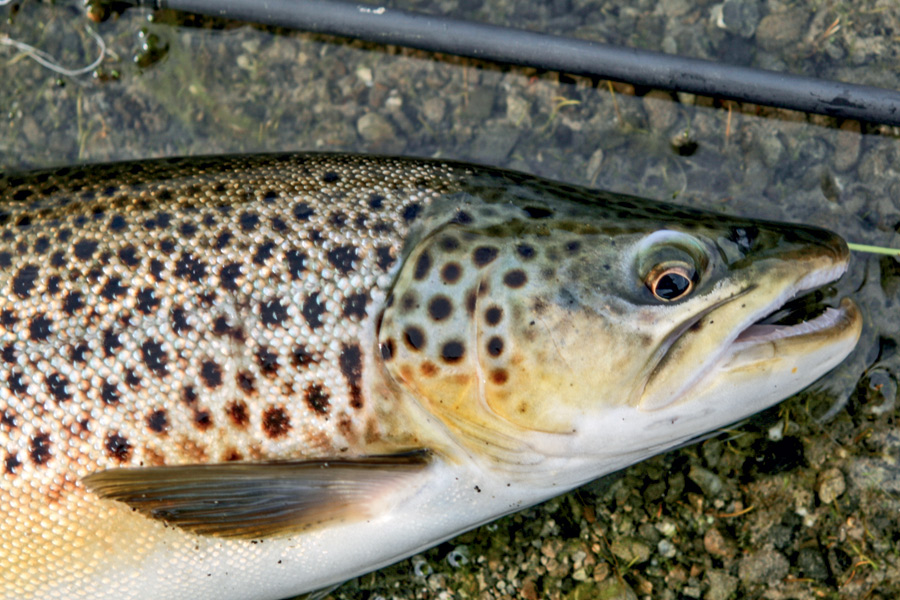
Overall, brown trout are the most widely distributed, but rainbow trout are also available throughout the country. All regions also have year-round trout fisheries, especially the lakes and lower sections of larger rivers.
Although many fisheries are accessible from the shore or river bank, enabling many good options for family fishing, a small boat opens up even more trout-fishing options.
Some prospective anglers might be put off trout fishing by the annual licence fee, but it will quickly pay for itself, especially the family licence, which offers the very worthwhile bonus of encouraging families to go fishing together. Trout are hard-fighting fish, often averaging 1-2 kilograms, so catching one is likely to cement a lifelong interest in fishing for a kid.
Trout can be caught using a range of methods. Bait fishing, especially in lowland areas, is ideal for young families. Later on, youngsters may want to progress to more active fishing methods, such as spin fishing and, eventually, fly fishing. Fortunately, you can set up for all these methods with just a modest budget, making trout fishing overall quite affordable. Best of all, it will now be possible to put some tasty meals on the table.
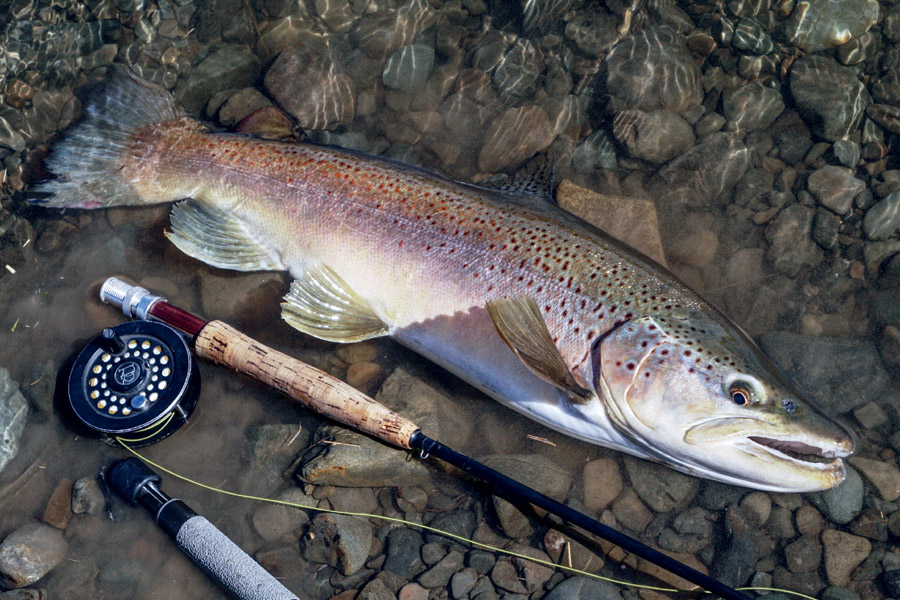
Trout, in my opinion, should rate at the top of the Best Fish Guide. After all, trout are fast-growing fish, often reaching a catchable size in 2-3 years. So, at an environmental level, trout fishing is sustainable – provided the water flows, the habitat and water quality are looked after.
Another big plus is that trout fishing does not involve destructive fishing practices (as many commercial sea fisheries do) and trout can only be caught recreationally, with no commercial harvesting of trout allowed in New Zealand.
Even better, the vast majority of trout feed on high quality wild food items rather than feed pellets (like farmed salmon), so are likely to be healthier for people to eat.
For those looking for potential culinary candidates, you need to find an area with lots of trout: rivers and lakes hosting large numbers of smaller trout offer the best option in my opinion. Besides, removing fish from locations with large numbers of trout can lift their average size over time.
Fish & Game has a lot of useful information brochures on spots where anglers are encouraged to harvest trout: www.fishandgame.org.nz. Conversely, locations with small numbers of larger trout, such as headwater rivers, should be the domain of catch and release only.
I like to take trout around the 0.5–1 kilogram range, as these are often the tastiest, rather than older, larger and often tougher fish, which are also important breeders. For similar reasons, trout that are close to spawning are best released, too. Besides, much of the fish’s goodness goes out of the flesh and into the eggs or milt sacs.
Environment and flavour
Trout, unlike most other fish, have flesh that’s highly variable in quality; basically, the condition of the trout is determined by its diet and the environment it’s caught in. Consequently, some trout can taste muddy, while many others yield flaky, flavoursome flesh. This makes choosing the right ones to keep especially important.
In general, trout caught in lakes will have a better flavour than fish caught in rivers, where the trout have to work much harder to get food. However, I find many coastal and lowland locations often yield good eating fish, too. As a rule of thumb, trout with a small head in proportion to their body size have usually grown quickly and will invariably taste good. Also, those trout with a diet heavy in koura typically result in orange, tasty flesh – typical of trout from many Central Plateau and Otago lake fisheries. Orange-fleshed trout can also be used to create superb sashimi.
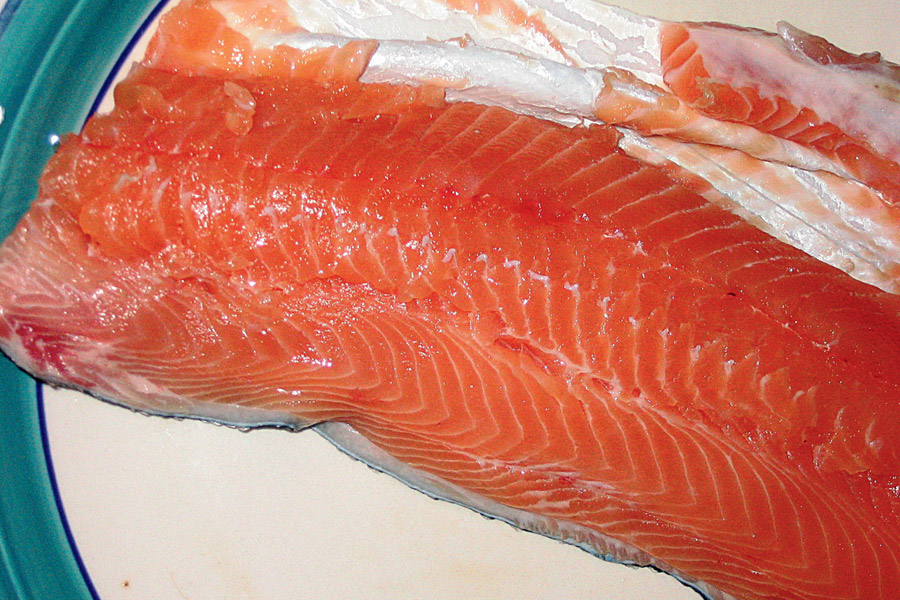
Trout with easily-shed scales, such as sea-run trout, generally make a great meal, too, no doubt due to their protein-rich diet. The best-eating trout, in my opinion, are brown trout that feed on crabs in estuaries. These trout can have flesh that’s a deep-red colour and full of flavour. A crustacean diet and brackish water make for a top culinary combination.
On the other side of the coin, long, skinny fish with large heads and fins (known as ‘slabs’) are best left in the water. This also applies to trout from higher altitude rivers with a primarily insectbased diet, as they tend to have pale, white flesh that does not make great eating. For this reason, such fish, especially those from headwater fisheries, are best released.
Preparing trout
Trout are the ideal size to bake whole, having a large amount of usable meat relative to their size. Baking one in tinfoil is a simple and tasty option; once cooked, you can gently lift the meat off the backbone.
Trout are also ideal for smoking, with their firm and flavoursome flesh responding well to manuka smoke.

In recent years, I have also simply taken the sides off the trout, salted them, and then left them to air dry. The trout gets cured by the salt and can be finely sliced – a very simple but tasty preparation.
Adding some seasoning can improve the eating qualities of paler-fleshed fish. A favourite recipe from my childhood involves filleting the trout, putting the fillets in a mix of lemon juice and wild mint, then leaving it to marinate overnight. That completed, coat the marinated fillets in seasoned flour, dip in egg, roll in panko breadcrumbs, and pan-fry in butter.
As a general rule when cooking trout, it pays to add a fair bit of salt and other seasonings, because they really lift the trout’s delicate flavour.
Summary
Our trout fishery is world class and robust enough to allow for a sustainable trout harvest from many areas. One of the exciting aspects of catching and eating trout is the variety of flavours available, as trout taste different depending on their environment. So take the plunge and get a licence – it’s an investment that will provide you with the satisfaction of securing your own wild food year round.
|
|

Fishing Reports Visit Reports
Outer Hauraki Gulf Fishing Report 17/09/26
Spring wind the handbrake. Spring is starting to make its presence felt in the outer... Read More >
Top of the South Fishing Report - 17/09/26
Early snapper in Tasman Bay. Well, spring is finally here, and the days are getting... Read More >
Bream Bay Fishing Report - 17/09/26
Good snapper catches reported. After Tangaroa turned off the fish tap for a month or... Read More >
Bay of Islands Fishing Report - 17/09/26
Pacific bluefin tuna for the lucky few. The last fortnight has seen more fishable days... Read More >


Monday 21 September 2026
Major Bites
 - -
- - Minor Bites
 - -
- - Tuesday 22 September 2026
Major Bites
- - Minor Bites
- -
Comments