
Boat ramp etiquette
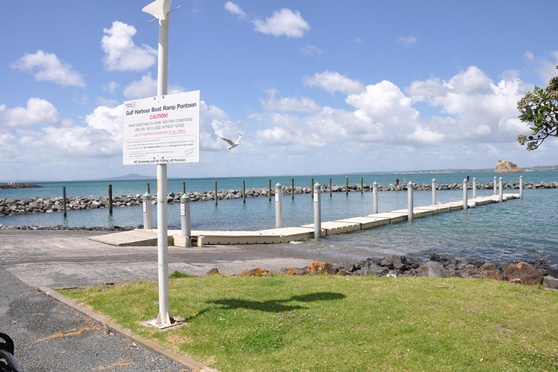
John Eichelsheim provides plenty of great tips and advice to make launching and retrieving boats as stress-free as possible.
Congested ramps
There are many, many thousands of trailer boats in New Zealand, so it’s not surprising boat-ramp congestion is a problem at times. On summer weekends, popular boat ramps often experience long queues, trailer parking can be difficult and tempers fray, sometimes leading to ugly physical confrontations.

Boaters who ignore basic boat-ramp etiquette can really raise the hackles of other boat-ramp users. Some are just arrogant or rude, but many are simply inexperienced and inadvertently hold up others because they lack the knowledge and skills to launch and retrieve their craft efficiently. A little patience goes a long way, but boat ramps are shared facilities, so the onus is on users to launch and retrieve their boats as quickly and safely as possible.
Here’s how...
Come prepared
Pre-launch preparation should happen before leaving home. Give the boat a thorough check-over. Make sure there is enough fuel (or stop on the way to the ramp to fuel up), check the battery is charged and that the steering works as it should. It’s better to discover the steering has seized before leaving your driveway than after launching the boat.
Check the trailer: are the lights and indicators working? Are the tyres the correct pressure? Boat trailer tyres should be inflated to a higher pressure than those on the tow vehicle. The recommended pressure is printed on the sidewall and is typically around 50psi cold.
Check the trailer coupling and safety chain. Make sure the tow ball is the right diameter for the coupling and the trailer is coupled securely. Carry a spare shackle for the trailer safety chain(s) – they have a habit of going missing at boat ramps! Check the trailer’s braking system. Is the hydraulic fluid topped up? Do the callipers work properly?
Check the integrity and security of the tie-downs, winch cable and safety chain to the boat. The boat should be winched up tight against the trailer post and the tie-downs placed under firm tension so the boat can’t move on the trailer in transit. Make sure the outboard flag is fitted, with a working light if intending to travel in the dark.
All of this preparation can be done the night before using the boat. Then it’s a simple matter of climbing into the vehicle and heading to the ramp the next morning.
Putting in
At a busy ramp there’s nothing more irritating than disorganised boaters holding up others because they are not ready to put in.
Those boaters who use both lanes of a two-lane boat ramp are pretty annoying too, as are those yet to master backing a trailer. The boat ramp is not the place to learn.
Avoid holding up other users by removing the tie-downs, fitting/checking the bungs and loading the gear while still in the car park before moving onto the ramp. Check the fuel line is connected, the keys are in the boat’s ignition, and the safety chain shackle is finger-tight so you are not fumbling around for a tool to undo it when on the ramp. Engage the spacer that prevents the override brakes coming on when you reverse the trailer.
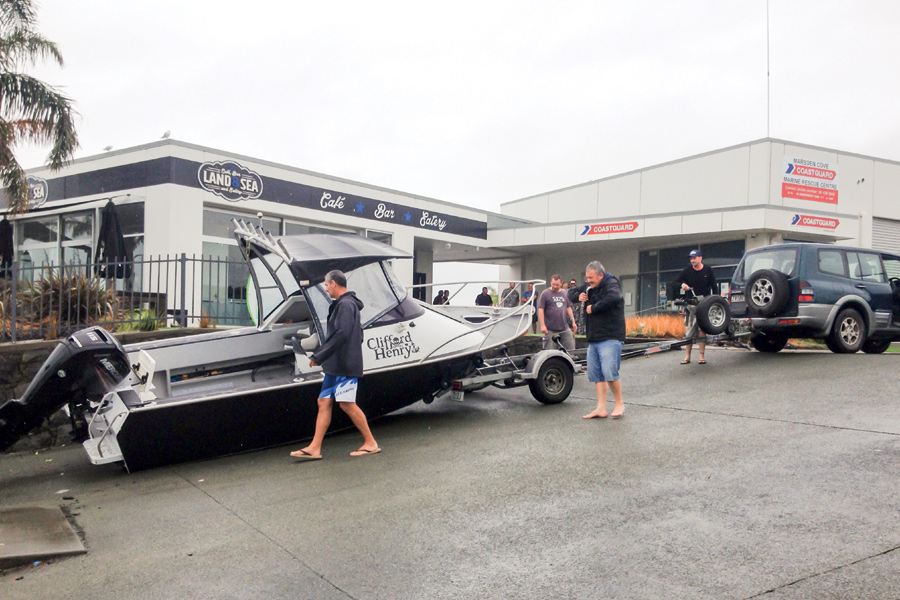
When everything is ready, slowly back the boat down the ramp, keeping to one lane on a multi-lane ramp. Stop with the trailer wheels in the water, undo the safety chain, and release the cable. Holding the painter, either push the boat off the trailer or reverse the vehicle another metre or so and hit the brakes to ‘bump’ the boat off.
Boats slip off modern multi-roller trailers very easily, so don’t undo the safety chain too early or the boat could end up on the ramp instead of in the water.
Once the boat is launched, secure it to the ramp finger or jetty while someone parks the vehicle and trailer, or, better still, motor clear of the ramp until the vehicle driver is ready to be picked up. Where practical, avoid holding the boat on the ramp because this prevents others using it.
Parking
Be considerate when parking the trailer. Make sure the trailer or vehicle doesn’t impede other vehicles, and if all the trailer parks are taken, you may need to de-couple the trailer and utilise a couple of shorter car-parking spaces.
If parking on the verge or shoulder beside a public road, make sure the rig is well clear of traffic and doesn’t impinge on private property.
Pulling out
Retrieving a boat at a busy ramp requires just as much preparation and patience as launching it.
There may be dozens of boats waiting to pull out, so for things to go smoothly, goodwill and tolerance are required from ramp users.
With multi-lane boat ramps, one side of the ramp or several fingers may be set aside to retrieve boats, while the other side is used for launching. In most cases there are no rules around this, just common sense, but obviously if someone is launching a boat, you can’t retrieve yours until they are clear of the ramp.
If the boat ramp has fingers, it’s usual to come alongside and secure the boat while someone gets the trailer. The next boat should tie up behind the first boat, because the order of boats on the finger is the order in which they should be retrieved. Queue jumping is bad form!
Sometimes there are so many boats waiting, incoming boats have to stand off until there is space to tie up on a finger. Patience and consideration goes a long way in such situations.
Dropping a crew member on the finger to retrieve the trailer and then standing off again can speed things up at a busy ramp. He or she can then join the line of vehicles and trailers waiting to pick up their boats.
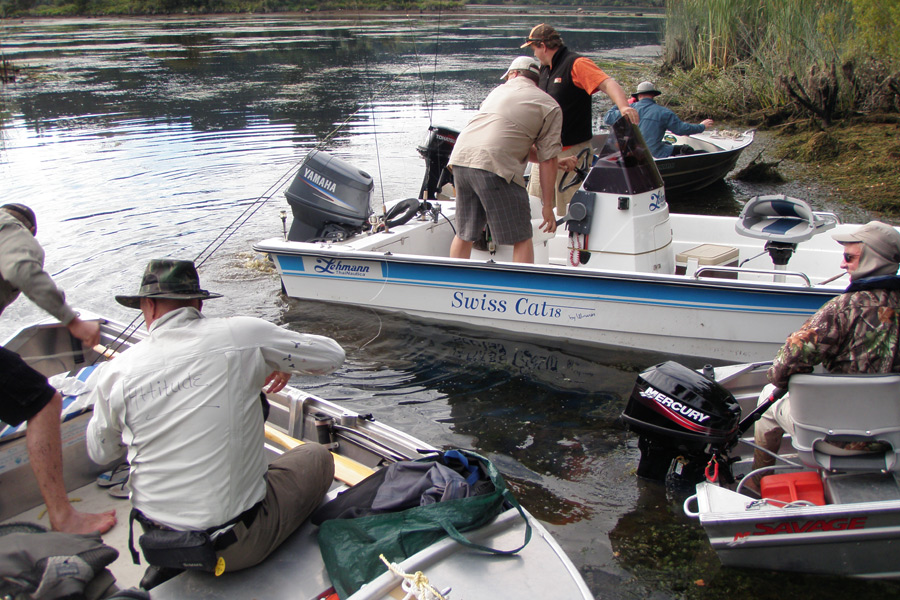
Where boat ramps don’t have fingers, it’s usually better to land the vehicle driver and stand off until he/she has backed the trailer into the water. Sometimes you can pull the boat ashore, beside the ramp, while you wait.
Although it can’t always be avoided, holding the boat on the ramp interferes with others launching or retrieving their boats. Controlling the boat on the ramp when it’s windy or rough can be difficult and wet, even dangerous.
Always run the cable down the trailer before approaching the ramp so its quick and easy to hook the boat on. Back the trailer into the water far enough so the boat goes on easily, but not so far it floats on the trailer, or it may not sit straight.
If waves are sweeping the ramp, try and time your retrieval between the sets and use a painter from a corner cleat to hold the boat straight as it comes on. You may have to get wet!
Driving the boat onto the trailer speeds up the retrieval process, and when done right it looks impressive too, but propeller wash can cause serious damage at the base of the ramp. Driving onto the trailer is expressly forbidden at many public boat ramps.
Going it alone
Handling a trailer boat at the boat ramp by yourself can be challenging.
If possible, choose boat ramps with fingers or jetties, because without them there’s nowhere to secure the boat while you park the tow rig. A protective seawall helps, too.
Otherwise, in some places you can pull the boat onto a beach adjacent to the ramp or, at a pinch, anchor the boat and swim or wade ashore to deal with the trailer – but the latter is risky. Also keep in mind that launching is the easy part – at the end of the day you’ve got to retrieve the boat, too.
There will also be challenges at the ramp. With no-one to help steady the boat and hold it straight, retrieving in windy conditions can be a real trial. Waves at the ramp make it even harder. It’s not so bad with a small dinghy or runabout, but a six or seven-metre cabin cruiser can be a real handful for a solo boater.
Trailer security
Trailer thefts from boat ramp car parks are all too common. While most occur at isolated locations, thefts also take place in large parking lots next to urban boat ramps.
There are a variety of security products available to ensure your trailer and tow vehicle are still coupled together when you return after a day’s trailer boating.
Some make it difficult for a thief to remove the trailer from your tow-bar, while others immobilise a wheel, making it impossible for the trailer to be towed away.
Such security devices offer insurance discounts, as well as peace of mind while out on the water, and can help protect against boat theft while at home as well.
Reversing a trailer
• Practice reversing a trailer away from the boat ramp. The more you practice, the more confident you will feel.
• Where possible, line up the boat and trailer in a straight line – it’s much easier to back down the ramp that way.
• Take it easy. Back down slowly and make small adjustments to the wheel to alter course, not large ones.
• If the trailer gets too far out of line, stop, go forward until the trailer straightens up, and try again.
• Learn to use your side mirrors to monitor the trailer’s progress, rather than swivelling your head.
• Raising the tailgate of an SUV or station wagon can make it easier to see an empty trailer, as can lowering the passenger seats.
• Dip your lights on multilane ramps so you don’t dazzle others backing down.
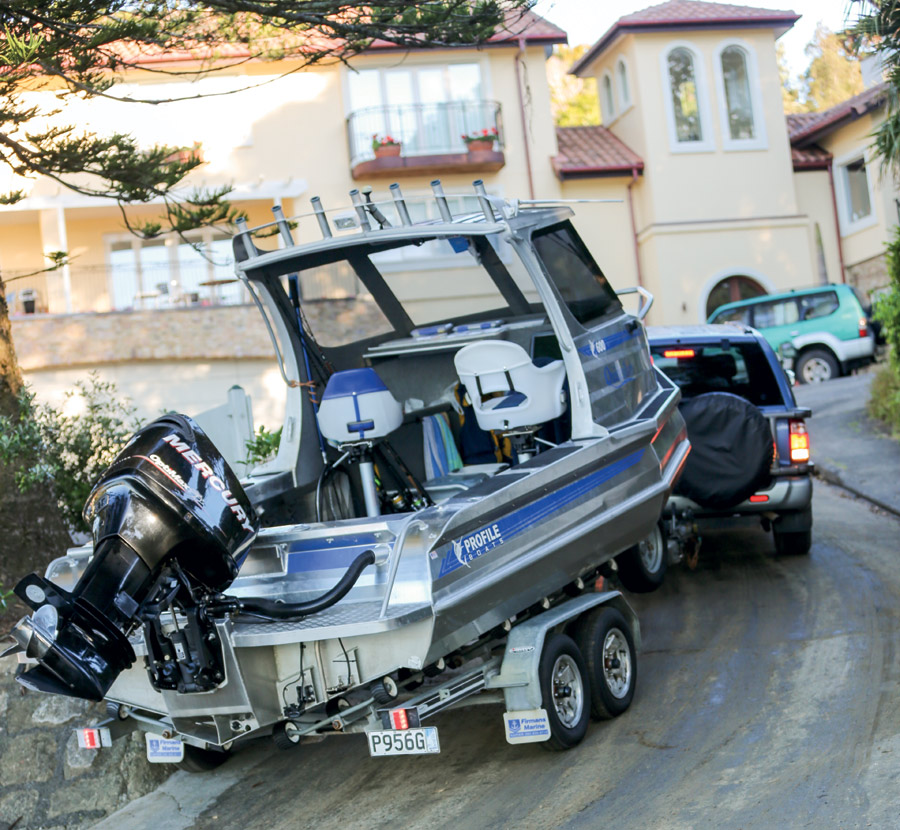
Launching
When launching a boat:
• As the driver reverses down the ramp, someone else walks beside the vehicle holding the painter (bow line), prior to pushing the boat off the trailer
• Move the boat to the jetty/ pontoon/finger if there is one, or have someone drive the boat clear and come back for the driver after he’s parked the vehicle and trailer
• To clear the ramp area, the person on foot walks the boat around the offside of the jetty
• The driver parks the vehicle and trailer, and returns to the boat.

Retrieving
On return to the ramp:
• Approach the jetty, pontoon or beach.
• If possible, drop off a person to retrieve the trailer. Back the boat away and stand off the ramp, or secure it to the ramp finger in order of arrival if there is room.
• Wait for your trailer to be positioned on the ramp
• Load onto the trailer
• Drive away from the ramp to prepare for departure.
|
|

Fishing Reports Visit Reports
Outer Hauraki Gulf Fishing Report 17/09/26
Spring wind the handbrake. Spring is starting to make its presence felt in the outer... Read More >
Top of the South Fishing Report - 17/09/26
Early snapper in Tasman Bay. Well, spring is finally here, and the days are getting... Read More >
Bream Bay Fishing Report - 17/09/26
Good snapper catches reported. After Tangaroa turned off the fish tap for a month or... Read More >
Bay of Islands Fishing Report - 17/09/26
Pacific bluefin tuna for the lucky few. The last fortnight has seen more fishable days... Read More >


Saturday 19 September 2026
Major Bites
 - -
- - Minor Bites
 - -
- - Sunday 20 September 2026
Major Bites
 - -
- - Minor Bites
- -
Comments