Hull Basics
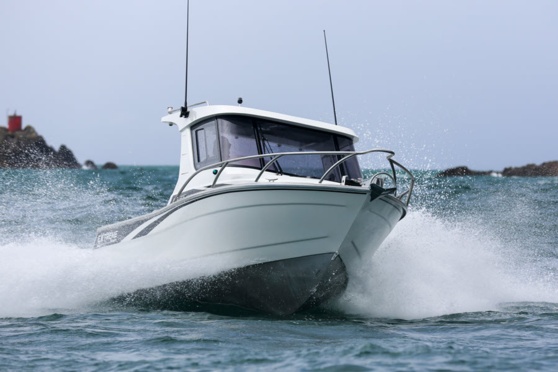
Several key elements matter when choosing a hull, including size, shape, build material, buoyancy, and stability.
Size matters
Choosing the right-sized rig will make a huge difference to your boating enjoyment. Your decision will depend on your budget, the sort of fishing and other uses you have in mind, where you live, the waters you will boat in, your intended crew, and the access available. Some boaties make the mistake of buying a big trailer boat that gets little use as it is too big and awkward to tow and launch. Your purchase should therefore be directed towards a vessel that will return the most use and enjoyment.
There is no standard system of measuring boat length in New Zealand, and the numbers on the side may not accurately reflect a boat’s actual length. The amount of space inside is also affected by the beam (width), so it is up to you to estimate if there is enough workspace to do the job that the new boat is intended for.
Things to consider include:
• How many people will you take on board?
• How far offshore do you plan to go?
• Where will the boat be stored? Will it fit lengthwise, height-wise, width-wise into, say, your shed, or can you manoeuvre it around the house onto the back lawn? Sometimes fittings like a drawbar hinge, or a fold-down canopy or rocket launcher, can solve storage issues.
Buoyancy
Everyone appreciates a good-looking hull, but when it comes to priorities, a prudent boatie always puts function over form. One particularly important aspect of a boat’s design is having a decent amount of reserve buoyancy (buoyancy over and above the boat’s weight) held in a number of separate sealed or foam-filled chambers. The rig should float if swamped, preferably upright, with enough buoyancy left over to support the crew and all the equipment aboard.
Stability
Another important aspect of a boat’s design is stability; that is, how stable the boat is in the water, or the degree to which it will take on a list when weight is moved off the centre line and to one side.
A boat which takes on an uncomfortable list when several of the crew moves to one side is said to be ‘tender’. In extreme cases, when the list becomes strong, any unsecured load may slide to the ‘low’ side, which can cause a capsize.
Good stability is a valuable aspect in a boat, especially in those where the crew will be standing up and moving around, or likely to have multiple people on one side to deal with the likes of big fish or when hauling pots/nets.
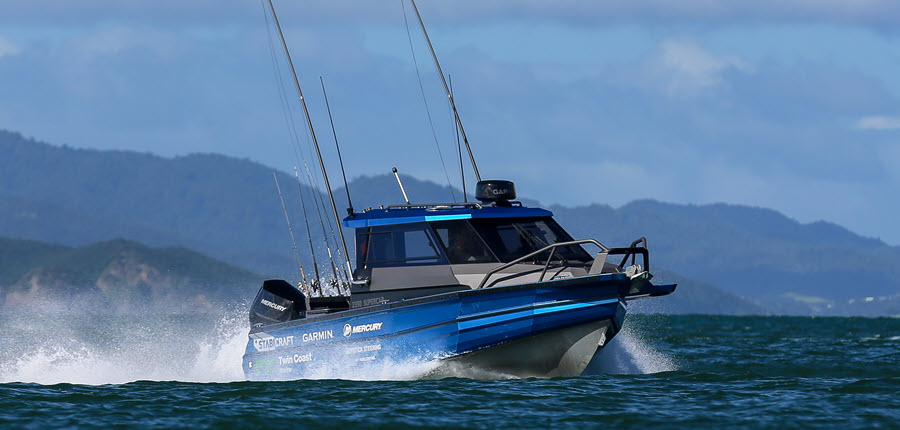
Some types of boats are inherently stable, particularly pontoon boats and catamarans, the basic designs of which also give them excellent load-carrying ability and high levels of reserve buoyancy. In New Zealand, pontoon boats seem to be the more popular of these two types.
The stability of monohulls can be affected by their deadrise (the ‘V’ of the hull, usually measured at the transom). In general, the shallower the ‘V’, the more stable the hull but the harder it rides. Deep-V hulls (with a deadrise of, say, 18 to 21 degrees) tend to ride softly but are less stable at rest.
Stability in monohulls can be improved with design features including keel-line, self-flooding ballast tanks; wide and/or down-turned chines (the line where the side and bottom meet); low centre of gravity; keels; and under-hull strakes.
Ride
Most people value a boat that rides softly, safely, smoothly, and dryly at a reasonable speed rather than bouncing and banging across the sea at high speed, beating up the crew.
The way a boat rides can be affected by a mix of the hull design, engine and prop set-up, balance (including fuel tank and engine placement), how you drive and trim the boat, and the sea conditions at the time. Other aspects include hull weight, how fine the entry is, and how full the ‘shoulders’ are.
Changing one design aspect can affect another. For example, a hull may be built with a fine entry and a deep-V with the idea that it will slice through the water nicely and give a good ride, but this can mean a reduced planing surface and the boat struggling to get up on the plane. This issue, in turn, might be corrected by the addition of a series of planing strakes to the bottom to provide more ‘lift’, but these can make the hull pound. While the above concepts are true in general, some boats perform quite unlike their designs would suggest, hence the importance of a sea trial!
Aluminium
Aluminium is available in a range of gauges (thicknesses). Commonly used is some combination of 3-8mm marine aluminium sheet, depending on the size of the boat. Heavier gauges are typically used for larger craft and lighter gauges for pontoon construction. Usually, the bottom is the heaviest, with lighter sides, and the topsides are lighter again. This keeps the weight and centre of gravity low and helps the stability and ride.
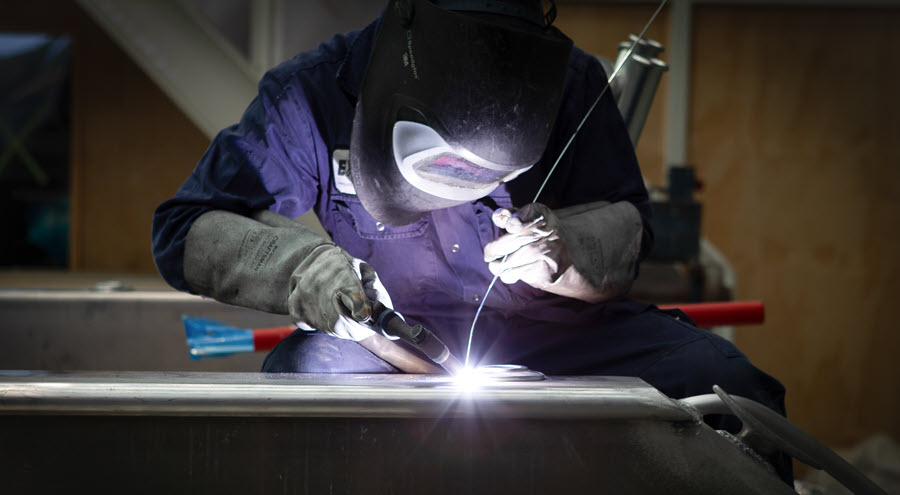
The majority of hardcore fish-and-dive machines tend to be aluminium because they can be easily altered for specialist needs and are perceived to take the wear and tear of fishing better.
Aluminium is generally perceived as simple to work with. Aluminium boats can be easily customised by cutting and welding, so one-off items may be fabricated without having to spend a whole heap of money and time making new moulds. This makes it easier to build a hull to a customer’s requirements if they have specialist fishing or cruising needs.
Aluminium pros:
• Generally lighter construction
• Can be ballasted to add weight to improve rough water performance
• Easy to customise
• Less susceptible to sinker, lure, stone, and general impact damage
• Can be run up a beach with less fear of damaging the hull
Aluminium cons:
• Potential for electrolysis – where two dissimilar metals are in contact
• Noisier
• Colder, especially when overnighting
• Can suffer more from outboard vibration
• More susceptible to heeling when being driven into a side wind
• Can be rougher riding than fibreglass or plastic hulls
Fibreglass
Fibreglass (technically glass-reinforced polyester – GRP) is said by its supporters to be better-looking, quieter, and softer riding, while metal-heads reckon aluminium is lighter, harder wearing, and that a well-made ‘tinny’ can also look good and ride well.
Because of the cost of developing specialist hull moulds for fibreglass boats, many of them (but not all) are designed to be all-rounders/family boats. They are not as easily customised, each feature requiring a separate mould.
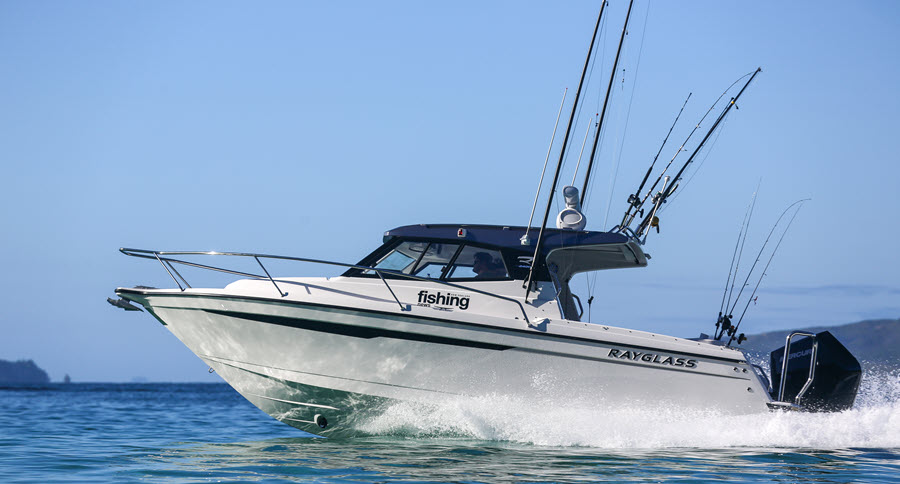
Fibreglass boats are normally constructed using a hull laid over internal stringers to which the topsides, constructed separately, are attached. Hardtops are moulded separately then added. Because of the construction method, once the mould is perfected, then every hull comes out the same.
Fibreglass pros:
• Generally softer riding
• Less noisy, especially when overnighting when there is chine slap
• Warmer
• No worries about dissimilar metals contacting each other causing electrolysis
• Ability to have more rounded lines
Fibreglass cons:
• Not as easily customised – greater reliance on bolt-on accessories
• Damage not as easily repaired
• More care needed when beaching
• Potential for osmosis in older hulls
• Gelcoat needs occasional cut and polish to keep in top condition
• Susceptible to ‘dings’ from stones, metal lures, and sinkers
Plastic
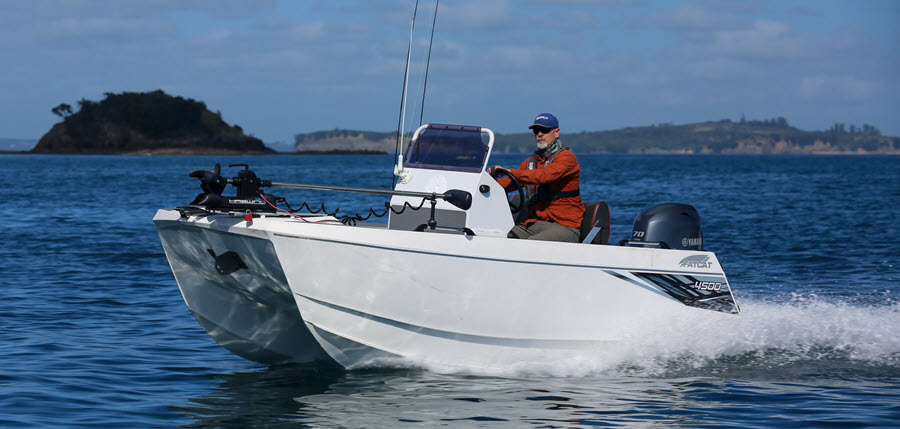
Most of these craft are constructed using the rotational moulding process which results in a durable finish that will take the everyday knocks and bangs better than either fibreglass or alloy craft.
Like fibreglass boats, any features need to be created in the mould itself. Rotationally moulded boats are popular with people who like to net for the likes of flounder due to their smooth gunwales. Duckshooters also like them as shooting platforms because they can be produced in ‘camo’ colours.
Plastic pros:
• Lightweight
• Hard-wearing
• Generally smooth riding
• Can be less expensive
Plastic cons:
• If non-rotationally moulded, hulls may be structurally compromised
• Not as easy to customise (e.g. rod holders)
• Might not hold their resale value as well as other boat styles
Wood
Wood is the classic boat-building material, although it’s not used for production trailer boats these days. Although some of the old classics can be works of art, be cautious when buying second-hand or home-built wooden boats as there are plenty of pitfalls. Unless you are experienced in dealing with wooden boats, it is recommended that you seek advice from someone who is.
People who build their own wooden boats at home vary widely in skill, in their construction techniques, and in the materials they use. Older or home-built wooden boats are often constructed from wood planks or plywood. Single-layer wood may be of ‘lap strake’ construction or have any gaps between the planks filled with caulking of some type. Double and triple-layer plank construction runs the grain in different directions for additional strength, but older boats may have used animal-based glues between the layers, which can delaminate in time.
Likewise, there is a wide range of plywoods on the market. Boats need to be built from marine ply (with waterproof glue and minimal core voids), and all wood will need to be well protected with a GRP skin (‘glass over ply’) or proper marine paints and finishes to prevent water intrusion and subsequent rot.
Common Questions
What should you consider when choosing a trailer boat hull?
Consider the size of the boat, the type of fishing and boating you intend to do, the waters you'll use it in, and how many people you'll carry. Hull material, stability, buoyancy, ride comfort, towing and storage requirements are also important factors.
What is the difference between aluminium, fibreglass and plastic boat hulls?
Aluminium hulls are lightweight, durable and easy to customise, making them popular for fishing boats. Fibreglass hulls generally offer a quieter, softer ride and warmer interior, while plastic hulls are lightweight, hard-wearing and resistant to everyday knocks and impacts. Each material has advantages and disadvantages depending on how the boat will be used.
What makes a boat hull stable and suitable for rough water?
Hull shape, deadrise, weight distribution and overall design all influence stability and rough-water performance. Deep-V hulls generally provide a softer ride in choppy conditions but can be less stable at rest, while shallower-V hulls tend to offer greater stability but a harder ride. A sea trial is the best way to assess how a particular boat performs.
Continue Reading


Sunday 29 November 2026
Major Bites
 -
 -
Minor Bites
 - -
Monday 30 November 2026
Major Bites
- - Minor Bites
- -