Configuration & Layout
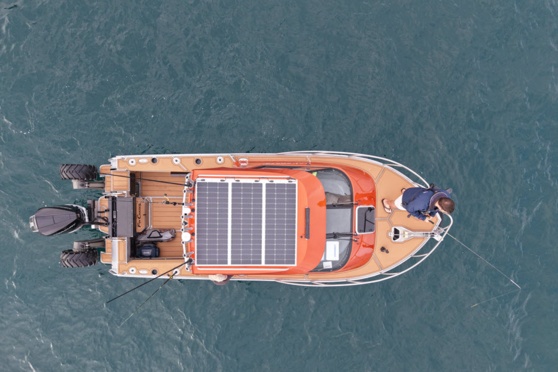
Moving past hull type, there are a range of topside configurations and internal layouts that may be considered.
The configuration
Hard tops (open-back or enclosed), cuddy cabins, centre consoles, centre cabins, side consoles, and tiller-steer (open boats) are some of them. The choice is usually governed by the size of the boat and its intended use.
For example, a certain hull size and weight is needed to sustain a hard-top without making the boat top-heavy and unstable (about 5.5-6m length minimum for a monohull; pontoon or cat hulls, with their extra stability, can be a little smaller). Enclosed hardtop constructions eat up a bit more space than open-back designs, so the hull needs to be longer in the first place, say 6.5m-plus.
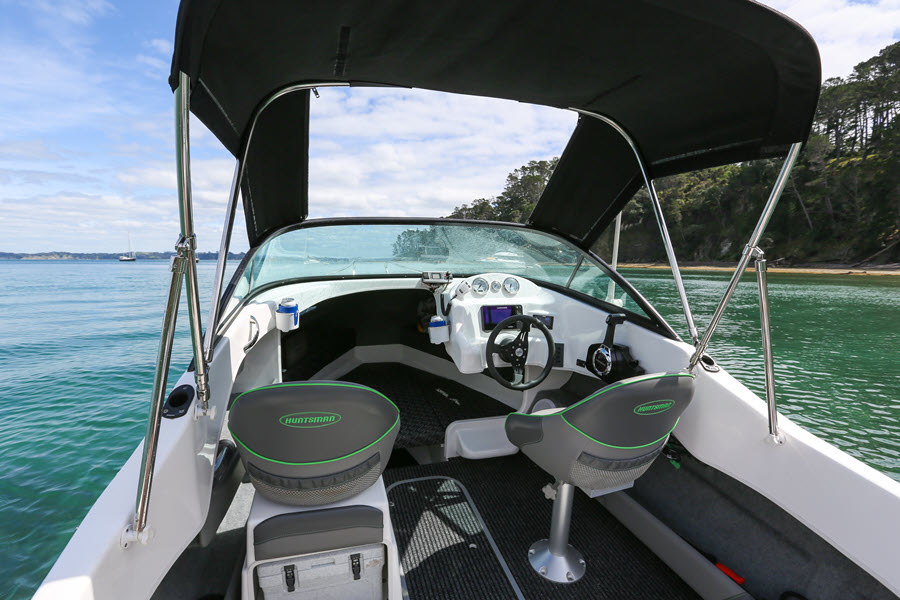
Given the extremes of weather experienced in NZ waters (harsh UVs in the summer; rain and cold winds almost any time), it is no surprise that hardtops are probably the most popular configuration in boats of 6m and above.
Cuddy cabins (runabout/windscreen types) offer some protection and have less windage, weight, and expense than a hardtop. These are often fitted out with canopies, which may or may not incorporate a rocket launcher. Canopies can fold down for easier shed storage and less windage when towing, but if not well made, can sometimes leak in heavy weather, and visibility when travelling may be reduced. If purchasing a cuddy cabin without a canopy, one can be purchased separately and installed, either as a temporary or permanent addition.
Another configuration that has been around a long time, but recently gained more popularity with the advent of lure fishing techniques, is the centre console. This design opens a heap of fishing space in the bow and around the sides, allowing anglers to easily follow fish they are fighting right around the boat. It also makes accessing the anchor easier.
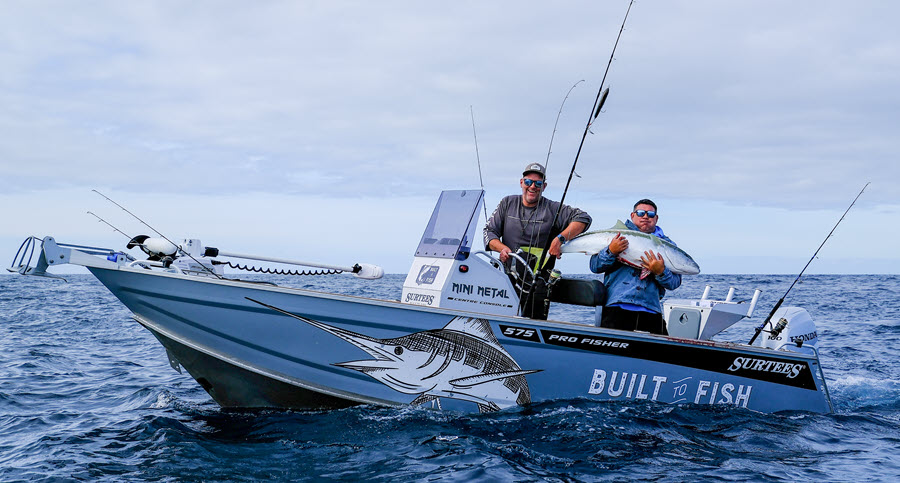
The downside of centre consoles is that there is reduced shelter for the crew, and the centre of balance is shifted aft, so the positioning of things like batteries and fuel tank/s may need to be altered to address this. Variations include the side console and the centre cabin (which is just a large centre console and, again, requires a larger hull to sustain it while still maintaining access around the sides).
Centre consoles seem to be at their best in the north’s warmer, more sheltered east coast waters or when jigging or fly-fishing in lakes.
Internal layout
The internal layout will affect how safe and comfortable you are while boating and fishing. One major choice regarding the internal layout is whether you want a day boat or an overnighter.
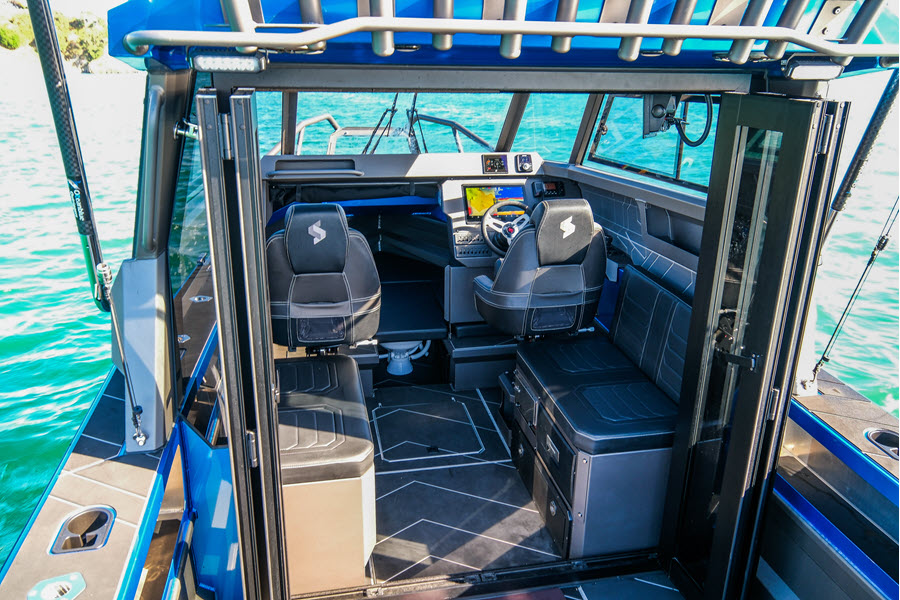
If you don’t intend to do any stay-away trips, there are a lot of fittings you can do without, and it is questionable if you even need forward berths. They might be handy occasionally for the kids to have a nap on, but you may be better off choosing a boat with an internal configuration that allows more fishing room in the cockpit or more stowage space. However, if you decide that stay-away trips are high on the agenda, then more space might be invested in comforts like full-length berths, a toilet, fridge/freezer, extensive lighting, a larger battery array, galley/cooker, and even a freshwater shower.
Visibility and ventilation
In a boat, visibility is important so you can avoid other watercraft, swimmers, divers, rocks/reefs, buoys, and debris (such as logs). In rougher conditions, you also need to know when to brace yourself against the next wave.
Water splashing onto your screen or dried salt deposits can obscure forward visibility. Other vision blockers include rolled-up canopies, windscreen mullions in the wrong place, grab rails, bracket-mounted electronics, and internal glare. This last is at its worst with the combination of a tinted windscreen and a light-coloured dash top. To cure it, don’t opt for too much tint in the screen, and cover your dash with dark matte paint or dark marine carpet.
To keep your screen clear, you will need windscreen wipers or regular applications of a product like Rainex, which helps water to bead and run off. The more vertical (or even overhanging) your screen, the better this works. Toughened glass will resist damage from UV exposure and scratching from dried salt. Perspex/polycarbonate screens are more prone to such damage.
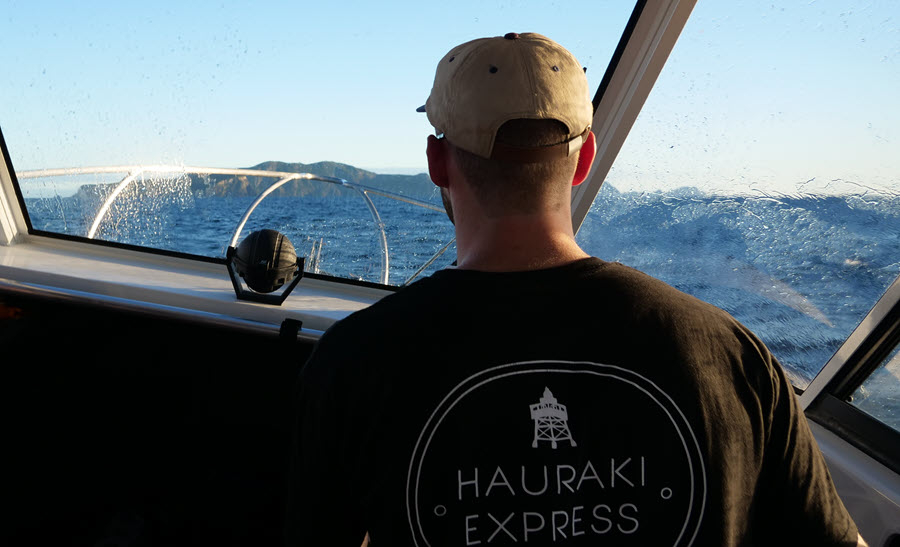
Ventilation is another thing to consider in an enclosed hardtop; it can get stuffy inside trolling on a hot day. If it is calm enough for spray not to be an issue, opening a forward cabin-top hatch, side-sliding windows, or a hatch/skylight in the wheelhouse roof will get some air flowing through. The trick is to remember to close the forward hatch before you take off or if the sea picks up.
Seating
There are some great boat seats around, and depending on how up-market you want to go, seats can feature padded upholstery, backrests, swivelling and sliding mounts, armrests, and roll-back bolsters. One of the important aspects, as far as comfort goes, is to have a suitable footrest, especially if the seat is set high to give better forward visibility.
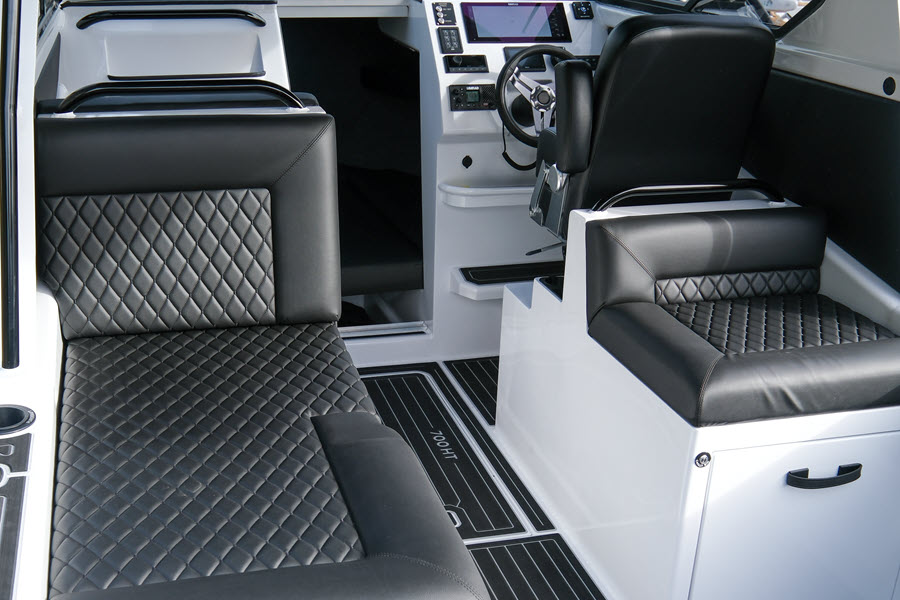
Shock-absorbing gas or pneumatic pedestals can also make the ride a lot more comfortable, and other seat-mounting base designs can incorporate built-in stowage, fridge installations, and so on. The combo forward-facing bucket seat and rear-facing bench seat (called a ‘king and queen’) is popular, but don’t forget the benefits and simplicity of a bog-standard bench seat.
Cockpit layout
Now we are starting to get to the fishy bit. Excepting centre-console and centre-cabin layouts, the cockpit is where most of the fishing takes place.
Sufficient fishing space for the number of people you want to be able to fish is crucial. Fishing is difficult if the cockpit is packed, people are tripping or casting over each other, and lines and fish are becoming tangled (especially when using braid).
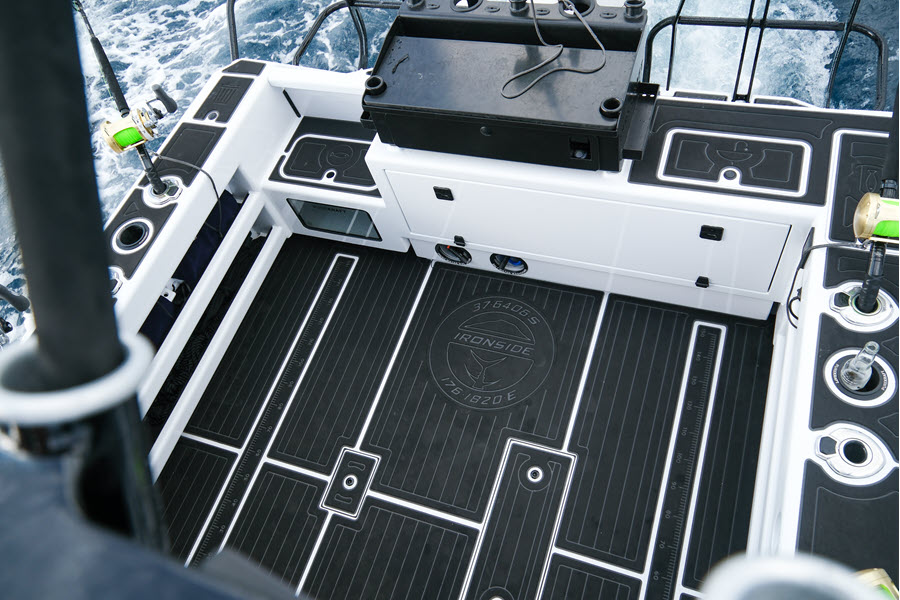
The gunwale design can play a part in fishing comfort, too. Ideally, you want flat, smooth internal gunwale faces which provide support between the middle and the top of an angler’s thighs when leaning on the gunwales when fishing. Anglers also need some ‘toe-room’ so they can lean on the gunwale/transom faces while still standing upright without having to lean forward and be off balance. In practice, this is done by extending the gunwales off the sides and into the hull a bit, which also allows space for side shelving that can take rods, gaffs, poles, etc.
If looking to purchase a smaller vessel, especially one with low sides, be aware that time spent standing should be limited. Standing in small boats poses a risk not only to the person standing (who could fall in), but also to the others in the boat, as they could flip the vessel if weights are not secured and are able to move freely from one side to another. Find ways to make items in your cockpit multi-purpose – for example, using a chilly bin as a seat.
Drainage
Drainage is another aspect to be considered: if (or when) water gets into the boat, how do you get it out?
Boats with sealed decks (as featured on many trailerboats) mostly drain to a sump under the transom, from where water is removed by a bilge pump. These need to be large enough (depending on the size of the boat) to move water quickly and are rated in gallons per hour (gph). A 1,000gph pump is considered a decent size for, say, a 6m boat. You should be able to reach the pump reasonably easily to clear any blockages.
If the boat is kept on a mooring or in a berth, an automatic float switch for the bilge pump is essential in case of heavy rain, but you will need to keep an eye on things; prolonged, heavy rain triggering the pump can flatten the batteries if the boat is not attached to shore power, with potential for flooding.
Other drainage options include scuppers, but free-draining decks are usually required for these to work efficiently, and not many trailerboats are built like this. If you raise the deck height to achieve free-draining decks, it also raises the centre of gravity, which can make smaller boats less stable.
Boats with an inboard engine usually have bilge pumps installed in wells (holds) cut through the deck. To protect these from flooding and drowning the engine, engine wells require coamings (raised edges) and usually also have a float switch-operated bilge pump.
The transom
The transom (rear) design is as important to fishers as the cockpit’s sides. If you are at anchor or trolling, most of your fishing is done behind the boat, so accessibility to this space is important. Small table fish, such as gurnard or tarakihi, are easily handled and may not be an issue, but larger, more powerful species such as kingfish, tuna, and marlin are much harder to control, especially when using light tackle. To protect the line, you need to be able to move across the transom and around the cockpit quickly, reach around outboards or stern legs, and get the rod tip clear of the side if a hooked fish suddenly dives under the hull. If there’s a bait station on the transom, is it so high that it prevents you from moving easily across the transom with a loaded rod?
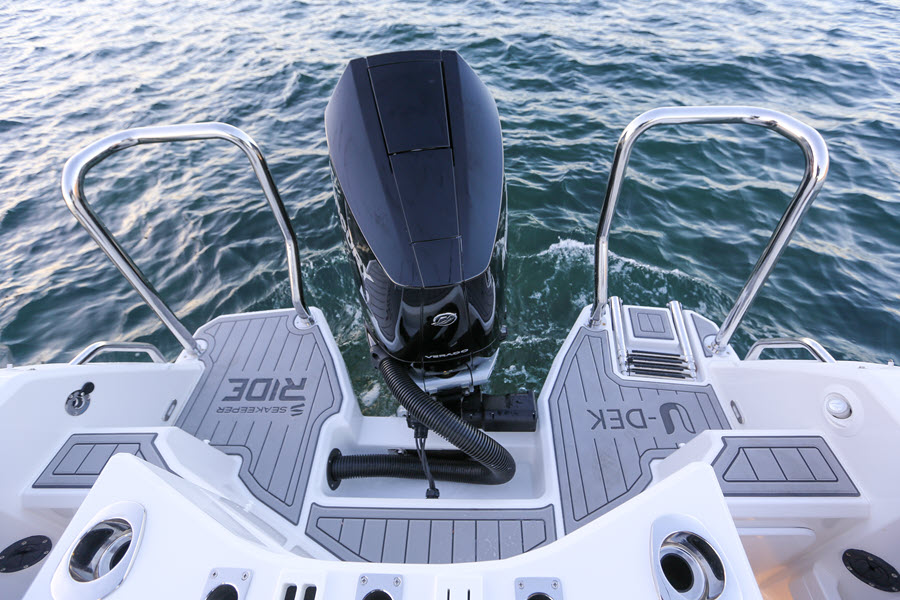
Some of these potential issues can be alleviated if you have a walk-through transom design and a full-width boarding platform (which should have a non-skid finish), allowing an angler to get out behind the transom for fishing endeavours. For safety’s sake, a rail ‘cage’ can be built around the platform, and this can include a fold-down section which forms a boarding ladder. Boarding ladders are normally set adjacent to the transom walk-through (if fitted) with grab rails to aid anyone climbing aboard. Such fold-down ladders can also be incorporated into the bow rails so passengers can easily board and disembark on steep-to beaches.
The port side (left-hand side looking forward) is the standard side for a transom step-through in a trailer boat used for gamefishing, to ensure angler safety during forward fish chasing on the port side. On the other side of the coin, if the boat is more often used for diving, it is easiest and safest to have the boarding facilities on the right-hand (starboard) side, so the helmsman can keep a close eye on the position of divers or swimmers as the boat is manoeuvred to pick them up. Divers prefer a ’T-type’ dive ladder over the ‘H’ style, as they are easier to climb while wearing dive fins. Dual walk-throughs on either side are increasingly seen on new Kiwi boat builds, many with removable ‘doors’.
Common Questions
What is the best boat layout for fishing?
The best layout depends on the type of fishing you do and the conditions you typically encounter. Centre consoles offer excellent access around the boat for lure fishing, while hardtops provide greater shelter in changeable weather. Cuddy cabins offer a compromise between protection, fishing space and cost. The cockpit should provide enough room for everyone to fish comfortably without getting in each other's way.
What should you look for in a fishing boat's cockpit layout?
Look for sufficient space for the number of anglers you intend to carry, with room to move around when fighting fish. Smooth, supportive gunwales, adequate toe-room, accessible rod storage and practical shelving all improve fishing comfort. The transom should also allow anglers to move freely when handling larger fish, with features such as a walk-through transom and boarding platform worth considering.
What safety features should you consider when choosing a trailer boat layout?
Good visibility, adequate ventilation, secure seating, effective drainage and safe access around the boat are all important. Check that the windscreen provides an unobstructed view, the cockpit has enough room to move safely, and the bilge pump is appropriately sized and accessible. Boarding ladders, non-slip platforms and a well-designed transom walk-through can also improve safety when boarding, diving or handling fish.
Continue Reading


Sunday 29 November 2026
Major Bites
 -
 -
Minor Bites
 - -
Monday 30 November 2026
Major Bites
- - Minor Bites
- -