Anchors
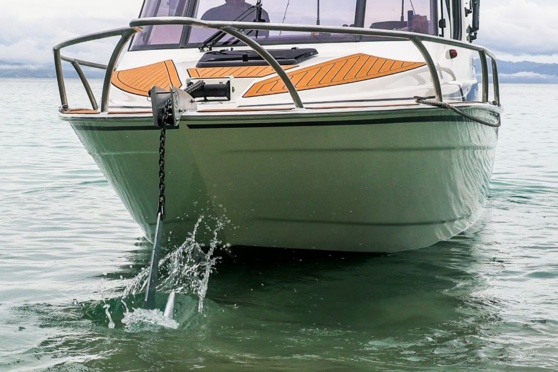
Anchoring is an important aspect of fishing and boating in general. Good ground tackle is also important safety equipment. For example, if you are being blown down onto a rocky coast with your engine out of commission, you really want your anchor to hold!
Pick your pick
There are a range of anchor types available that are suitable for different seabed types. In very basic terms, the two common types are plough anchors designed for sedimentary bottoms like sand, silt and mud, and grapnels, which are meant for rocky, reefy areas. In practice, there is a bit of crossover in anchor types, and as long as you have plenty of chain and let out enough warp, you should get a decent hold. The general rule of thumb is to have an anchor weight that equates to the length of the boat in metres x 1 kg-1.5 kg (so a 5m boat should have at least a 5kg anchor).
A different type of ‘anchor’ is the sea-anchor, drogue, or ‘chute. These are not designed to hold the boat in one position, but to slow the drift and hold the bow (if they are set from the bow) into the sea. As well as a safety measure in rough seas, drogues are commonly used for drift-fishing.
Rope and chain
Don’t be shy about the length of your anchor warp (rope). You should be carrying enough warp to be able to deploy about three times the depth of the water you are anchoring in.
The diameter of the warp and the material it is made from make a lot of difference to how easy it is to pull. Skinny ropes have less surface area, and that means you have to clench your hand really tightly to get a decent grip, which is hard work. Twelve-millimetre rope allows a good grip and provides a balance between comfort, capacity, and cost. Of course, bigger boats require heavier anchors and chains, and in turn, heavier warp.
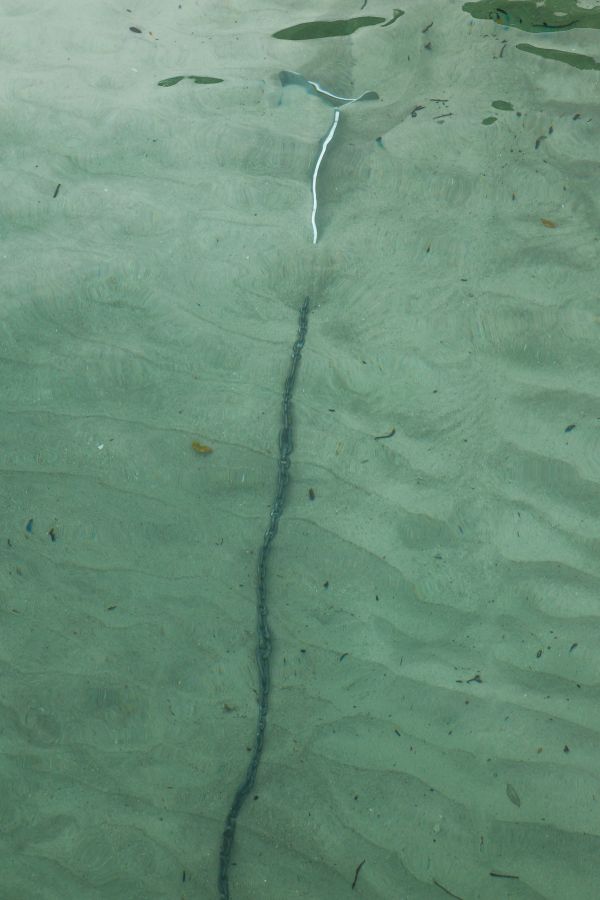
Ropes (or ‘lines’ in boat speak) are made of many materials, but two types are most commonly used for anchor warps these days. Polypropylene is cheap and it floats, but it is harsher to handle and susceptible to damage from the sun’s UV rays, becoming weaker in the medium term. Nylon will sink, is abrasion- and UV-resistant, stretches a bit, is easier on the hands and, although more expensive than polypropylene, is probably the better option for an anchor line in the medium to long term.
A section of chain is used between the warp and the anchor (the combination of warp and chain is called the ‘rode’). This is partly to resist wear, but mostly to hold the shaft of the anchor down so that the head can dig in to get a good hold on the seafloor. Skimping on the chain length is counter-productive, and it should equate to 1.5x the length of the boat in metres (so a 5m boat should have at least 7.5m of chain).
The pointy end
When an anchored boat is bucking in a sloppy head-sea, the warp/rope needs to be constrained in the fairlead (bow roller), which is normally mounted on a short bow sprit. If the warp jumps out of the fairlead, it will stop holding the boat from the point of the bow and the boat will start lurching from side to side (‘kiting’) which makes it unstable. The warp can be constrained by a locking pin on the fairlead, which is good if the anchor is permanently mounted, but a bit of a pain if you need to climb out onto the bow to lock/unlock it each time.
Split, dropped bow rails which come down hard on each side of the fairlead are a good way to keep the warp from jumping out of the fairlead. Single-piece bow rails are fine for permanently mounted anchors but not so good if you need to manoeuvre the anchor (particularly larger grapnel types) under the rails each time.
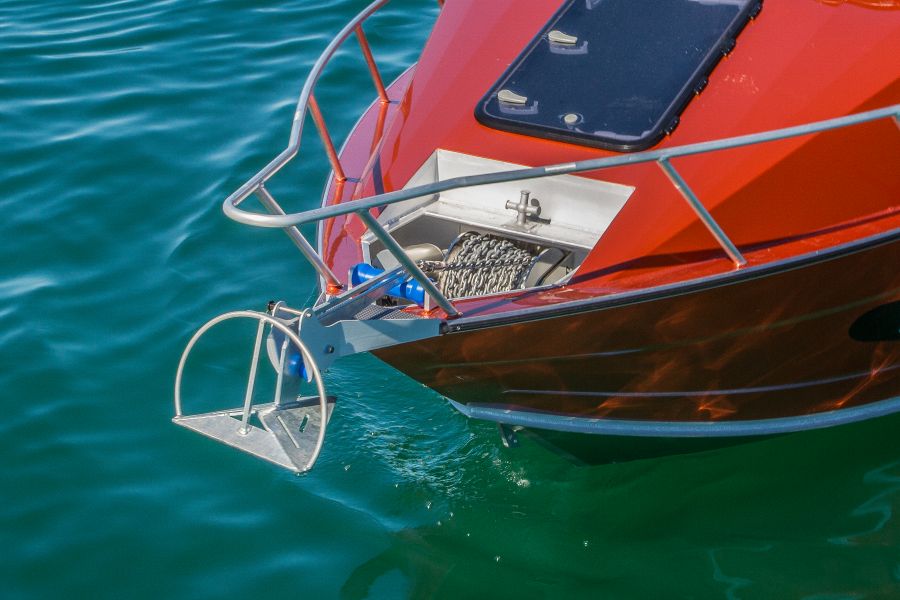
If you are using a hatch in the foredeck to work the anchor, it needs to be comfortable to stand or kneel in (some boats have a small platform in the forward cabin under the squabs for the bowman to use) and within easy reach of the anchor well and tie-off bollard.
If the main access to the bow is around the cabin sides, make life easier and safer for the bowman with side rails, grab rails, and an anti-skid finish on the gunwales and side decks. Centre-console or centre-cabin boats provide easy access when anchoring.
Most anchor wells have modest overboard drains, but if you take a wave over the bow, filling an unhatched well, it can take some time for the water to drain out. Until this happens, you may have an extra 100kg or so holding the bow down into the next swell. This can be dangerous both when the boat is underway and at anchor.
Winches and capstans
Winches and capstans are great labour-saving devices. Drum winches pull and roll up the warp on a horizontally shafted drum. You might think a design like this would be fraught with issues, but in practice they work very well.
Capstan types need a certain amount of fall into the anchor locker to work properly, so check this. The chain may shift around in rough conditions and could jam when you next try to let it out. A hatch entry into the well is necessary to sort out any tangles.
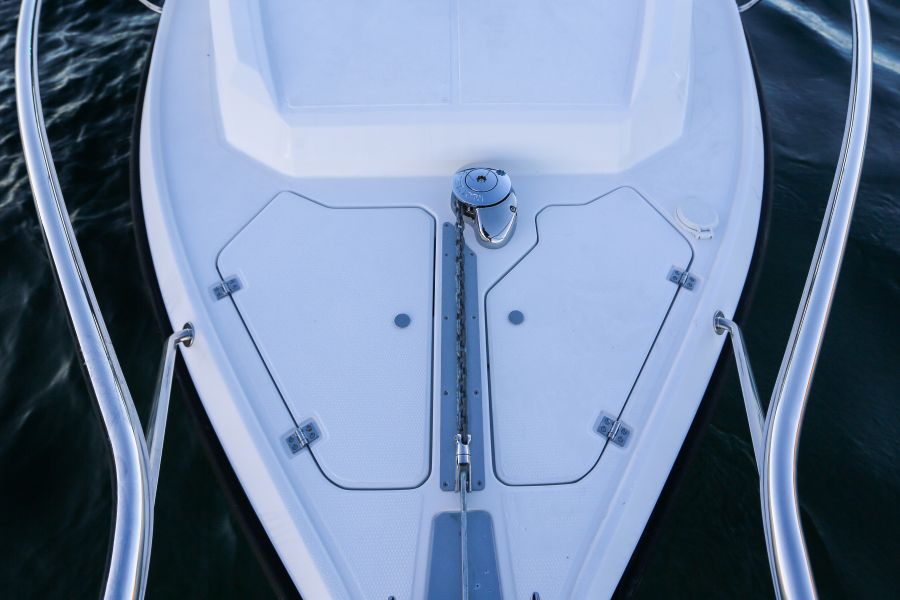
If you prefer to keep things manual on the anchor front, apart from the ‘big guns’ method of anchor retrieval, anchors can also be lifted with a sliding-float system combined with engine power.
Common Questions
What type of anchor is best for a trailer boat?
The best anchor depends largely on the seabed where you intend to fish and anchor. Plough anchors are designed to dig into sedimentary bottoms such as sand, mud and silt, while grapnel anchors are better suited to rocky and reefy areas where their multiple arms can catch on the seabed. Having sufficient chain and anchor rope is also essential for achieving a reliable hold.
What size anchor do I need for my boat?
A general rule of thumb is to allow 1–1.5kg of anchor weight for every metre of boat length. For example, a 5m trailer boat should carry at least a 5kg anchor. The length of anchor chain should be approximately 1.5 times the boat's length in metres, while the anchor rope should be long enough to deploy around three times the depth of the water you're anchoring in. Boat design, conditions and seabed type should also be considered when selecting ground tackle.
Do I need an electric anchor winch on my trailer boat?
An electric anchor winch or capstan makes deploying and retrieving an anchor considerably easier, particularly on larger boats or when anchoring frequently. Drum winches retrieve and store the anchor rope on a horizontally mounted drum, while capstans use a rotating mechanism to pull the rope into the anchor locker. Both can be effective, but it's important to ensure the anchor well has sufficient space and the chain can fall freely without jamming. Smaller boats can often manage perfectly well with a manual anchoring system.
Continue Reading


Sunday 29 November 2026
Major Bites
 -
 -
Minor Bites
 - -
Monday 30 November 2026
Major Bites
- - Minor Bites
- -