
Rigging Livebaits
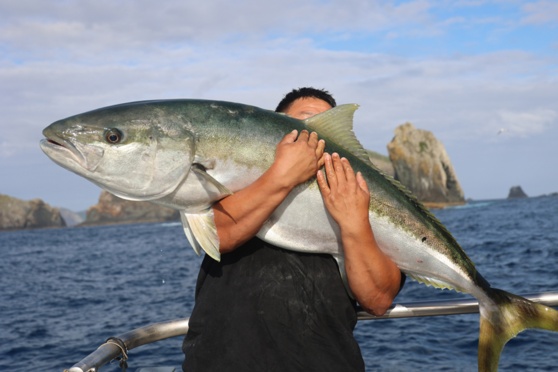
Using live bait is often lethal, but different fishing situations and different baitfish species mean livebaits need to be hooked in various ways to get the best results. Always keep in mind that the smaller the hook and the lighter the trace, the livelier the bait will be – but go too light, and you might not hook up, the hook might bend, or the trace could break, so it’s a balancing act.
Upper shoulder hooking
This is probably the most popular way to hook relatively tough live baits such as sprats, kahawai, yellowtail mackerel, koheru and trevally. The method suits a variety of techniques, including fishing baits under floats and balloons, attached to sliding-sinker rigs and allowed to swim freely on just a hook. It can also be used to very slowly troll a bait, perhaps putting the boat in and out of gear to keep the speed down.
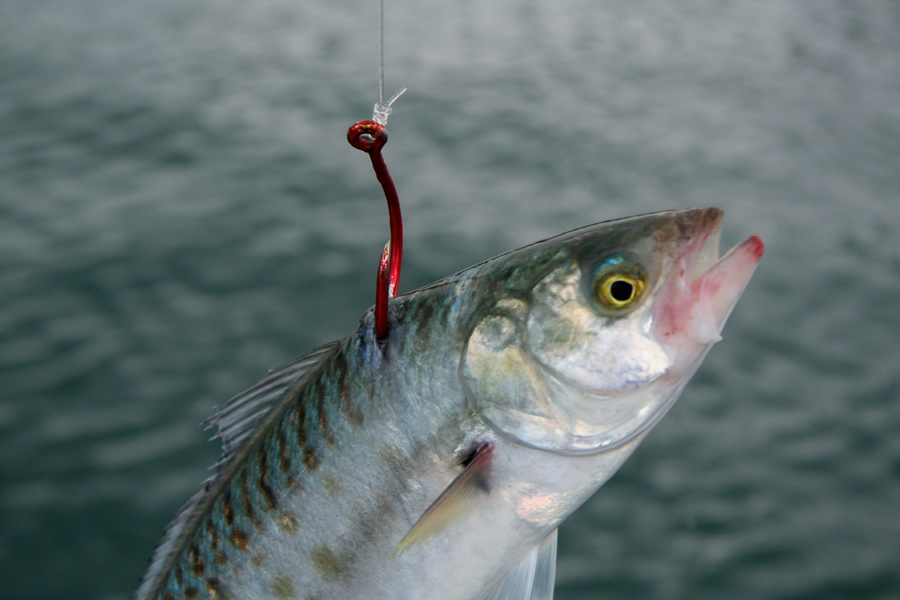
Upper shoulder hooking is the most popular way to hook relatively tough live baits such as kahawai.
Advantages:
• Upper shoulder hooking keeps the baitfish’s head pointing into the current, allowing it to get enough water over its gills and stay in good condition for long periods of time. It’s a position that seems to encourage mackerel livebaits to swim downwards, too.
• This style of hooking works with quite small hooks, making the presentation more subtle and natural looking, but with a good hook up ratio, which is great when targetting sharp-eyed fish like yellowfin tuna.
• Later, when it is being retrieved, the bait is brought in headfirst, allowing it to swim relatively naturally (baits pulled in backwards soon die) and frequently attracting bites in the process. When done correctly, this hook location offers a high hook-up rate, rarely hooking back into the bait when swallowed.
Disadvantages:
• This technique results in only a modestly streamlined rig, so isn’t ideal for deeper water locations with strong currents; a large, powerful live bait can struggle so hard it doesn’t get down in time (if at all) for predators to detect and bite when fishing over specific structures. Having said that, if you can get the bait down, those strong, frantic movements make it very attractive to predators and encourage enthusiastic bites!
Hooking tips:
• The upper shoulder is best; you want to insert the hook on an angle across the bait’s shoulder, so its point ends up nearer the bait’s head than the shank. But first, if using an offset hook, make sure its point ends up angling well away from the bait’s body, not closer into it.
• Focus on how deeply you hook the baitfish – too far down the body can badly injure smaller baits, making them less effective, or choking the hook so it can’t hook-up effectively. On the other side of the coin, hooking baits too lightly makes the hook susceptible to being ripped out on the strike.
Want to read more?
Unlock this article & all NZ Fishing News Premium content by subscribing for only
$9.99 every 3 months
Latest Premium Articles
Monster South Island Canal Trout
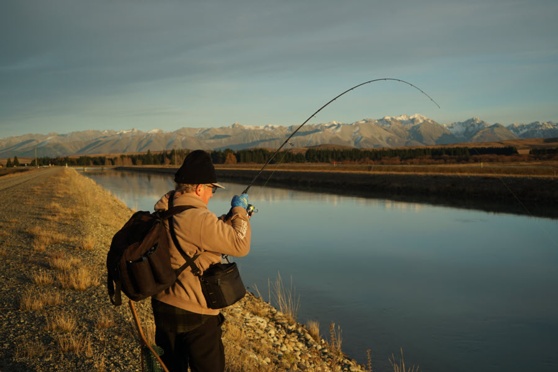
September 2026Okay, I agree, some of the Mackenzie Country canal brown and rainbow beasts are grossly overweight and lack attractive symmetry, having tiny bullet heads, barrel-like bodies,... Read More >
Rapala Hydro Tackle Storage System
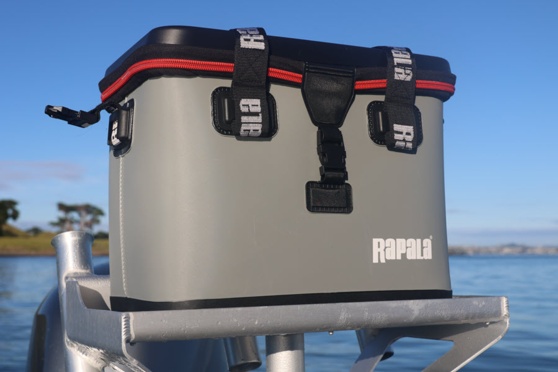
September 2026Every angler knows the frustration of opening a tackle bag and seeing a mess. Wet tackle, rusted hooks, or tangled lures slow down your fishing. Whether... Read More >

Spiced, Grilled Kaimoana with Parsley Drizzle
September 2026Seafood on the BBQ is one of my favourite things to cook when I want something quick, easy, and packed with flavour, and this recipe is... Read More >

Garmin Force Kraken + LiveScope Review
September 2026On the NZ Fishing News Proline Alloy 1860HT, Garmin’s Force Kraken trolling motor and LiveScope sonar system together create an integrated fishing platform that allows us... Read More >
New Bait & Berley Fishing Tricks
September 2026Most of the anglers from my generation cut their fishing teeth on bait and berley, learning from a variety of mentors. My start came courtesy of... Read More >

Review: The Yamaha F115
September 2026In the fiercely contested outboard engine market, manufacturers are constantly chasing marginal gains in power, fuel efficiency, weight reduction, and technology. Yet despite the relentless pace... Read More >