First boat repairs - sea nymph v146
Printed From: The Fishing Website
Category: General Forums
Forum Name: The Boat Shed
Forum Description: Discuss all things boating.
URL: https://www.fishing.net.nz/forum/forum_posts.asp?TID=138724
Printed Date: 05 Jun 2026 at 2:48am
Topic: First boat repairs - sea nymph v146
Posted By: Primer
Subject: First boat repairs - sea nymph v146
Date Posted: 09 Aug 2024 at 6:57pm
|
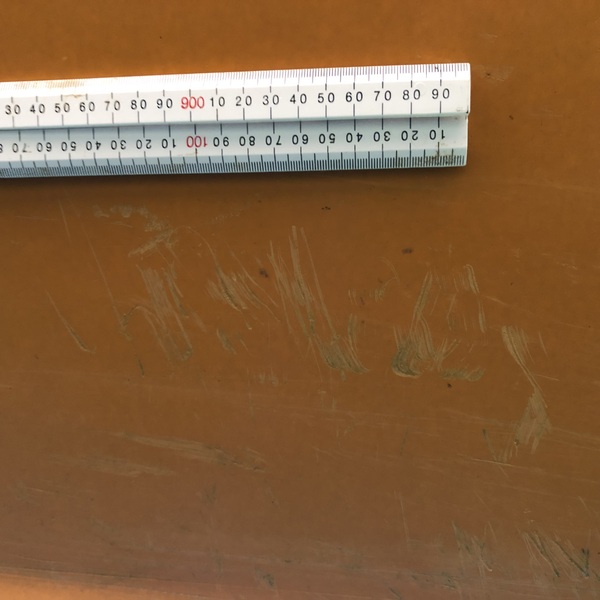
Hi all, After reading on this forum for a bit I've brought my first boat. This is my first foray into boating and fishing. It was cheap and cheap for a reason. I've got the steering/controls and engine side of things coming together, the electrical appears to generally work but needs further investigation for anything that looks like it may fail. The hull is where I'm up to now and would appreciate some direction on what I would consider minor bumps and scrapes (lots of them) to the hull. What I'm wanting to do get the boat on the water without causing further water damage to the hull. The purpose of this for evaluating the boat to see if it works for me and how much time and effort I want to put in to making it all tidy and nice again. Also the weather isn't great for proper repairs (temperature and rain) at this time of year. I will be doing the repairs outside when I have a few spare hours and its not raining. From what I've read a quick fix would be "to seal the area grind out, find out if structural, fill with glass and
resin..a little resin rich.. then roughly grind the high points off to
general shape" (courtesy of steps 2016) Could I get a away with a few thick layers of gel coat without the grinding out and filling with glass and resin? Perhaps using a small radiant heater to help with the curing? It would only need to last 3 - 6 months before being attacked properly. I'm thinking 2 layers of gel coat with out wax and then one final with wax. P.S trying to figure out how to load pics
|
Replies:
Posted By: Primer
Date Posted: 09 Aug 2024 at 7:19pm
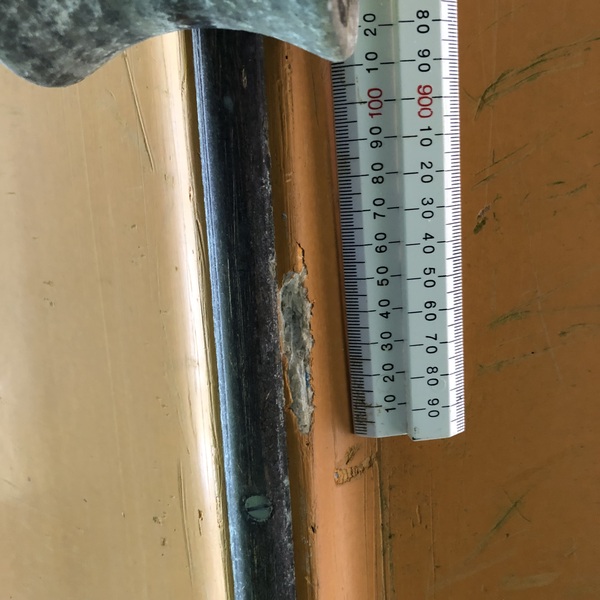
|
Posted By: Primer
Date Posted: 09 Aug 2024 at 7:20pm
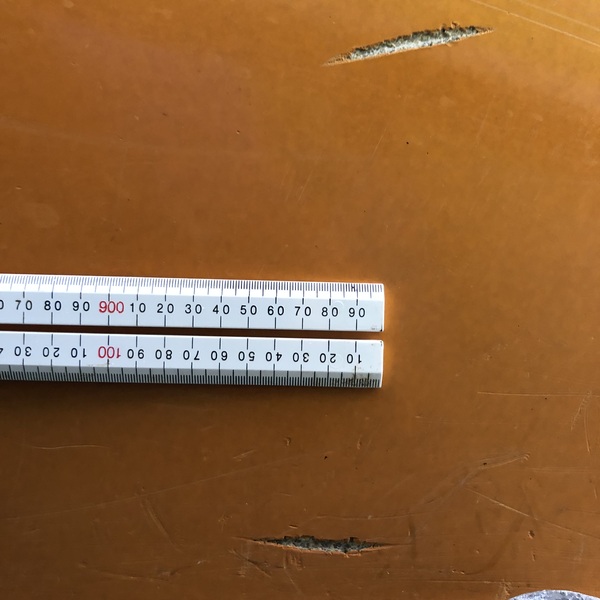
|
Posted By: Primer
Date Posted: 09 Aug 2024 at 7:20pm
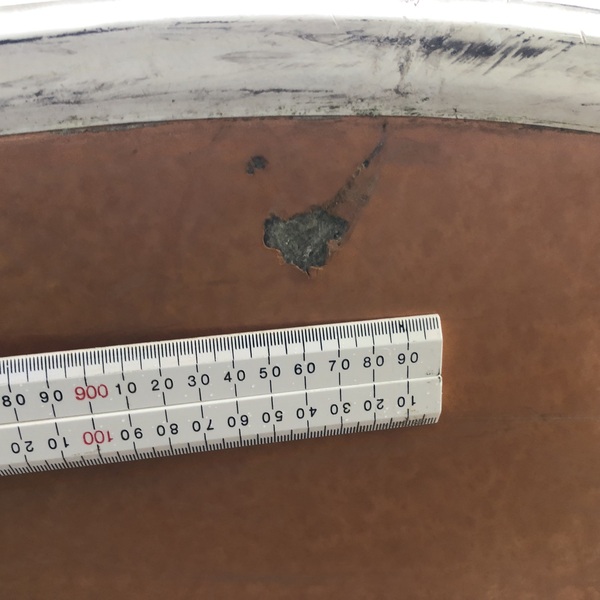
|
Posted By: Primer
Date Posted: 09 Aug 2024 at 7:21pm
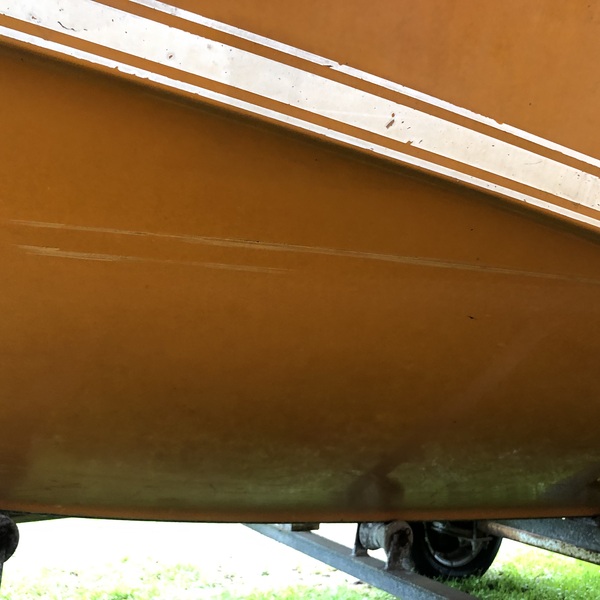
|
Posted By: Primer
Date Posted: 09 Aug 2024 at 7:22pm
|
Posted By: Pcj
Date Posted: 09 Aug 2024 at 8:15pm
|
Gel coat will do nil.really need to get 2 pack resin/hardner with some micro balloons..Easy to mix and sand.First will be to sand/ grind until you get clean looking glass.Over fill then sand .Mixing gel coat colour can be tricky. Depending on your location.there is a fibreglass supply shop in panmure AK who have the gear and advice.did this exercise last yr ------------- "Times up" |
Posted By: Pcj
Date Posted: 09 Aug 2024 at 8:21pm
|
If you have f/b look up sea nymph page.couple of old builders there who will give you all the advice on glassing etc ------------- "Times up" |
Posted By: Bertiesdad
Date Posted: 09 Aug 2024 at 11:11pm
|
Just using gelcoat won't work for long - it will fall out pretty quickly due to adhesion issues on the mat. Its not a mission to do this properly though-they aren't big dings. Anything along the keel line or the strakes needs doing sooner rather than later as hull flex through pending plus trailer launching just makes things worse. This is how I go about it- 1) cut back the gelcoat so you have a sound edge, give fiberglass and gelcoat a sand at edge- go gently- don't give yourself more work- something like a 400 wet will do trick. Then mask up as close as you can to site of repair. 2) Use a 2 pack micro filler- I use international epifill- its more expensive yes but its easily the best for small scratches and dings. It doesn't need gelcoat or paint if you can't be bothered and is easy to work. Fill to slightly proud. 3) Use sellotape or mylar tape over epifill to shape to hull. You might need some extra wide tape. Thie tape not only compresses the filler but if you do it right you can reduce sanding after a lot and get a really good hull profile on the repair. 4) leave it at least three days- pref 5. 5) Take masking and sellotape/mylar off. sand gently fine grade 1500+ - you only need a tiny difference for gelcoat with surrounding. gel coat is basically paint . Mask up surrounding again. 6)The color match for gelcoat on the hull will be a PITA- if you are not bothered much you'll get close enough. Frankly you can use a good marine enamel on anything and prob get a closer match. If using gelcoat mix use clingfilm or mylar tape again till cured. Leave at least 72 hours 7) Unmask etc. Sand very lightly with a very fine grade- at least 1800 again 8) repeat gelcoat procedure again if req/biothered 8) T-cut if you're worried about that sort of thing 8) wax it. 9) go catch loads I would do all your dings at once-theyre not big- bearing in mind working time of epifill. You can adjust that by playing with mix a bit- but only a bit otherwise strength will be compromised. On the curing time/temp- I've used epifill midwinter lower north island a few times- yes it takes longer but if you are not fishing doesn't matter if the whole thing takes a week or two. As long as you use tape/ clingfilm on repairs and mask well-any rain that comes along shouldn't be a major issue- though obv don't start in the rain. Down south will be different for sure. Hope this helps cheers |
Posted By: Primer
Date Posted: 10 Aug 2024 at 7:43am
|
Thanks for the info guys very helpful. A couple of questions for you Bertiesdad. The other dings look dryish/better to me so should I take gel coat back to sound edge, sand sound edge and exposed glass with 400 grit and apply epifill? no grinding out of glass or roughing up needed? If I apply epifill uncoated, can I apply gel coat/marine enamel to it after using it in salt water? I believe epifill is a epoxy based resin. I'm I shooting myself in the foot
by using it on a polyester resin material when it come to working on it down the
road? Or is that an issue for structural repairs not cosmetic surface touch ups? I'm in the mid upper north island with highs around 14-16 degrees so the temps should be workable. I'm not fussed if I have to let it set for a week or two. |
Posted By: Bertiesdad
Date Posted: 10 Aug 2024 at 8:21am
|
If the damage at the bottom of transom / keel is wet and staying wet then it’s possible you unfortunately have a bigger problem. The transom- which in a boat of this age is probably wood ( either ply or balsa) cored might have absorbed water over time and begun to rot under the glass. You can check this by trying to wobble the transom. Just grab it to one side or other of outboard and see if it flex’s/ bends when you pull and push hard. If it does the core is probably gone. Fixing that properly is a major mission but it can be fixed in short term at the area of damage. Basically dry it out as long as you can- keep the boat out of the water obviously and use a dryer / heat gun on area of damage. When it’s dry follow the sanding/ getting back to sound gelcoat steps and continue. If you find that as you cut back/ sand everything is still wet you will def have an osmosis/ rot problem. That is really difficult to fix without major work . If you don’t mind fugly you can go full workboat and use fresh mat round the damage onto sanded gelcoat surround. Soak it in resin mix and leave it to cure a week or so. It can be rough sanded to get the the worse bumps out but as it’s essentially a sticking plaster it’ll never look pretty and prob not worth getting too hung up about but it will stop things getting worse for a season or so. But fundamentally the boat needs proper attention. Cutting out and recoring a transom is possible- plenty get done- but it’s a major job and unless you are confident in your glassing/cutting/ templating one best left to professionals should it be necessary. For the other dings above waterline don’t worry about epoxy /vinylester issue. Filler and fairing is not going to cause any iproblem on this scale. And sanding down any exposed fibre- as long as it’s dry- will be enough to provide a key for epifill. And yes if the epifill repair stays sound and is allowed to dry it can be glassed / painted at a later date. . None of the dings in your pics look worth reaching for a grinder on imo. That’s just making work on a boat of this vintage and runs the risk of doing more harm than good. Sorry to sound a bit negative but transom issues are very common on older glass boats- it’s always there and the deck that rot starts. Older resins often don’t bond with wood cores very well and over time things like through hull mounting of accessories, engine changes and stern fittings allow water ingress. You shouldn’t worry too much about cosmetics but do check the transom. If you have a lot of flex there it can lead to failure- if not bad I would prob bodge the repairs and go fishing.i have done exactly that on one boat that’s proved fine if not showroom. |
Posted By: Primer
Date Posted: 10 Aug 2024 at 2:52pm
|
I've had a check and can't see any movement when yanking on transom or outboard. It does have a lot of penetrations in it so would be at greater risk rot that I haven't identified. I allowed for a DIY transom (and floor) replacement when buying. I haven't done it before but hopefully with enough research and pointers could do it if needed. I wouldn't say you sound negative just realistic about the likely condition of these older boats. I'll get the gear together and post up some pics as I get into it. Keen as to get it fixed up and on the water. |
Posted By: Bertiesdad
Date Posted: 10 Aug 2024 at 6:22pm
| Good luck with it. The final advice I would offer is to make a decision before u begin on the standard of finish you are going to get to now. If the priority is getting out there then water tightness/ not getting worse is all u need at the mo and permanent and pretty can be done next winter. If you want to go one and done to best effort now then be brutal on the preparation- but be prepared to find more work req than you thought at first. The latter nearly always happens on older boats if you go hard at itt that can be a bit disheartening if you are keen as just to go fishing. But fundamentally nothing is that difficult - just time and as usual money. There’s immense satisfaction in learning how to do glass as you go along and bringing these old girls back to work. Cheers |
Posted By: Kandrew
Date Posted: 10 Aug 2024 at 8:50pm
|
I would think about taking the engine bolts out leaning the outboard back against something that will take the weight and having a good dig around in the bolt holes with a sharp screwdriver to see if there’s anything soft. I would also check the keel strip screws for water tightness and rot where they screw in. But as above rebuilding transum is a bit of a job but most good DIYers are capable of this type work. There’s plenty of good vids on the net and forums to get questions answered. New resin and and glass techniques have way improved from when this boat was built just make sure you use the right timber and foam and you’ll be fine. Once you’ve repairing the boat I would look to paint it. I’ve painted a few sailing dinghies with a roller, cut and polished them and they’re come up great. Use a 2 pac epoxy paint there’s some good one around. |
Posted By: Primer
Date Posted: 11 Aug 2024 at 8:27am
|
Yip I've decided to do a rough patch up with epifill (no paint or gel coat) at this time. Then all going well with the boat a one and done on all the major hull work. So floor, transom and exterior hull depending on what my investigations find. I'll have to sort out shelter to do the work so getting up it and going gives me time to work out a solution. As well as enjoying and getting some boating experience. Kandrew that's a good idea. I might just remove one bolt at a time so leaving 3 holding the motor while I have a dig around from the interior side.Will look into the keel strip screws too. I'll do bit of search to see how others have approached it. Re painting I've only done light research into the pro's and con's of paint vs gel coat so will do more before I decide which way to go.
|
Posted By: Bertiesdad
Date Posted: 11 Aug 2024 at 8:59am
| As Kandrew says it’s almost guaranteed you’ll get better results ( assuming you fair and prep hull well) with a 2 pack enamel or similar. International again make a great 2 pack glass paint. Awlgrip is really popular in US. Given that ( assuming you don’t have a spray shop ) you will be applying anything by brush or roller- you will def end up with a better looking boat using a 2 pack paint. |
Posted By: Pcj
Date Posted: 11 Aug 2024 at 9:23am
I used Altex single pack roller and tip and holding up well 2 coats,even this cool weather holds a gloss and dries quickly,well paint at 10.00am and its good by 4.00pm for the cooler temps. only primed/under coated where I used filler, washed with sugar soap,good sand to break through gel coat and a good dewax..After 12 months still holding well.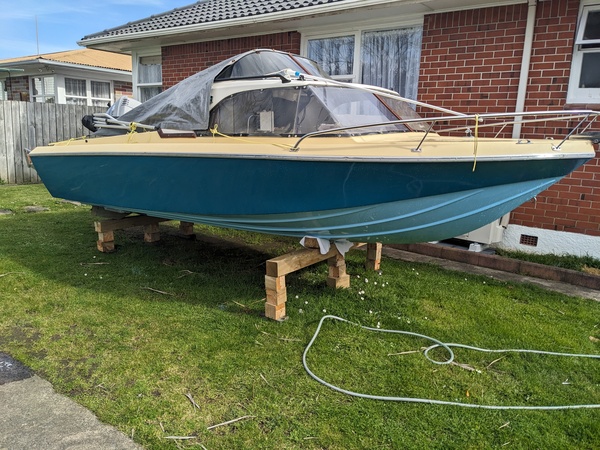 ------------- "Times up" |
Posted By: Primer
Date Posted: 11 Aug 2024 at 8:38pm
|
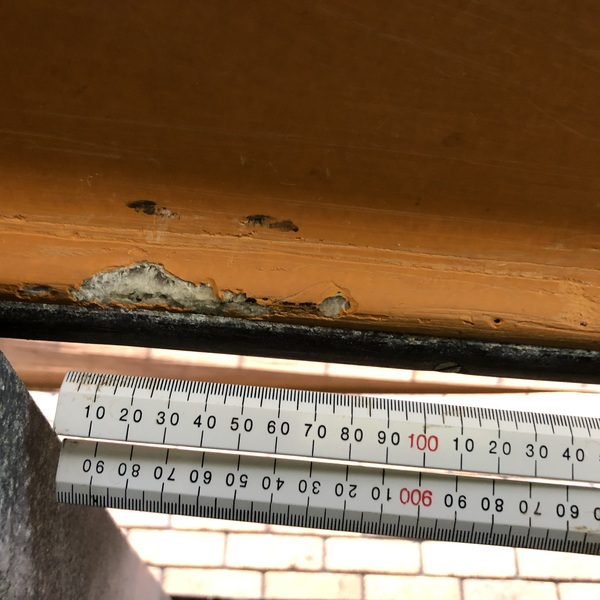
Got the Epifill today and some 400 wet and dry. Gave a few spots a hit with the stanley knife to flick off the flakey bits of gel and fibreglass, then sanded with 400P W&D, 98% of the gel coat didn't flake at all. Here's a pic of the worst one. 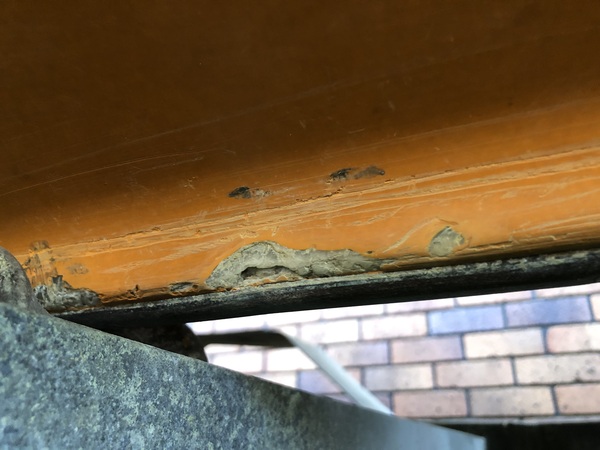 Do you
think I've broken the edges in enough for the fill to work properly? After reading your guys post and watch the vidoe below, I have been leaning towards a paint system for ease of repairs and colour matching. Good to hear I don't need to spray to use a 1 or 2 pac paint as that simplifies the process. I found this video on gel coat vs paint quite helpful: Pcj that looks pretty damn slick I'd be stoked if mine came up like that. |
Posted By: Pcj
Date Posted: 11 Aug 2024 at 11:08pm
|
I would sand whole edge back and reglass it,does it go right through in to hull?
------------- "Times up" |
Posted By: Primer
Date Posted: 12 Aug 2024 at 6:56pm
|
Its appears not. That hole is about 3-4mm deep through a layer of fibre glass to another one. There is some separation between the layers - don't know if its because of the damage or it was made like that. Its enough to get a stanley knife blade in between. I plan to get some dremel bits and open that first layer to see the extent of the separation. I'll post some updated pictures when I get some time to work on it. |
Posted By: Kandrew
Date Posted: 12 Aug 2024 at 8:19pm
| Probably caused by water getting in. I would clean it right back as you won’t get the epoxy to bond to it. |
Posted By: Bertiesdad
Date Posted: 13 Aug 2024 at 5:26pm
| Is the pic you posted of the keel band? And where exactly is separation between layers of mat? Can you post better pic? The separation is caused by resin failure which will have been caused by damage to telcos then flex then water. Older resins and mats were nowhere near as good as modern and things like water ingress caused by osmosis in fibres was a problem. The real answer is to cut back until the separation is gone - as it’s the keel (I assume) it’s important to rebuild strength and integrity. You will need new mat if it’s a patch larger than about 2 x 2 in. Cut to size and bond/ fair as best you can using filler. The problem is access because ideally you want that keel band out the way.. keel bands are a total PITA on glass boats - if the boat is trailered right ( ie trailer set up properly) you h wouldn’t need it. Drilling holes into the bottom of a boat for screws is asking for trouble! Make it part of the long term plan to get rid of it. If you have better pics can maybe offer more advice. |
Posted By: Primer
Date Posted: 14 Aug 2024 at 11:52am
|
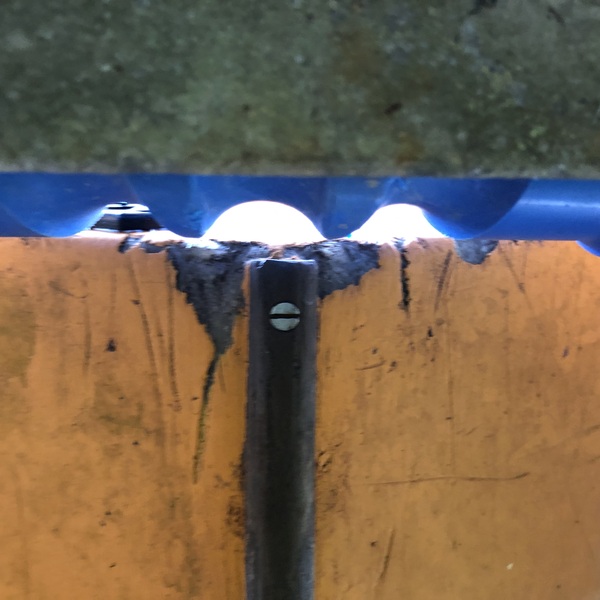
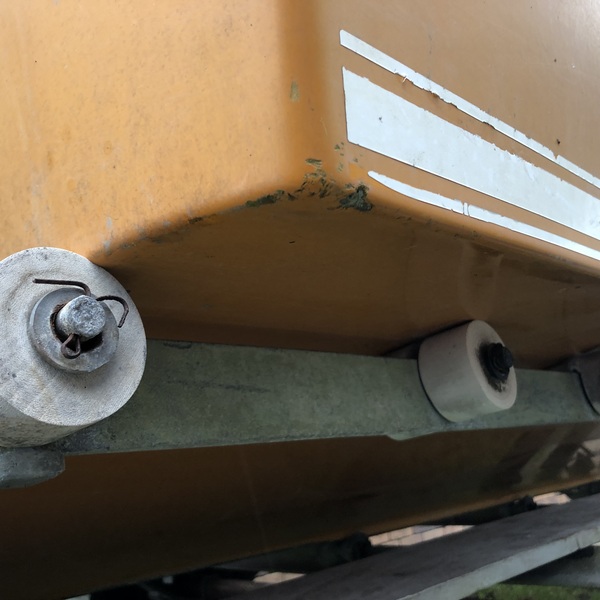
Ok I haven't got the dremel bits yet but gave it bit more of a cut back with a stanley knife. Yes its the keel band see the pics below for a better view. Looks like the layer underneath is woven. There is a similar damage further along the keel that when I started prodding opened up just like this one (top two pics). I was also thinking the keel band will have to come off as I started to scratch way at it. I want to prop the boat up on the trailer so I can remove it, will see what I can come up with/jerry rig. The boats not trailered right so the keel strip will have to stay for the time being. Fixing up the rollers and boat position is another item on the list. 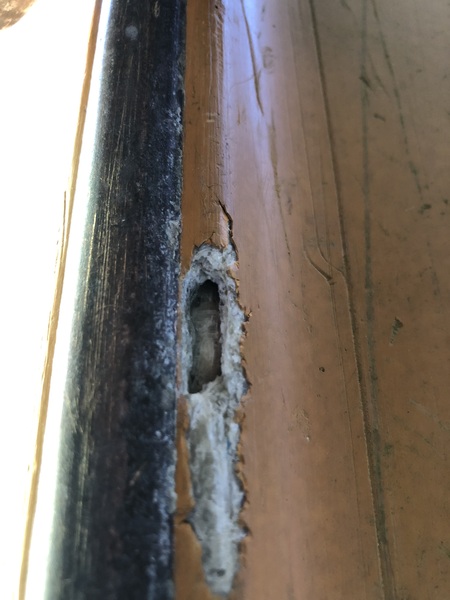 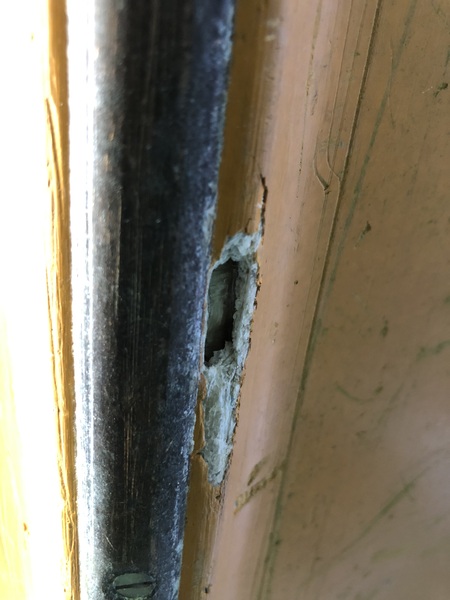 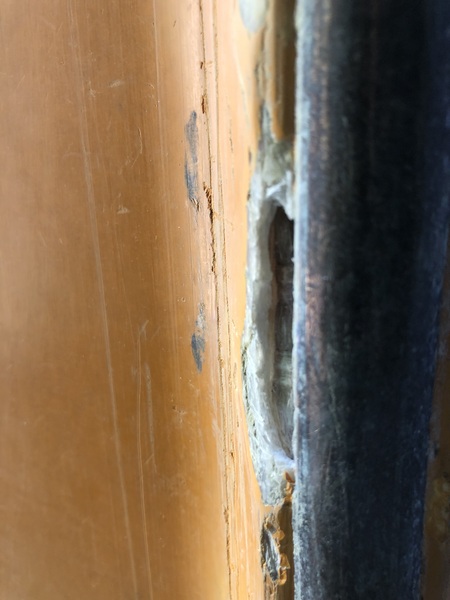 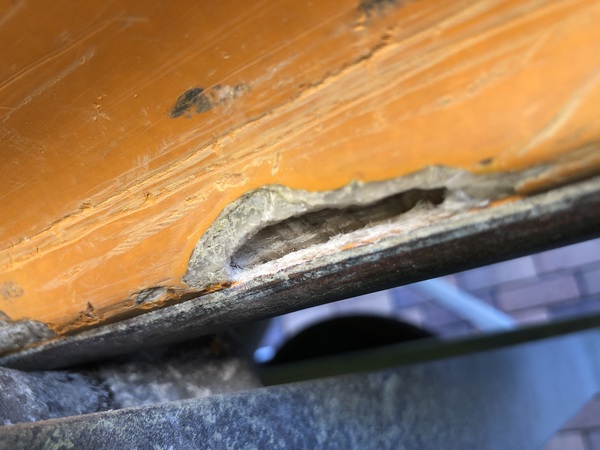 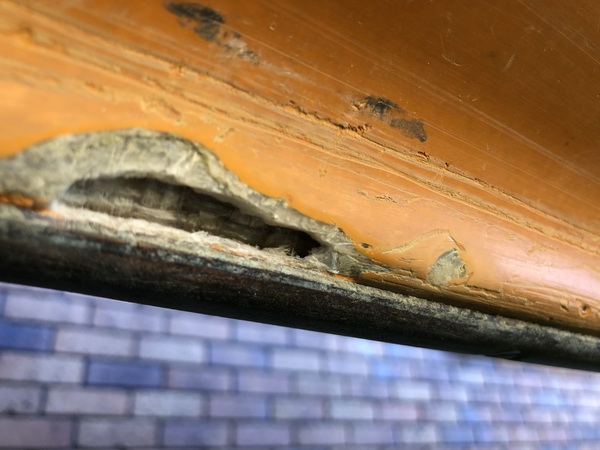 |
Posted By: Primer
Date Posted: 14 Aug 2024 at 11:55am
|
Pulled a couple of keel screws too. Appear to be stainless, so I'm guessing they have been replace at some stage as originals are brass I believe? Only pulled three and they tightened back up solid. 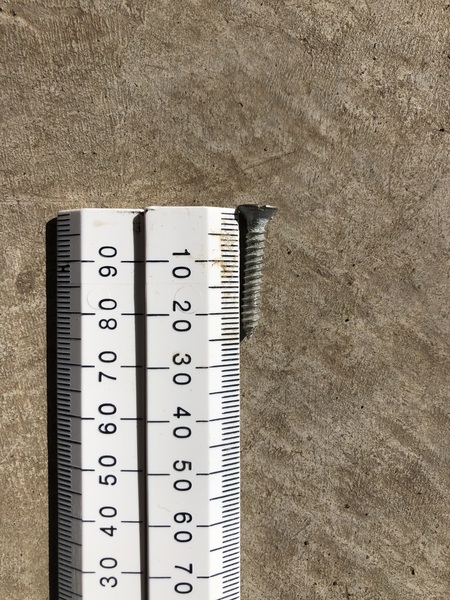 |
Posted By: Bertiesdad
Date Posted: 14 Aug 2024 at 9:49pm
|
The screws don’t look like they were bedded in with much- esp if the came out easily. If you absolutely have to put a hole in a hull now everything would be bedded in with 3M 502 or similar. The separation is quite hard to gauge . If you push a narrow flexi palette knife blade into it how far before it’s firm? There is a way to fix relatively simply ( short term ish) but basically you need to invert the hull- which would need getting engine and anything else off and getting it supported right- obv don’t know your space constraints. Get it upside down though and you will give yourself a much better result- gravity if your friend here as a liquid resin mix into the separation space can provide a reasonable repair bond for the short term- faired on top with epifill. Did exactly this on an old sailing dinghy years ago suffering similar problem. That’s the best way forward to get this old girl back on the water asap. But depends again on extent of mat separation internally! |
Posted By: Primer
Date Posted: 15 Aug 2024 at 7:26pm
|
I brought some selleys marine sealant so I can put some of that in the holes when I put the keel strip back on. I don't have a flexi palette knife blade but I just thought of my feeler gauges, they are quite flexible so I will try them tomorrow. Got close to getting the keel band off today. I've made a timber frame on the trailer to support the boat once I jack it up. Just need to put carpet on the timber supports, jack boat up and screw it into place. Space is a constraint and I don't have any lifting gear so flipping the boat at my place without wrecking it would be difficult. I could really use proper high stud garage about now. I'm thinking that once the keel band is off I'll have to aggressively strip back the fiberglass till there's no more separation and do a proper repair. I've got a 125mm P80 flappy disk on my grinder that will make short work of it. I'll jerry rig something to provide heat so I can use a polyester resin to complete the structural repair and use epifill for fairing. |
Posted By: Kandrew
Date Posted: 15 Aug 2024 at 8:32pm
|
Good luck mate, hope it works out for you. I might have some off cuts of 450gram woven mat at work if you’re in Auckland. I’m in Onehunga if you can pick it up it’s yours |
Posted By: Bertiesdad
Date Posted: 15 Aug 2024 at 9:14pm
|
Sounds like a plan. If you do need to flip it at a later date it’s not that hard on a boat this size. Loads of tyres to lift onto first and a second line to protect gunnel as as pivots up. The screen height ( assume it’s pretty standard ) is bout 30 in max?? This is can be managed with tresle height- or even a stack of tyres if you have a pile to access. Three blokes should take care of it. Obv any rocket launcher etc need off first. It always looks a mission but as long as you have manpower it’s not as risky as you think. If you could manage I would strongly advise- you always get a much better result in any proper small boat keel repairs if the whole length can be exposed and accessed easily. If it’s a no go it’s a no go. You can still improve the integrity a lot with boat upright but will need to mix things a bit stiffer to reduce working time and hence any effect of gravity before u get any covering films in place for curing |
Posted By: Primer
Date Posted: 16 Aug 2024 at 5:16pm
|
I got the keel strip off today and poked a 0.25mm feeler gauge around. The large hole has 8mm of separation under the keel band area and nil up the side of the keel. the smaller one has a few mm of separation. I'll get some disposable overalls then get into sanding it with the angle grinder. Kandew - Thanks for the offer, I have some other structural repairs to make so will order a bunch of resin, double bias, csm etc once I know what I need. Bertiesdad - Lawn space is at a premium and would have to remove some plants to roll it. Even then it would be tight without moving the boat back while rolling. When you say mix things a bit stiffer do you mean upping the catalyst or using an additive to thicken it up? |
Posted By: Bertiesdad
Date Posted: 16 Aug 2024 at 6:46pm
|
The 8mm separation will need mat by the time you cut back and building up again to follow profile bearing in mind it will need properly fairing at some stage. You won’t really know how best to attack it until you e got the whole area back to solid glass/ gel coat. Post up some pics at that stage and we can pitch in our 2c if you want it. On thickening up- you can up the catalyst a bit- no more than 10pc- which can speed up- but easiest way is to mix normally and let it go off until you have a consistency that will not be too deformed / pullled out by gravity. You will end up wasting a bit more and timing is key getting things in place before mix becomes unworkable. It’s all a bit trial and error but start with small amounts and see what works best and build up the layers. |
Posted By: Pcj
Date Posted: 16 Aug 2024 at 7:15pm
|
50mm wide insulation tape can be your friend. helps, fill hole and place over top,it will peel off ------------- "Times up" |
Posted By: Primer
Date Posted: 17 Aug 2024 at 12:55pm
|
Got to spend a bit more time on it this morning. Ground back the large and small holes and opened up another next to the small hole + lightly touched shallow chips in the gel coat along the keel. Ended up chasing the separation along the keel line for the 3 holes (one new). I'm wondering if the separation on the new hole is layup related, some of the resin is very smooth as though there was no adhesion between layers to begin with. New hole (small hole to the right) 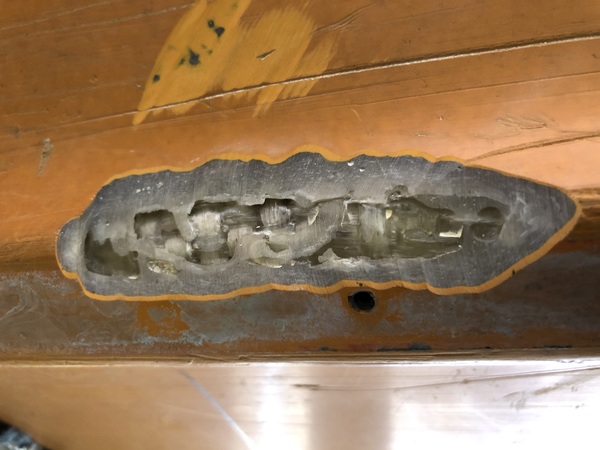 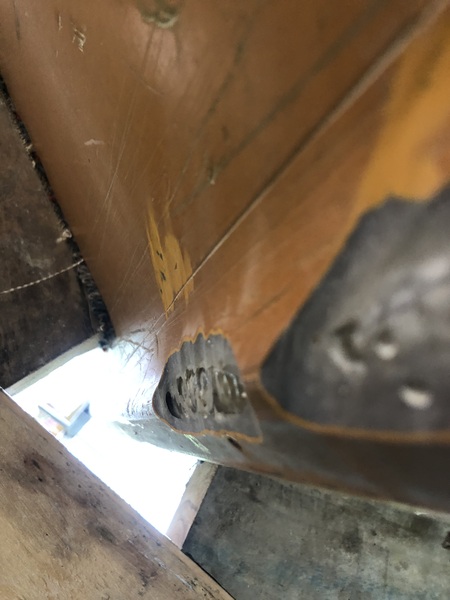 Here's the large hole 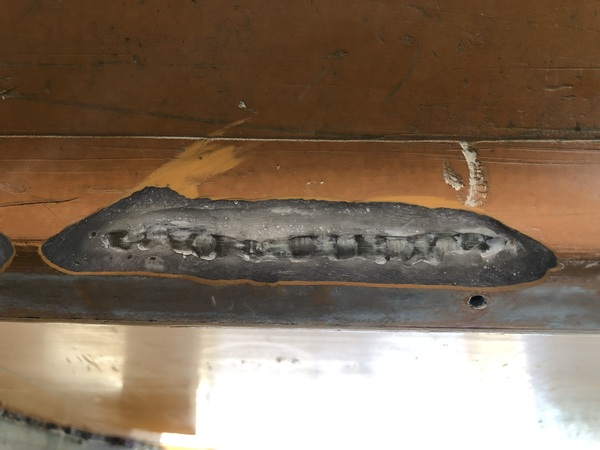 small hole (to the right of the new hole) 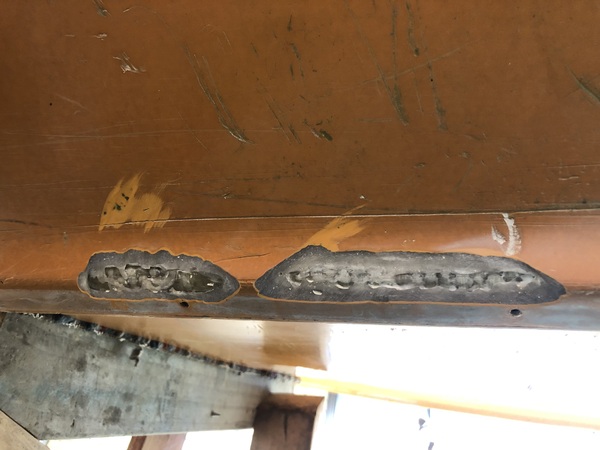 Where I need to apply glass I will feather out 12:1 once a find something less agressive than a flappy disk on the grinder. Changed to P120 and it still stripped out the material very quickly. Will do some research and see what I can find. One thing of concern I came across was a small amount of moisture coming out of a couple of keel screw holes 1/3 from the stern. I'm thinking water is soaking through the keel from the inside. The floor is definately leaking as water pisses out the bung hole everytime it rains. I'm guessing its leaking through cracks in the gel coat, as I've put sealant in any screw holes that I could find. Maybe its time to pull the floor up and have a look? Bertiesdad- I'm always keen for people to throw in their 2cents,
its all new to me and the more info the better. I see what you mean with
the resin I'll let it go off a bit before putting it on and do it in
batches to maintain workability. Pcj - Yip got some 50mm around that I can use. 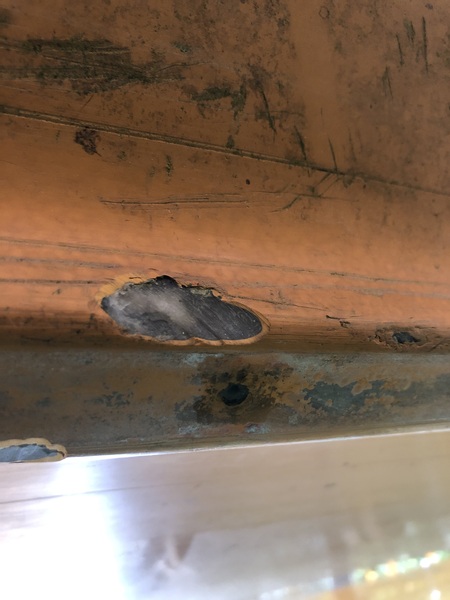 |