
Tips for finding trout
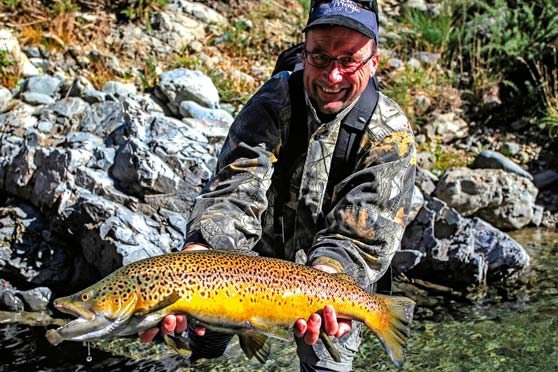
Trout are found throughout New Zealand - with the exception of Stewart Island and the Far North – with brown trout in particularly being the most geographically widespread of our introduced species.
Many of our trout fisheries are easily accessible and overall a minimal amount of gear is required. Yet often our trout will occur in low numbers in many environments, and especially backcountry rivers, so having a few tips of finding them consistently is the focus of this article.
Trout require three main factors – the first is a good flow of water or a decent sized water body, as trout are often the apex predator in many freshwater environments; secondly, is good structure in which to hunt their prey and also to shelter from floods ( and for young trout to have cover from predators, notably the black shag); and thirdly, a good food source.
Trout have a high metabolism so burn through food fast. There needs to be large and productive insect or baitfish populations to support trout populations. To counter this in many situations trout become opportunistic feeders, feeding on just about anything that has protein and can fit in their mouths.
In the early spring, coastal river mouths are prime locations to find trout, and especially good sized searun fish. The high protein environment allows trout to grow fast and offers a diversity of food they might not have enjoyed through the winter months.
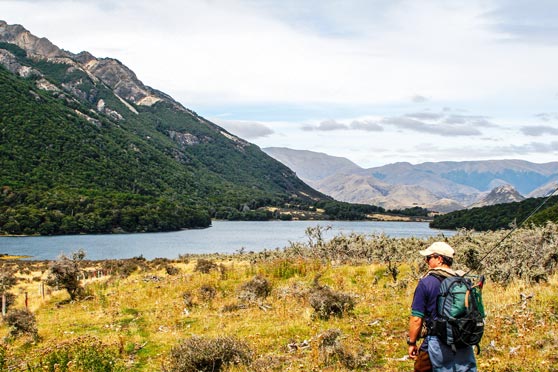
Often in September I will focus on river mouths as in many regions the mouths of medium and larger sized rivers are open all year round in coastal regions, but also the mouths of rivers into lakes. The arrival of whitebait and then smelt also accelerates the trout’s growth and feeding activity, making them hungry for a range of spinners and soft-baits. Generally, a flow of at least one cumec (one cubic metre of water per second) is required at coastal streams and in some situations trout can move into very small coastal lagoons to
feed.
When river fishing for trout there is a golden range of river flows that often provide the best fishing. Many rivers that have from 5-8 cumecs of flow will often have good trout fishing providing there is enough cover for larger fish to shelter and also that the rivers catchment is intact so that the river isn’t too discoloured with sediment (which sadly is becoming an increasing issue).
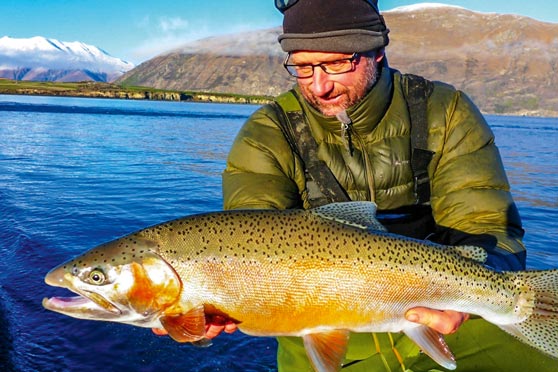
Many of our best trophy trout fisheries are in rivers with a flow range from 5-8 cumecs, especially in headwater regins. Once the flow goes over 5 cumecs there will often be a large and consistent drift of aquatic insects that will allow the trout to grow throughout the year with enough food. When rivers with the magic flow range are combined with good permanent rock structure, (as many back country rivers have) and a range of stone/rock sizes in the riverbed, you will almost invariably have outstanding fishing providing the rivers often have clear flows.
You can easily find these rivers at home by spending a few hours trolling through Google Earth. Yet one challenge with these sized rivers is that he trout grow large and become very territorial so constantly walking up the river and fishing new water is required. Often back country rivers are suited to sight fishing for this reason.
In addition to rock structures for stability, rivers that have constant flows, primarily spring creeks, are also good as again a constant food supply often allows trout to reach large sizes. Many larger and unstable braided rivers, especially in the South Island, with have clear spring creeks flowing on their margins and these often provide outstanding fishing. Again, these spring creeks can be found by looking at Google Earth imagery. Tiny spring creeks are notorious for producing big fish!
When fishing lakes, inflowing rivers are often a prime location to fish as these provide a focal point for trout as far as feeding and spawning requirements go. Areas with shallow waters in lakes, especially when combined with weed beds are often ideal fishing areas too, especially where the channels of inflowing rivers go through the weed-beds. Many lakes will fish well when there is a slight increase in the flow of rivers into them, which increases the amount of food going into the lake. The sometimes discoloured water will often make the trout easier to catch.
Like rivers, paying attention to structure in lakes is important. Trout love to hunt along drop-offs, so anywhere where the water depth rapidly changes will be worth fishing, especially where stony edges drop away into weed-beds as these environments provide the trout with cover and a diversity of food.
It will often be the smaller and medium sized lakes that will consistently have the higher proportion of larger fish, just as it is with rivers. Medium size lakes often have a greater proportion of edge environments that produce feeding opportunities and a higher proportion of shallow weed beds, compared to larger and less productive lakes. This is especially so in the South Island.
As mentioned, trout are constantly feeding, so look for lakes that have a good food source. The volcanic lakes in the North Island have a consistent food supply and water temperature that allows for trout to reach large sizes. Ideally lakes with clear water, shallow weed-beds and a reasonable amount of nutrients produce the best fishing, but be aware that as trout numbers increase in lakes generally the size of the fish goes down.
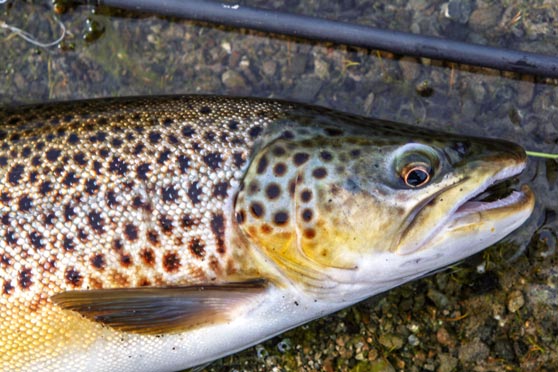
When fishing lakes, it is important to cover the water as trout will often be territorial so by moving around and placing your gear in front of new fish you increase your chances of success – no different to river tactics really!
In summary, look for rivers and lakes, often of medium size with stable environments and a good amount of prey for the trout. Trout need lots of food. Often when you see shags around it is a good indicator the area holds good numbers of fish.
Rivers and lakes with lots of small baitfish are often prime areas to find trout. Waterways with stable margins and good bankside vegetation will provide the best fishing. Each river and lake will have its own unique combination of fish sizes and densities, so getting some background information on the waterway is important. In the case of headwater and often trophy trout rivers, the same rivers, and even pools, year after year will produce trophy trout.
Trout overall are good indicators of the stability and health of our waterways and a resource to be treasured. Make sure you support the fishery and buy a license for the upcoming season. Happy trout hunting.
|
|
This article is reproduced with permission of |

Fishing Reports Visit Reports
Tauranga Fishing Report - 28/05/26
Tarakihi on the bite Trips are few and far between at this time of year,... Read More >
Canterbury Fishing Report - 28/05/26
Fresh and salt turning it on! It is not very often I get to say... Read More >
Bay of Islands Fishing Report - 28/05/26
Lures paying dividends We finally had a break in the SE winds that have been... Read More >
Manukau/West Coast Fishing Report - 28/05/26
Snapper and gurnard in the harbour The weather has finally taken a turn for the... Read More >


Major Bites
Minor Bites
Major Bites
Minor Bites
Comments