
Blue Moki
- 1 Comment

|
Māori name: |
Moki |
|
Scientific name: |
Latridopsis ciliaris |
|
All-tackle NZ record: |
9.1kg |
|
Eating quality: |
Excellent |
Description
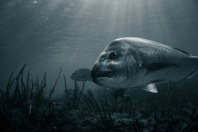
Blue moki are predominately found in the southern NZ climes but can be found lurking right around the country’s east coast. They are a species of the trumpeter family, featuring the same distinctive fleshy lips on their downward-facing mouths that their tarakihi and porae relatives have. Blue moki have very selective feeding habits and sharp eyesight – feeding primarily during the darker hours on invertebrates, small fish and crustaceans.
Blue moki are blue-grey and brown, with pale splotches often visible along their upper flanks. Their thick bodies and powerful tails nod to their strong fighting prowess, and their white flesh makes fine eating. Despite these drawcards, they are rarely caught in many parts of the country, although Wellington anglers and southern surfcasters often target them with success.
Where to catch
A fish that schools close to the seafloor, blue moki are typically found over areas of reef or structure close to the sand or shingle where they like to grub around for food. Blue moki can also be found on open stretches of surf and shingle beaches; however, when caught in these areas, they are likely migrating along the coast.

They inhabit a range of depths and are not shy about entering the shallows, particularly in low-light conditions. The primary range of blue moki is from the Eastern Bay of Plenty south, right down the length of the east coast. Encounters further north tend to be with individual fish or small groups.
When to catch
They can be caught year-round but usually in better numbers and sizes from October to April after their winter spawning run. Some fish from the North Island’s east coast reportedly migrate through the winter to spawn in deep water off the East Cape.
Keen surfcasters prefer targeting blue moki over the change of light and into darkness. It seems they move in shallower, and their feeding activity peaks over this period. The bonus at this time is fewer baitfish and small reef fish ‘pickers’ around to decimate your baits before the desired moki can sniff them out.
Optimal tides depend on location; however, as a rule of thumb, higher tides are better for shallow reefy beaches, while tides are less relevant on steeply shelving shingle beaches. Low swell conditions are favoured if fishing from the shore, as blue moki will cruise just beyond the shore break within easy casting distance.

How to catch
Surfcasting
Specialist distance casting rigs are generally superfluous when moki fishing as they like to patrol just beyond the shore break. Whatever rig you choose, keep hook sizes reasonably small (e.g. 3/0-5/0) and opt for shellfish baits such as mussels, tuatua, crabs, or prawns. Crayfish also make great baits if you’re into that kind of sacrilegious behaviour! With these delicate baits, bait elastic is recommended to secure baits for as long as possible.
While not essential, a shellfish berley bomb deployed in the wash or a berley cage sinker at the end of your rig can make things more exciting. If fishing in the dark, a tip light will help you notice when moki are sniffing around your offerings. Sometimes they hit the bait hard, and other times they may slowly suck on your bait. Most anglers fish a firm drag with circle hooks for a good hook-up rate and to keep these hard-fighting fish away from the reef.
Bottom fishing
With blue moki sharing the same habitats as more popular fish such as blue cod and tarakihi, they are regularly caught with the classic ledger rig bottom-fishing technique that many southern anglers apply. Rigs armed with small hooks and baited with shellfish should yield a few blue moki if they’re in the vicinity.
Fishing Reports Visit Reports
Tauranga Fishing Report - 28/05/26
Tarakihi on the bite Trips are few and far between at this time of year,... Read More >
Canterbury Fishing Report - 28/05/26
Fresh and salt turning it on! It is not very often I get to say... Read More >
Bay of Islands Fishing Report - 28/05/26
Lures paying dividends We finally had a break in the SE winds that have been... Read More >
Manukau/West Coast Fishing Report - 28/05/26
Snapper and gurnard in the harbour The weather has finally taken a turn for the... Read More >


Major Bites
Minor Bites
Major Bites
Minor Bites
Latest Articles
Analysis: The Fisheries Amendment Bill Debate
June 2026New Zealand’s Fisheries Amendment Bill has reach Parliament, carrying the weight of both expectation and alarm... Read More >

Extreme Aluminium Trailers Review
June 2026Extreme Boats has long been recognised for its award-winning aluminium vessels, and is now expanding into high-quality aluminium trailers... Read More >
The Export NZ Fishing Competition Announces Season Winners
June 2026Another exciting season of The Export NZ Fishing Competition – has come to an end, and we’ve just announced our prize winners... Read More >

History of Zane Grey's Fishing in NZ
June 2026One hundred years ago, the trajectory of big game fishing in NZ changed forever with the arrival to its shores of one man - Zane Grey... Read More >
BBQ'd Gurnard with Citrus and Herb Butter
May 2026This is a pretty ‘cheffy’ recipe, featuring a sauce that is definitely one to impress guests with, but it's fairly easy to cook... Read More >